
Blockchain
Understanding Bitcoin Market Dominance: A Comprehensive Analysis


Bitcoin Market dominance has surged to a three-year high, sparking excitement in the cryptocurrency market.
This significant shift for Bitcoin (BTC), the undisputed king of crypto, raises questions about the future of altcoins and the overall direction of the crypto landscape.
Let’s dive into what this means and how investors might navigate this changing market dynamic.
Understanding Bitcoin Market Dominance
Bitcoin domination is the proportion of total cryptocurrency market capitalization owned by Bitcoin.
When Bitcoin’s dominance rises, it generally means that BTC is outperforming other cryptocurrencies, attracting increased investment.
A higher Bitcoin dominance percentage suggests that investors have an increased appetite for the established cryptocurrency market leader.
Recent Surge in Bitcoin Dominance
Several factors are contributing to the recent surge in Bitcoin’s dominance, including:
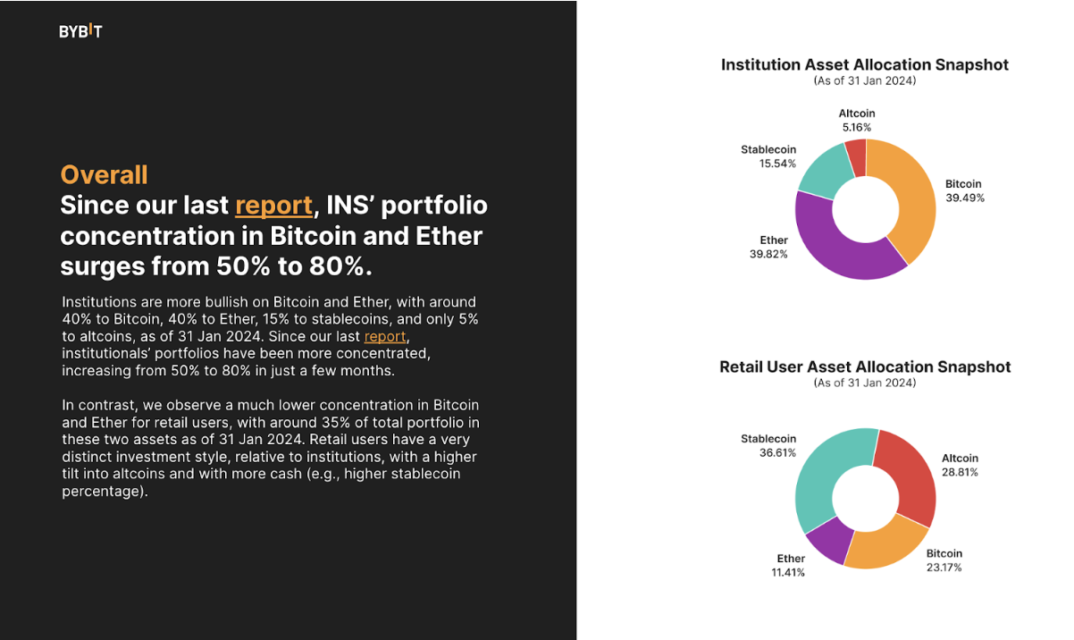
- Increased Institutional Interest: Larger investors often favor Bitcoin due to its established track record and higher perceived stability.
- Regulatory Concerns: Looming regulations within the crypto space may make investors flock towards Bitcoin as a perceived safer haven during uncertainty.
- Altcoin Volatility: Recent fluctuations in altcoin prices may have made the “tried and true” appeal of Bitcoin more enticing.
Market Analyst Opinions: Decoding the Dominance Surge
The recent surge in Bitcoin’s dominance has sparked a lively debate among market analysts, with a range of perspectives emerging:
1. Altcoin Exodus vs. Temporary Trend:
- Bullish on Bitcoin: Some analysts believe this signifies a wider shift away from altcoins. They argue that investors are seeking the perceived safety and stability of Bitcoin, especially with increased institutional interest and regulatory uncertainties. This could lead to a sustained period of Bitcoin dominance.
- Altcoin Resilience Camp: Others see this as a temporary trend. They believe strong altcoins with innovative projects and real-world applications will continue to attract investment in the long run. They point to past instances where altcoin markets have rebounded after periods of Bitcoin dominance.
2. Macroeconomic Factors:
- Flight to Safety: Certain analysts interpret the rise in Bitcoin dominance as a “flight to safety” response to broader economic concerns. Bitcoin, with its limited supply and established presence, might be seen as a hedge against inflation or market volatility.
- Impact of Global Events: Geopolitical tensions or global economic events could be influencing investor behavior, leading them to favor the perceived stability of Bitcoin.
3. The “Maturation” of Crypto:
- Institutional Evolution: Analysts who subscribe to this view suggest that the rise in Bitcoin dominance reflects the maturing crypto market. As institutional investors enter the space, they may favor the established reputation and higher liquidity of Bitcoin, compared to newer altcoins.
4. Divergent Views on Duration:
- Short-Term Dominance: Some analysts believe this is a short-term phenomenon, with altcoins regaining momentum as market dynamics shift.
- Long-Term Restructuring: Others predict a longer-term restructuring of the crypto market, with Bitcoin potentially consolidating its dominance as the primary store-of-value asset within the crypto ecosystem.
Potential Implications for Cryptocurrency Investors
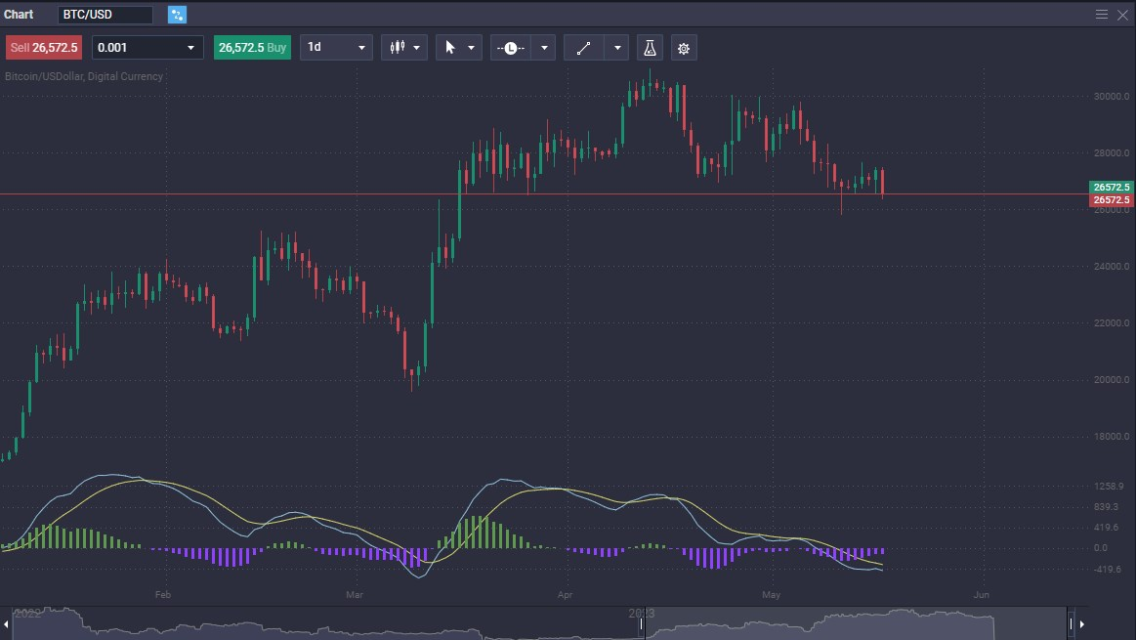
The rise in Bitcoin dominance offers a crucial moment for investors to re-evaluate their crypto strategies.
A focus on diversification is wise, but short-term adjustments to balance a portfolio towards Bitcoin may be beneficial while its dominance holds.
However, it is critical to note that the long-term viability of correctly chosen altcoins, should not be underestimated.
Historical Context of Bitcoin Dominance: Key Takeaways
Bitcoin’s dominance has fluctuated throughout its history due to various factors:
- Early Years (2009-2013): Bitcoin initially held near-total dominance, but the emergence of altcoins began to erode this position.
- Altcoin Explosion (2017): The ICO boom of 2017 saw Bitcoin’s dominance dwindle as investors researched new firms, followed by a market downturn and a partial return to dominance.
- Cycles of Change (2018-Present): Bitcoin dominance has shifted in a cyclical pattern. Periods of Bitcoin outperformance are often followed by “alt seasons” where altcoins experience significant growth.
Important Lessons:
- Market Dynamics: Bitcoin’s dominance is not static; it reflects changing investor preferences and market trends.
- Cyclical Nature: The crypto market operates in cycles. Understanding fluctuations in Bitcoin dominance can aid in future predictions.
- Altcoin Potential: While Bitcoin has a strong track record, some altcoins offer innovation and growth potential, deserving attention from investors.
Studying the past patterns of Bitcoin dominance provides a clearer view of the current market and helps inform smart investment decisions.
Taking Advantage of Bitcoin’s Rise: Strategies for the Current Market
While the future of Bitcoin dominance is uncertain, the current surge offers opportunities for investors to capitalize on this shift. Here are some strategies to consider:
- Dollar-Cost Averaging (DCA) into Bitcoin: DCA involves investing a fixed amount into BTC at regular intervals smoothing out price fluctuations, and potentially reducing risk over time. With Bitcoin’s price on the rise, a consistent DCA strategy could allow for gradual accumulation as dominance remains high.
- Rebalancing Your Portfolio: If Bitcoin’s surge has caused its percentage in your portfolio to grow significantly, consider rebalancing. Sell a portion of the increased BTC holdings and consider redistributing the proceeds into your existing altcoin positions or new, carefully researched projects.
- Exploring Bitcoin-focused Investment Vehicles: The rise in Bitcoin dominance has led to increased access to specialized investment instruments. Consider exchange-traded funds (ETFs) or other products providing indirect exposure to Bitcoin, especially if regulations allow such investments in your region.
- Short-Term Trading: For experienced traders, the current volatility may present short-term opportunities to profit by ‘trading the range’ between Bitcoin and specific altcoins. Use technical analysis cautiously to spot potential entry and exit points.
Important Considerations:
- The Rise of DeFi: The Decentralized Finance (DeFi) sector, built primarily on the Ethereum network, holds immense potential. While Bitcoin dominance is high, strong DeFi projects could still offer significant growth opportunities.
- Staying Informed: The crypto market is highly dynamic. Stay updated on the latest news, regulatory developments, and technological innovations that could impact Bitcoin’s dominance and overall market movement.
Potential Risks of “All In” on Bitcoin
While Bitcoin’s dominance is high, it’s vital to recognize the inherent risks of any investment, even in the most established players. Practicing diversification and risk management will help in maintaining a balanced portfolio.
Is This a “FOMO” Moment? Separating Hype from Rational Investing Ahead of the Bitcoin Halving
The fear of missing out (FOMO) is a powerful emotion that can drive impulsive decisions in any market, especially the volatile world of cryptocurrency. As Bitcoin’s dominance climbs and its next halving approaches, it’s essential to ask whether this is a FOMO-fueled surge or a reflection of rational investor sentiment.
Signs of FOMO Intensified by the Halving:
- Media Frenzy: Sensationalized headlines about Bitcoin’s price gains and the historically positive price impacts of previous halving events may further fuel a sense of urgency in investors.
- Herd Mentality: When investors see others rushing into Bitcoin pre-halving, they may succumb to the fear of being left behind, leading to impulsive buying without thorough consideration.
- Focus Solely on Short-Term Gains: FOMO-driven investors may obsess over the potential for quick profits around the halving, neglecting Bitcoin’s suitability for long-term investment strategies and potentially overpaying for the asset.
Arguments Against Pure FOMO:
- Institutional Interest: Growing investment from large institutions suggests strategic interest in Bitcoin’s scarcity model enforced by the halving, which could support long-term price appreciation.
- Regulatory Environment: Potential regulations can drive investors towards Bitcoin’s relative stability and predictability – particularly important as the halving’s effect on supply becomes tangible.
- Altcoin Innovation: Strong development activity on altcoin projects indicates continued belief in blockchain technology, even while Bitcoin’s halving garners more attention.
Striking a Balance in the Shadow of the Halving
The upcoming Bitcoin halving likely intensifies FOMO-driven behavior. Here’s how investors can navigate this:
- Acknowledge the Power of FOMO: Realize that emotions, heavily influenced by the halving narrative, can impact judgment.
- Focus on Fundamentals: Analyze Bitcoin’s unique supply dynamics, the historical impact of halvings, and how BTC fits into your long-term portfolio.
- Avoid Impulsive Decisions: Don’t let short-term hype overshadow careful research and consideration of your own investment goals and risk tolerance.
Remember, while FOMO might propel short-term market movements around the halving, lasting success in the crypto space often requires research, a calculated approach, and patience, especially in these potentially volatile times.
Bitcoin’s increasing dominance marks a noteworthy change in the cryptocurrency landscape. While its future trajectory is uncertain, this shift underscores the ever-evolving nature of this market. A balanced approach that embraces both the potential of Bitcoin and the long-term promise of select altcoins is likely the most prudent strategy for investors in this dynamic environment.
Disclaimer: Remember, cryptocurrency markets are volatile. Invest only what you can afford to lose, and conduct your research before making any decisions.

Blockchain
5 Reasons Why Delta Exchange is the Easiest Platform for Crypto Trading Strategies in the Indian Market

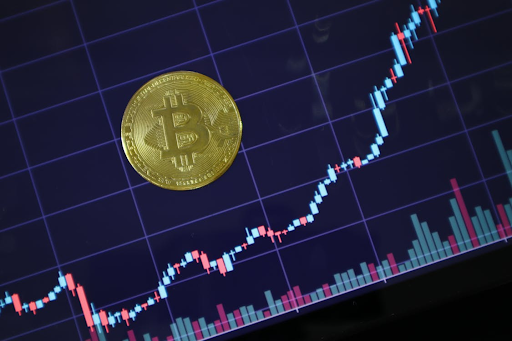
Crypto trading in India has grown exponentially in the last few years. In 2025, the market pulled in $258 million in revenue and is on track to hit nearly $732 million by 2033, growing at a 14.3% CAGR from 2026 onwards. That kind of money doesn’t come from people buying Bitcoin on a whim and hoping for a lucky spike. It comes from traders who plan entries, manage exits, build hedges, and run full-blown crypto trading setups.
This shift has created a new problem. Most Indian crypto exchange apps still feel built for basic spot buying without any advanced features to try. You open five tabs, check prices on one app, place orders on another, track risk on a third, and hope nothing slips through.
Delta Exchange transforms the story here. Instead of spots, Delta offers a safe trading platform to explore crypto derivatives (futures and options) across major currencies.
Let’s understand more about Delta Exchange and why so many Indian traders end up sticking with it once they try it.
Why Try Crypto Trading Strategies on Delta Exchange
Ranked among the top Indian crypto exchanges, Delta Exchange offers a range of features and analytics tools to simplify your crypto trading experience.
Here’s why many traders trust Delta Exchange:
- INR trading keeps things simple
If you’ve ever had to convert INR to USDT or USD just to trade Bitcoin, you know the hassle. Delta Exchange lets you deposit and withdraw in INR directly via UPI, IMPS, NEFT, and bank transfer, with your margin and profits shown in INR.
That means no awkward crypto conversions or extra wallets – you fund your account straight from your bank and start crypto trading like it’s normal money.
- Algo trading bots that actually work
Automation can save hours and reduce emotional stress and decisions, especially with fast moves in crypto F&O. Delta Exchange supports algo trading through APIs and bot integrations from platforms like TradingView and Tradetron.
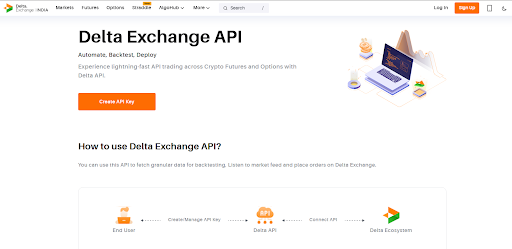
You can link your trading strategy to webhooks or APIs and let bots place trades for Bitcoin futures or other crypto options even when you’re away. If you want systematic, repeatable strategies with fewer missed opportunities, this setup feels practical and real.
And the best part? You don’t need to have any coding knowledge or degree – API Copilot does it all for you.
- Lower trading fees that don’t eat into your wins
Fees matter because every percentage point you pay is one less in your pocket after a winning trade. Delta Exchange offers competitive taker and maker fees, plus a fee cap on options that limits how much you pay on low premium trades.
This helps keep costs predictable, whether you’re trading Bitcoin or ETH futures and options. Traders who place frequent trades or use multi-leg strategies on the Indian crypto exchange can keep more of their gains, rather than having them eaten up by trading fees.
- Strategy Builder for practical trading plans
Strategy planning can get messy if the platform doesn’t help you visualize outcomes. Delta Exchange offers tools that let you craft crypto F&O setups with clear strike choices and expiries, plus daily, weekly, and monthly options for more precise timing. This helps you conveniently plan spreads, straddles, or hedges.
- Compliance and risk measures to know
It’s one thing to trade, another to trust the platform doing it. Delta Exchange is registered with India’s Financial Intelligence Unit (FIU) and follows local KYC and AML rules.
For risk management, the platform supports:
- Margin controls and stop-loss tools that help you manage positions while you trade Bitcoin or other crypto derivatives.
- Demo account to practice trades and understand the market without real money.
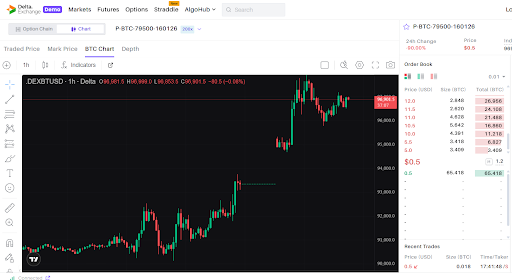
- Payoff charts show you how your trade will play out with breakeven points and maximum P&L.
This way, you can study your crypto trading strategy better before finalizing the trade.
Apart from these, Delta also offers leverage up to 200X – a good way to amplify your profits if the market moves in your favor.
The Bottomline
Indian crypto traders have moved far past the buy-and-hold phase. Spot crypto trading still has its place, yet most active users now want faster ways to make money from price swings, not wait months for a rally.
That’s where crypto F&O, spreads, and short-term setups step in. You want tools that let you react within minutes, control risk, and lock gains when the move shows up.
Platforms that only support basic coin buying just can’t keep up with that style of trading. Serious traders want flexibility, speed, and ways to work with volatility, not sit through it – and Delta Exchange caters to such traders well.
Disclaimer: Crypto trading carries inherent risks due to its high volatility. This article is for informational purposes only. Kindly do your own research before making any investment decisions.
Blockchain
MoonExe Aligns With the Next Phase of Stablecoin Payments as Global Regulation Accelerates
MoonExe today reaffirmed its strategic focus on stablecoin-powered payment infrastructure as global regulatory clarity continues to accelerate across major financial jurisdictions.
Regulators worldwide are advancing frameworks that formally recognize stablecoins as legitimate instruments for payment, settlement, and treasury operations. Legislative initiatives in the United States, expanded licensing regimes in Asia, and structured compliance approaches in other regions are collectively signaling a transition from experimental adoption to regulated, real-world deployment.
As stablecoins move deeper into mainstream financial infrastructure, demand is increasing for platforms capable of delivering real-time liquidity, transparent pricing, and verifiable settlement. MoonExe’s Exchange Finance (ExFi) model is designed to address these needs by enabling stablecoin-based currency conversions that operate continuously, without dependence on traditional banking cut-off times or geographic limitations.
The platform focuses on facilitating efficient value movement while maintaining transparency through public blockchain records. Transactions executed within the MoonExe ecosystem can be independently verified via standard blockchain explorers, reinforcing confidence through auditable, immutable data.
In parallel with regulatory progress, market participants are increasingly prioritizing infrastructure reliability over speculative activity. Stablecoins are being evaluated less as alternative assets and more as operational tools capable of supporting cross-border payments, digital commerce, and treasury flows.
MoonExe continues to expand its infrastructure and partnerships to support this evolution, positioning itself as part of the foundational layer required for stablecoins to function at global scale.
For more information about MoonExe and its stablecoin payment infrastructure, visit https://moonexe.com/
Blockchain
Playmaker to Launch in Q2 2026 as Midas Labs Expands Its AI-Powered Game Creation Ecosystem

Midas Labs, a UK-based Web3 technology company, has announced the upcoming launch of Playmaker, an AI-powered game creation and launchpad platform scheduled for Q2 2026. The platform is designed to lower barriers to game development and funding, operating as a core product within the UNIFI-powered Midas ecosystem.
Playmaker will provide creators, indie studios, and early-stage visionaries with an integrated environment to ideate, build, fund, and publish games without the traditional constraints of large teams or complex technical infrastructure. By combining AI-assisted creation tools with a structured launchpad and marketplace, the platform aims to streamline the path from concept to live product.
According to Jonathan Wheatley, Chief Marketing Officer of Midas Labs, Playmaker represents a natural progression of the company’s ecosystem strategy.
“Playmaker is about enabling participation at every level — from creators and developers to early supporters and players,” said Wheatley. “By integrating AI-driven creation with funding and publishing infrastructure, we’re building a system that allows ideas to move efficiently from concept to execution.”
The platform is powered by the $PLAY token, a fixed-supply utility asset used for project participation, creator payments, marketplace transactions, and ecosystem services. $PLAY operates within the broader UNIFI ecosystem, where UNIFI serves as the access and conversion layer, reinforcing liquidity and alignment across Midas Labs’ products.
Midas Labs has structured Playmaker’s token economy around a non-mintable, scarcity-driven model, designed to support long-term sustainability as platform adoption increases.
The Playmaker launch builds on recent Midas Labs milestones, including the expansion of the Midas Play Marketplace, multiple game releases, ecosystem partnerships, and the rollout of UNIFI staking infrastructure. Together, these components form a vertically integrated environment linking creation, funding, distribution, and participation.
Playmaker is scheduled to go live in Q2 2026, with phased ecosystem access beginning with early contributors before expanding globally.
About Midas Labs
Midas Labs is a United Kingdom–based Web3 technology company focused on building scalable digital ecosystems across gaming, AI, and creator-driven platforms. Powered by the UNIFI token, Midas Labs develops infrastructure designed for long-term participation, real utility, and sustainable growth.

Conflux Joins Hong Kong Web3 Festival as Secondary Exhibition Sponsor

Web3 Leader Programme is an official Platinum Sponsor at Hong Kong Web3 Festival 2026

WEEX Labs Announced as Primary Exhibition Sponsor at Hong Kong Web3 Festival

CF Blockchain Joins Hong Kong Web3 Festival as Secondary Exhibition Sponsor

ENI Announced as Gold Sponsor at Hong Kong Web3 Festival 2026

CoinPost Announced as Secondary Exhibition Sponsor at Hong Kong Web3 Festival 2026

Cardalonia Aiming To Become The Biggest Metaverse Project On Cardano

P2P2C BREAKTHROUGH CREATES A CONNECTION BETWEEN ETM TOKEN AND THE SUPER PROFITABLE MARKET

WOM Protocol partners with CoinPayments, the world’s largest cryptocurrency payments processor

ETHERSMART DEVELOPER’S VISION MADE FINTECH COMPANY BECOME DUBAI’S TOP DIGITAL BANK

Project Quantum – Decentralised AAA Gaming

WOM Protocol Recommended by Premier Crypto Analyst as only full featured project for August
-
 Crypto4 years ago
Cardalonia Aiming To Become The Biggest Metaverse Project On Cardano
-
 Press Release5 years ago
P2P2C BREAKTHROUGH CREATES A CONNECTION BETWEEN ETM TOKEN AND THE SUPER PROFITABLE MARKET
-
 Blockchain6 years ago
WOM Protocol partners with CoinPayments, the world’s largest cryptocurrency payments processor
-
 Press Release5 years ago
ETHERSMART DEVELOPER’S VISION MADE FINTECH COMPANY BECOME DUBAI’S TOP DIGITAL BANK
-
 Press Release5 years ago
Project Quantum – Decentralised AAA Gaming
-
 Blockchain6 years ago
WOM Protocol Recommended by Premier Crypto Analyst as only full featured project for August
-

 Press Release5 years ago
ETHERSMART DEVELOPER’S VISION MADE FINTECH COMPANY BECOME DUBAI’S TOP DIGITAL BANK
-
 Blockchain6 years ago
1.5 Times More Bitcoin is purchased by Grayscale Than Daily Mined Coins