
Press Release
Falcon: The Prime Project to Disrupt DeFi This September

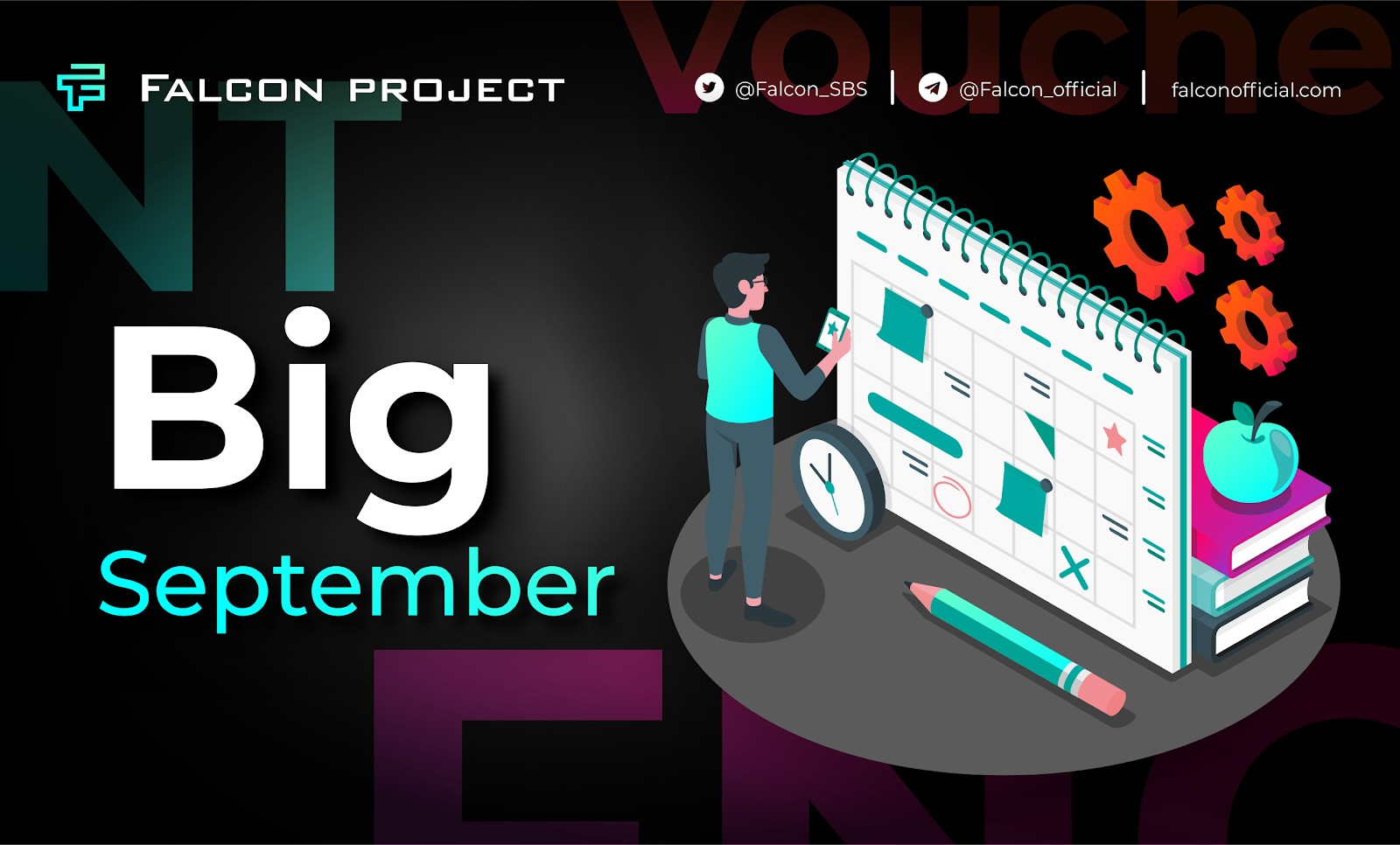
The Falcon project has emerged as a dynamic and innovative DeFi platform that incorporates two interchangeable blockchains to form a robust network.
The hybrid blockchain model allows users to choose the best blockchain regarding speed, convenience, anonymity, and privacy.
An official tweet from the Falcon Project on Sep. 5 revealed that work in the Falcon blockchain would be fully completed in Q4, 2020. The exciting development means that users will soon behold the FNC privacy coin in their wallets.
The Project is also preparing to offer liquidity pools soon on top DeFi platform Uniswap in a move that promises to disrupt the DeFi sector’s dynamics.
Those who maintain the liquidity of the FNT / ETH pool on Uniswap will receive rewards in the FNT token, the so-called farming, which has already become a trend this year. We also have information on updating the falconofficial.com website to reflect these changes.
What Does the Falcon Project Offer?
The Falcon project, which launched on Feb. 2, 2020, brings a unique approach to decentralized finance with its ERC-20 token-based payment system and anonymous hybrid blockchain.
The venture seeks to integrate FNT (ERC-20 token), which runs on the Ethereum blockchain, and Falcon Project’s coin, FNC.
FNT serves as the Project’s official digital asset and allows for speed, simplicity, and convenience while offering a comprehensive bonus system for holders. The token allows for unrestricted listing on exchanges and is thus tradable with other digital coins.
On the other hand, the FNC coin is designed to uphold privacy and enhance security when making transactions on the blockchain. The coin offers holders features such as choice of anonymous and open transactions, passive pool staking, and convenient wallets.
Due to its focus on anonymity, FNC coin cannot be listed on exchanges but can be swapped for FNT in the ratio of 1:1 if a holder wishes to trade on platforms such as Falcon’s new partner OKEx.
Falcon aims to fully integrate FNT and FNC into everyday life for transactions or receiving payments conveniently and privately. Users can easily swap FNC for FNT via the swap form found on the website or via the Falcon project’s telegram bot.
About Falcon’s Unique Reward System
Falcon implements a different chain for its rewards system, the ERC-1155, token, referred to as a voucher. The system employs a Proof of Hold (PoH) mechanism where users swap ERC-20(FNT) tokens for ERC-1155 token to earn rewards.
To participate and earn rewards, users must deposit a minimum of 500 thousand FNT tokens. They then need to swap their FNT for a voucher equal to the amount they wish to freeze and earn lucrative returns.
With the FNT value going up in recent months, Falcon recently introduced 500,000 FNT vouchers to make the POH rewards more affordable to users. All voucher holders earn dividends of 10% every three months or 40% per year.
In a Sep. 8 tweet, the Falcon team announced that it had set a sales record on the Enjin marketplace by selling a 50M FNT voucher for about $10K.
The Project now plans to release the first round of payment to voucher holders and start burning tokens from the frozen fund.


Hong Kong, 30th March 2026 — Hong Kong Web3 Festivalis honored to welcome CF Blockchain as a Secondary Exhibition Sponsor.
CF Blockchain focuses on the authority and professional information and services of fintech, artificial intelligence, digital currency and blockchain industries.
Hong Kong Web3 Festival (“Web3 Festival”), co-hosted by Wanxiang Blockchain Labs and HashKey Group, is Asia’s premiere crypto conference since 2023. The previous editions brought together over 350 exhibitors and more than 1,200 speakers for in-depth discussions, attracted a cumulative total of 100,000 visitors, and saw over 400 diverse side events. It has solidified its status as a leading crypto event, influencing Hong Kong’s Web3 landscape.
Following the sellout success of its previous editions, Hong Kong Web3 Festival has announced its return on 20–23 April at HKCEC. Now in its 4th year, this four-day event will once again bring tens of thousands of Web3 professionals, investors, and enthusiasts across the globe to connect, learn and be inspired.
Web3 Festival 2026 has set the agenda for Web3 growth and innovation, focusing mainly on traditional finance and crypto finance, AI + Web3, and RWAs.
The conference will also convene top experts and leading Web3 projects to exchange ideas, share best practices and gain perspectives on today’s evolving Web3 landscape.
Featured speakers include:
Paul CHAN Mo-po, GBM, GBS, MH, JP, Financial Secretary of the Government of the Hong Kong Special Administrative Region
Dr. YIP Chee Hang, Executive Director of Intermediaries, Securities and Futures Commission
Xiao Feng, Chairman of Wanxiang Blockchain, Chairman and CEO of HashKey Group
Duncan Chiu, Legislative Council Member (Technology & Innovation Constituency), Hong Kong
Lennix Lai, Chief Commercial Officer, OKX Global
Adeniyi Abiodun, Co-Founder & Chief Product Officer, Mysten Labs
Lily Liu, President, Solana Foundation
Joseph Chalom, CEO, Sharplink
Francis B. Zhou, CEO, Quantum Solutions
Abdelhamid Bizid, Managing Director, BlackRock
Phil Kang, CEO, ZR Financial Group
Yat Siu, Co-Founder and Chairman, Animoca Brands
Bugra Celik, Head of Digital Assets and Currencies at Global Macro, HSBC
Robert Lui, Deloitte China Hong Kong Digital Asset Leader; Member of Task Force on Promoting Web3 Development
DIAO Zhihai, Head of International Business of Wealth Management, CICC
Don Ng, Director, Digital Assets, China Asset Management (Hong Kong) Limited
Gavin Wang, Managing Partner & Chief Investment Officer, SNZ Holding & SNZ Capital
David Lee, Chairman, Global FinTech Institute
Min Lin, Managing Director, Head of Global Business Development at Ondo Finance
Join Hong Kong Web3 Festival on April 20–23 and be part of an epic Web3 journey: https://luma.com/hkweb3festival_2026
Hong Kong Web3 Festival 2026 is honored to welcome ENI as a Gold Sponsor.
Hong Kong, 27th March 2026 — The Hong Kong Web3 Festival (“Web3 Festival”), co-hosted by Wanxiang Blockchain Labs and HashKey Group and organized by W3ME, is Asia’s premiere crypto conference since 2023. It convenes the world’s smartest minds in the Web3 and crypto space to discuss the latest trends and policies.
Hong Kong Web3 Festival 2026 will take place from April 20 to 23 at Hong Kong Convention and Exhibition Centre. The previous three editions brought together over 350 exhibitors and more than 1,200 speakers for in-depth discussions, attracted a cumulative total of 100,000 visitors, and saw over 400 diverse side events. It has solidified its status as a leading crypto event, influencing Hong Kong’s Web3 landscape.
Web3 Festival 2026 ultimately will have up to 400 speakers representing all aspects of Web3 and crypto on its stages. It has also attracted registrations from thousands of executives and corporate decision-makers in traditional finance and real economies. This enables the conference to be a high-level platform for in-depth dialogues and high-value connections.
As Asia’s premier crypto event, Web3 Festival leverages Hong Kong’s unique position as a global financial center and innovation powerhouse, bridging the vast market potential of Mainland China with worldwide Web3 advancements. This unique positioning enables the event to bring together the best resources from across the globe, offering attendees first-hand Web3 updates and networking opportunities.
ENI is an ultra-high-performance, modular L1 blockchain engineered specifically for hyper-scale commercial adoption. More information: https://eni.top
Get tickets: https://luma.com/hkweb3festival_2026
Be our partner: https://tally.so/r/w5YEbP
Hong Kong Web3 Festival 2026 is honored to welcome CoinPost as a Secondary Exhibition Sponsor.
Hong Kong, 27th March 2026 — Hong Kong Web3 Festival (“Web3 Festival”), co-hosted by Wanxiang Blockchain Labs and HashKey Group, is Asia’s premiere crypto conference since 2023. The previous editions brought together over 350 exhibitors and more than 1,200 speakers for in-depth discussions, attracted a cumulative total of 100,000 visitors, and saw over 400 diverse side events. It has solidified its status as a leading crypto event, influencing Hong Kong’s Web3 landscape.
Following the sellout success of its previous editions, Hong Kong Web3 Festival has announced its return on 20–23 April at HKCEC. Now in its 4th year, this four-day event will once again bring tens of thousands of Web3 professionals, investors, and enthusiasts across the globe to connect, learn and be inspired.
Web3 Festival 2026 has set the agenda for Web3 growth and innovation, focusing mainly on traditional finance and crypto finance, AI + Web3, and RWAs.
The conference will also convene top experts and leading Web3 projects to exchange ideas, share best practices and gain perspectives on today’s evolving Web3 landscape.
Featured speakers include:
Paul CHAN Mo-po, GBM, GBS, MH, JP, Financial Secretary of the Government of the Hong Kong Special Administrative Region
Dr. YIP Chee Hang, Executive Director of Intermediaries, Securities and Futures Commission
Xiao Feng, Chairman of Wanxiang Blockchain, Chairman and CEO of HashKey Group
Duncan Chiu, Legislative Council Member (Technology & Innovation Constituency), Hong Kong
Lennix Lai, Chief Commercial Officer, OKX Global
Adeniyi Abiodun, Co-Founder & Chief Product Officer, Mysten Labs
Lily Liu, President, Solana Foundation
Joseph Chalom, CEO, Sharplink
Francis B. Zhou, CEO, Quantum Solutions
Abdelhamid Bizid, Managing Director, BlackRock
Phil Kang, CEO, ZR Financial Group
Yat Siu, Co-Founder and Chairman, Animoca Brands
Bugra Celik, Head of Digital Assets and Currencies at Global Macro, HSBC
Robert Lui, Deloitte China Hong Kong Digital Asset Leader; Member of Task Force on Promoting Web3 Development
DIAO Zhihai, Head of International Business of Wealth Management, CICC
Chris Lee, Vice President, ETF China Asset Management (Hong Kong)
Gavin Wang, Managing Partner & Chief Investment Officer, SNZ Holding & SNZ Capital
David Lee, Chairman, Global FinTech Institute
Min Lin, Managing Director, Head of Global Business Development at Ondo Finance
CoinPost is Japan’s largest crypto news outlet. More information: https://coinpost.jp/
Join Hong Kong Web3 Festival on April 20–23 and be part of an epic Web3
journey: https://luma.com/hkweb3festival_2026

CF Blockchain Joins Hong Kong Web3 Festival as Secondary Exhibition Sponsor

ENI Announced as Gold Sponsor at Hong Kong Web3 Festival 2026

CoinPost Announced as Secondary Exhibition Sponsor at Hong Kong Web3 Festival 2026

CHAINISLE Announced as Secondary Exhibition Sponsor at Hong Kong Web3 Festival 2026

KBW2026 Announced as Secondary Exhibition Sponsor at Hong Kong Web3 Festival 2026

Aspire Confirms Official Participation at Hong Kong Web3 Festival 2026

Cardalonia Aiming To Become The Biggest Metaverse Project On Cardano

P2P2C BREAKTHROUGH CREATES A CONNECTION BETWEEN ETM TOKEN AND THE SUPER PROFITABLE MARKET

WOM Protocol partners with CoinPayments, the world’s largest cryptocurrency payments processor

ETHERSMART DEVELOPER’S VISION MADE FINTECH COMPANY BECOME DUBAI’S TOP DIGITAL BANK

Project Quantum – Decentralised AAA Gaming

WOM Protocol Recommended by Premier Crypto Analyst as only full featured project for August
-
 Crypto4 years ago
Cardalonia Aiming To Become The Biggest Metaverse Project On Cardano
-
 Press Release5 years ago
P2P2C BREAKTHROUGH CREATES A CONNECTION BETWEEN ETM TOKEN AND THE SUPER PROFITABLE MARKET
-
 Blockchain6 years ago
WOM Protocol partners with CoinPayments, the world’s largest cryptocurrency payments processor
-
 Press Release5 years ago
ETHERSMART DEVELOPER’S VISION MADE FINTECH COMPANY BECOME DUBAI’S TOP DIGITAL BANK
-
 Press Release5 years ago
Project Quantum – Decentralised AAA Gaming
-
 Blockchain6 years ago
WOM Protocol Recommended by Premier Crypto Analyst as only full featured project for August
-
 Press Release5 years ago
ETHERSMART DEVELOPER’S VISION MADE FINTECH COMPANY BECOME DUBAI’S TOP DIGITAL BANK
-
 Blockchain6 years ago
1.5 Times More Bitcoin is purchased by Grayscale Than Daily Mined Coins