
Blockchain
After Amazon, WEF wants to partner with Shiba Inu – Will it drive SHIB price to $2?

- The World Economic Forum is reportedly keen to work with Shiba Inu on the global Metaverse policy.
- Shiba Inu will also be present at this year’s Immerse Global Summit 2022 along with other industry giants like Microsoft and Meta Inc.
The latest development in the town is that World Economic Forum (WEF) is looking to work with memecoin ecosystem Shiba Inu on a global policy. Shytoshi Kusama, the developer and volunteer project lead at Shiba Inu made the announcement.
In a tweet on Tuesday, November 22, Kusama said that they have been invited by the WEF to collaborate on “MV global policy”. The Shiba Inu developer is likely talking about the Metaverse policy here. Reaching out to the community, Kusama has launched a Twitter poll asking:
ShibaArmy I need a quick vote: We have been kindly invited to work with the WORLD ECONOMIC FORUM as it pertains to their MV global policy. Would love to know what you all think because it’s not our decision, but yours.
#ShibArmy I need a quick vote: We have been kindly invited to work with the WORLD ECONOMIC FORUM as it pertains to their MV global policy. Would love to know what you all think because it’s not our decision, but yours.
— Shytoshi Kusama™ (@ShytoshiKusama) November 22, 2022
Digital assets and blockchain technology have been a subject of discussion at several WEF events recently. However, it would be the first time that the global organization has been partnering with a popular meme token.
Adding further, Kusama noted:
Yes I am serious. We would be at the table with policy makers and would help shape global policy for the MV alongside other giants like FB (bye Zuck), Sand, Decentraland etc.
As of press time, 18,678 have voted for the poll with 62.8 percent saying it would be great to work with WEF on MV. Nearly 27.1 percent of respondents have said not to work with the WEF. While it doesn’t matter to the rest of the 10 percent of respondents.
SHIB up 8.35% amid other developments
The latest development comes as reports circulate that Shiba Inu (SHIB) is entering into a partnership with retail giant Amazon. As of press time, Shiba Inu (SHIB) is trading at 8.35 percent up at a price of $0.000008996. However, amid the broader market correction, the SHIB price has corrected more than 80 percent over the last year.
During the crypto bull run of 2021, Shiba Inu (SHIB) was one of the most traded altcoins in the market. In another major development, lead Shiba Inu Metaverse advisor Marcie Jastrow will be representing the memecoin ecosystem at the Immerse Global Summit 2022.
Jastrow will be speaking at the summit scheduled to begin on December 5th and end on December 7th, 2022, at Fontainebleau Hotel Miami, Florida. This development will certainly bring wider recognition to Shiba Inu on a global front.
Marcie Jastrow from @Shibtoken will be speaking at #IGSmiami Dec 5-7, 2022 #ShibaArmy Retweet to share this! 📢
Did you get your tickets yet? https://t.co/3K2nwRoAy3#metaverse #blockchain #techconference #tech #SHIBARMYSTRONG $SHIB pic.twitter.com/KJqEU5p0Gj
— Immerse Global Summit (@ImmerseSummit) November 18, 2022
At the event, Jastrow will share light on the development of the entire Shiba Inu ecosystem. She will be sharing the stage along with speakers from big companies such as Meta Platforms, Inc. (Meta), Microsoft (MSFT), web3equity, and TerraZero. The Immerse Global Summit 2022 will have over 1000 attendees, including 300+ company representatives, 200+ speakers, and 20+ industry verticals.
Der Beitrag After Amazon, WEF wants to partner with Shiba Inu – Will it drive SHIB price to $2? erschien zuerst auf Crypto News Flash.


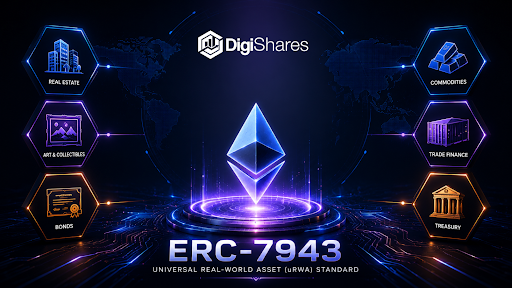
The Universal Real-World Asset (uRWA) standard is now specification-frozen and ready for production adoption across Ethereum and EVM-compatible networks
ERC-7943, the Universal Real-World Asset (uRWA) standard, has reached Final status within Ethereum’s formal standards process. The specification is now frozen – with its interface, error definitions, event signatures, and behavioral requirements fixed – and is available for production adoption across Ethereum and EVM-compatible networks.
ERC-7943 defines a minimal, vendor-neutral interface for the compliant tokenization of real-world assets. The standard addresses transfer validation, asset freezing, forced transfers, and enforcement actions without binding implementers to a specific identity provider, jurisdictional framework, or compliance stack. This approach enables institutions and developers to deploy regulated assets across jurisdictions while retaining flexibility over underlying compliance infrastructure.
“ERC-7943 gives institutions and developers a modular interface for compliance, transfer controls, and enforcement, so they can deploy regulated assets in any jurisdiction without depending on a single vendor’s stack,”
said Dario Lo Buglio, lead author of ERC-7943. “Compliance becomes pluggable since the standard separates the on-chain interface from the underlying KYC, sanctions, and jurisdiction logic.”
Final status represents the threshold for enterprise adoption in Ethereum’s standards process, as proposals may undergo substantial changes before reaching this stage. ERC-7943 attained Final status following multiple cycles of community review through Ethereum Magicians and the EIP working group. With the standard now finalized, institutions and infrastructure providers can build on a stable specification designed for long-term interoperability.
Early adoption is already underway. The Capital Markets and Technology Association (CMTA) has integrated ERC-7943 into recent releases of CMTAT, its open-source tokenization framework deployed in institutional initiatives globally. Chainlink has separately demonstrated compatibility through a public pull request tied to its Asset Compliance Engine (ACE). Brickken plans to integrate ERC-7943 into upcoming institutional infrastructure upgrades, with the standard expected to become the default framework across its product suite. These developments signal a transition from specification to active deployment across infrastructure and compliance environments.
The coalition supporting ERC-7943 has grown since its September 2025 announcement and now spans the full RWA stack, encompassing issuance platforms, infrastructure providers, exchanges, marketplaces, identity vendors, and audit firms. Backers and contributors include Bit2me, Brickken, Casper Network, CMTA, Compellio, Dekalabs, DigiShares, Forte Protocol, FullyTokenized, Propchain, RealEstate.Exchange, Stobox, and Zoth. Hacken and QuillAudits serve as security and audit partners.
The standard is open for adoption by issuers, infrastructure providers, and developers building tokenized financial instruments. Documentation, reference implementations, and community channels are available at erc7943.org. The full specification is published at eips.ethereum.org/EIPS/eip-7943.
About Bit2me
Bit2Me is the leading cryptoassets company in Spain, registered with the CNMV as a Crypto Asset Service Provider (CASP). The company has been building crypto infrastructure for more than 10 years and holds several cybersecurity and regulatory compliance certifications, including: ISO 27001 for Information Security Management; ISO 22301 for Business Continuity Management; ISO 37001 for Anti-Bribery and Corporate Ethics; ISO 37301 for Compliance Management Systems; UNE 19601 for Criminal Compliance Management Systems; and the CSA STAR Level 1 certification. https://bit2me.com/
About Brickken
Brickken is a global leader in the tokenization of real-world assets, offering a comprehensive SaaS platform that enables businesses to tokenize equity, debt, and revenue-sharing models. By integrating traditional finance with blockchain technology, Brickken provides tools to simplify asset management, enhance investor engagement, and unlock liquidity. With over $500 million in tokenized assets and a presence in 30 countries, Brickken is at the forefront of innovation in asset tokenization. To learn more about Brickken, visit www.brickken.com/
About Compellio
Compellio SA is a deeptech company headquartered in Luxembourg providing global infrastructure components for bridging the gap between web2 and web3 computing. Based on its patented technology, Compellio works with public and private organisations in driving regulatory-compliant solutions across multiple industries. Compellio’s tokenisation platform enables developers to abstract away the complexity of smart contracts and build standardised interoperability frameworks for the lifecycle management of their physical, digital, and hybrid assets. For more information, visit https://compellio.com
About Dekalabs
Dekalabs is a Valencia-based software development and digital transformation consultancy specializing in cutting-edge blockchain solutions. With a multidisciplinary and senior technical team, they deliver bespoke services spanning mobile applications, web applications, corporate solutions, UI/UX, and artificial intelligence (dekalabs.com).
About DigiShares
DigiShares is a market-leading provider of white-label software for the compliant issuance, management, and trading of tokenized real-world assets. The platform enables asset owners and fund managers to fractionalize assets, onboard global investors at low cost, and provide peer-to-peer or exchange-based liquidity through integrations with regulated venues such as RealEstate.Exchange. With more than 200 clients worldwide, offices in the US and Denmark, a network of 80+ legal partners, and integrations across Ethereum, Polygon, and other EVM chains, DigiShares offers one of the most flexible and customizable solutions in the industry. See www.digishares.io.
About Hacken
Hacken is an end-to-end blockchain security & compliance partner for digital assets. Unlike traditional providers, Hacken was born on blockchain. We combine deep Web3 expertise with enterprise-grade quality, AI-powered offensive security, and globally recognized certifications. Since 2017, Hacken has been trusted by 1,500 adopters including the European Commission, ADGM, MetaMask, Ethereum Foundation, and Binance to secure the new digital frontier. Visit www.hacken.io
About the Forte Protocol
The Forte Protocol is a next-generation blockchain infrastructure that unlocks tokenized economies, enabling developers to define, launch, and monetize their on-chain projects. Through its ecosystem of products and services, Forte Protocol is the infrastructure layer for safe, enduring digital economies that generate long-term value for developers and users. For more information, visit ForteFoundation.io
About FullyTokenized
FullyTokenized is a boutique development company specializing in custom blockchain, tokenization, and Web3 solutions. With a proven track record of delivering successful projects in highly regulated financial environments, including for Fortune Global 500 institutions, the company has contributed to projects representing more than $500M in tokenized value. FullyTokenized also empowers Web3 startups, helping them launch products in under 90 days and scale within the decentralized ecosystem. Visit https://www.fullytokenized.com to learn more.
About Propchain
Propchain is the technology vertical of Prop.com, building institutional-grade infrastructure for real estate financing and tokenized capital markets. Backed by Prop.com’s ~$150M in AUM and active operations across Europe and the UAE, Propchain connects real-world deal flow to digital rails for origination, compliant issuance, lifecycle servicing, investor reporting, and secondary distribution. The company is building one of the world’s first fully unified, standardized, verified data infrastructure layers for real estate—harmonizing operational, financial, and legal data into auditable records that enhance underwriting, monitoring, and transparency. Securitisations are issued out of Luxembourg, aligning with European regulatory frameworks and institutional best practice. Propchain’s product suite, including PropYield, is purpose-built to bridge high-quality real assets with modern market infrastructure, enabling scalable access to real estate yield while preserving rigorous compliance, governance, and data integrity.
About RealEstate.Exchange
RealEstate.Exchange (REX) is the world’s first licensed and regulated exchange purpose-built for tokenized real estate shares. REX combines decentralized finance technology with full compliance layers, enabling investors worldwide—both retail and institutional—to trade tokenized real estate shares directly from their self-custodial wallets. The platform offers instantaneous atomic-swap settlement, competitive listing fees, and a liquidity framework supported by the BRICK token. With its global legal network and partnerships with licensed entities, REX aims to become the go-to venue for secondary trading of tokenized real estate, see www.realestate.exchange.
About Stobox
Stobox is a turnkey asset tokenization provider and technology company focused on building the infrastructure for compliant digital assets. It enables businesses and individuals to transform real-world assets into tokenized instruments that are transparent, liquid, and accessible. Core solutions include Stobox 4 for token issuance and management, the STV3 Protocol for compliant token frameworks, Stobox DID for digital identity, and the Stobox Oracle for real-world data integration. Its structured methodology supports issuers across every stage of the tokenization lifecycle, from legal readiness to fundraising and secondary markets. Companies benefit from streamlined access to capital and global investors, while investors gain exposure to previously illiquid opportunities. https://www.stobox.io/
About Zoth
Zoth is reimagining global finance with the world’s first full-stack, modular Stablecoin Operating System, enabling enterprises and institutions to launch stablecoins and tokenized RWAs 90% faster and 70% cheaper. Its core products include FAAST (compliant tokenization infrastructure), Stablecoin Studio (stablecoin-in-a-box), ZeUSD (yield-bearing stablecoin), and PayX7 (stablecoin payments infrastructure).
Zoth delivers a full-stack suite spanning tokenization, payments, and yield management, supported by BVI & CIMA-regulated fund structures across 127 countries. Recognized by Messari as a top player in PayFi and RWAFi, Zoth combines compliance, scalability, and innovation to power the future of real-world finance. Visit https://zoth.io/.
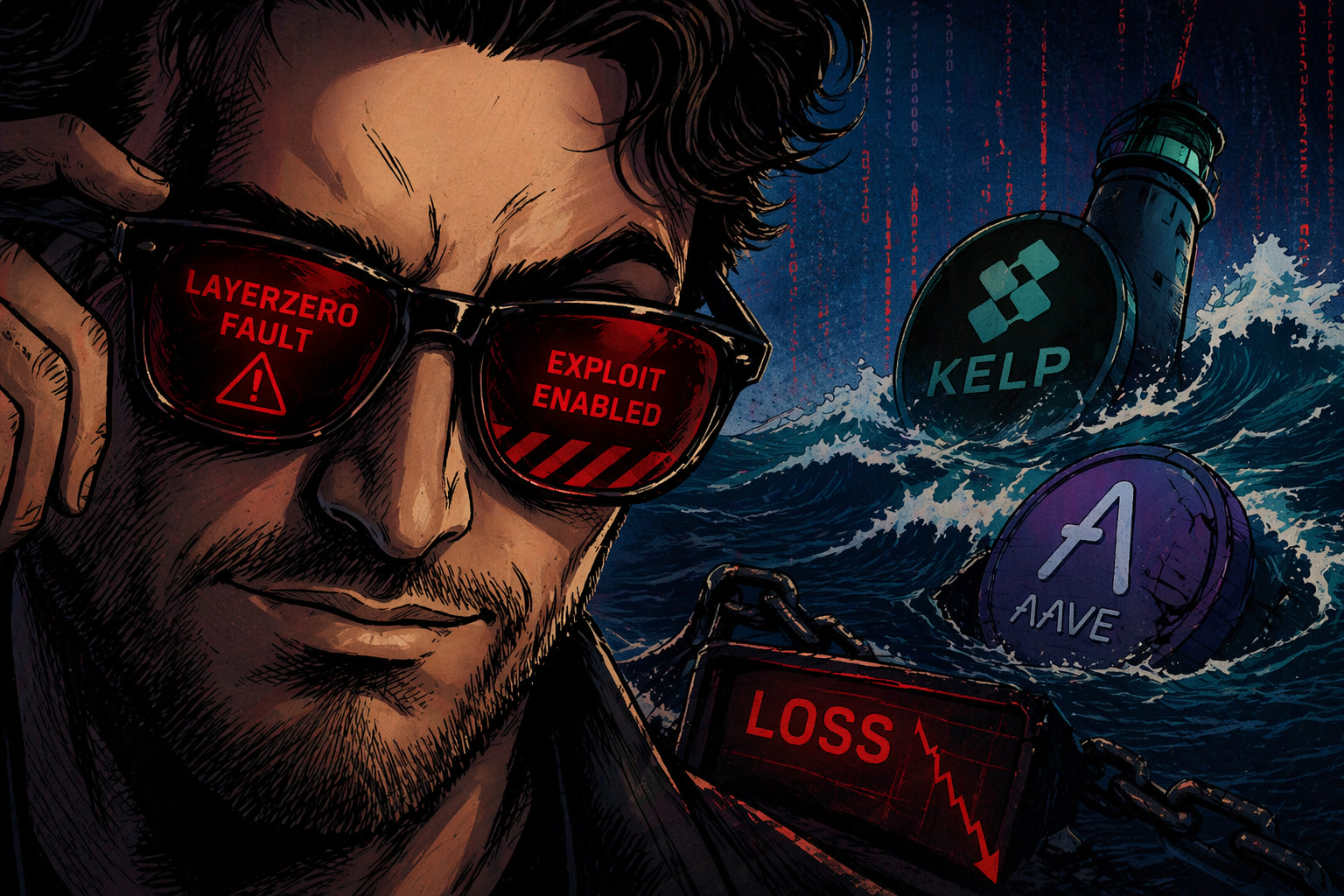
The fallout from the recent Kelp DAO exploit continues to ripple across the crypto ecosystem, with LayerZero pointing to a flawed system setup as the root cause of the attack.
Single Point of Failure Led to Exploit
LayerZero said the breach stemmed from how Kelp DAO configured its decentralized verifier network (DVN).
The attacker drained roughly 116,500 rsETH, valued at nearly $293 million, from Kelp’s LayerZero-powered bridge.
According to LayerZero:
- Kelp relied on a 1/1 DVN setup, meaning only one verifier was used
- This created a single point of failure
- Prior recommendations to diversify verifiers were not followed
As a result, the attacker was able to exploit the system without needing to bypass multiple verification layers.
LayerZero Distances Itself
LayerZero stressed that the issue was not a flaw in its protocol, but rather how Kelp implemented it.
The company is now:
- Urging all projects to adopt multi-DVN configurations
- Warning it may stop supporting apps that continue using single-verifier setups
Aave Hit With $195M in Bad Debt
The impact quickly spread to Aave, where the attacker used stolen assets as collateral to borrow funds.
This led to:
- Around $195 million in bad debt
- A sharp drop in Aave’s total value locked
- Billions withdrawn by users amid rising concerns
Liquidity issues have also emerged, especially around Ether-based lending pools.
Liquidity Risks Raise Alarm
Reduced liquidity on Aave is now creating additional risks.
Analysts warn that:
- Markets are nearing 100% utilization
- A 15% to 20% drop in Ether price could trigger further instability
- Liquidations may fail under current conditions
To limit further damage, Aave has frozen rsETH markets across its platforms.
Who Covers the Losses?
With no clear recovery plan, debate has intensified over who should absorb the losses.
Suggestions from industry figures include:
- Negotiating with the attacker for a partial return of funds
- Using ecosystem funds to cover losses
- Spreading losses across users
- Attempting a rollback to pre-hack balances
Each option carries trade-offs, and no consensus has emerged.
Broader Implications for DeFi
The incident highlights how interconnected DeFi protocols can amplify risk.
A vulnerability in one protocol can quickly:
- Spill into lending markets
- Trigger liquidity crises
- Impact multiple platforms simultaneously
Security Practices Under Scrutiny
LayerZero’s criticism of Kelp’s setup underscores a key lesson: security configurations matter as much as the underlying technology.
As protocols grow more complex, ensuring robust multi-layer verification systems may become essential to preventing similar exploits.
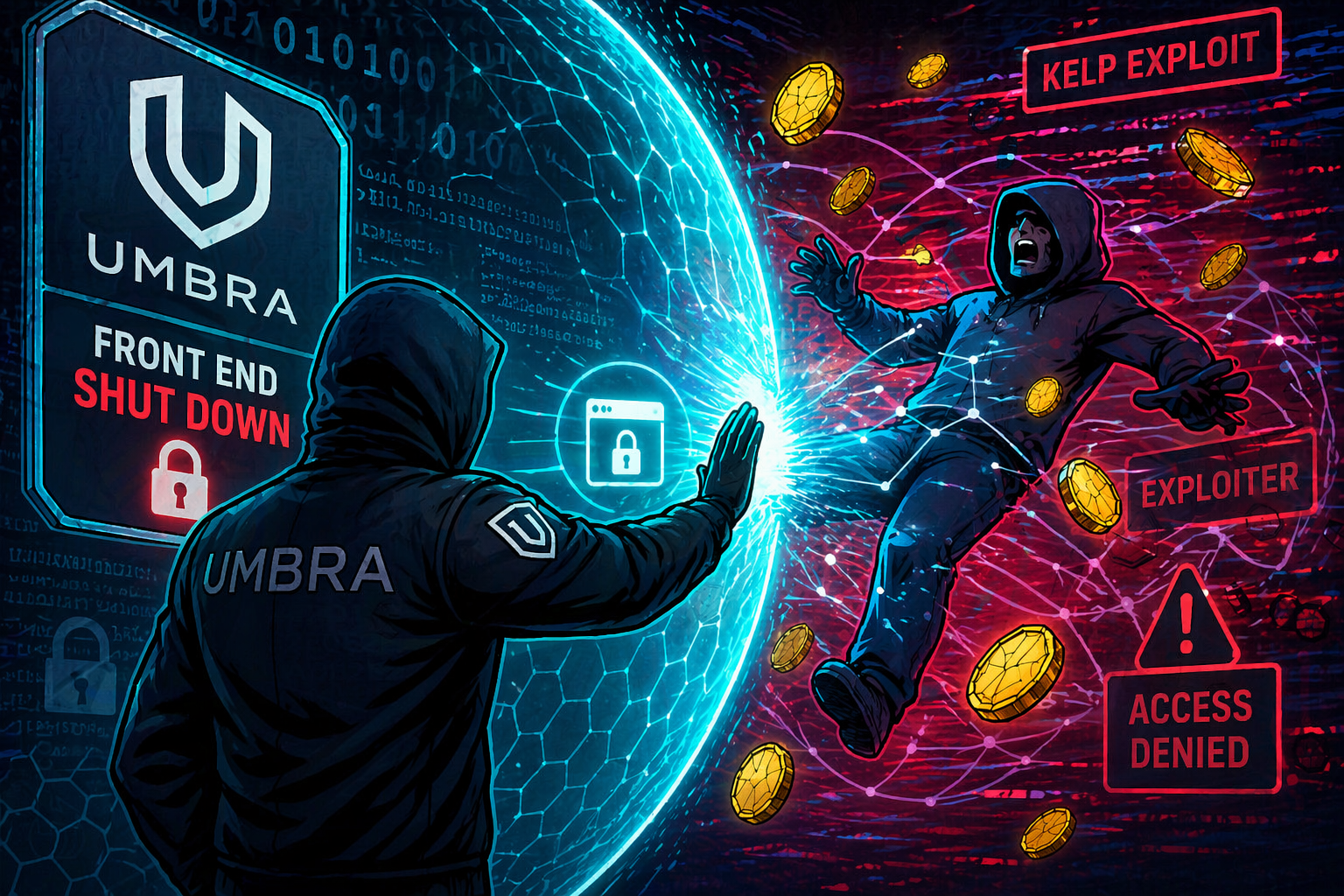
Privacy-focused crypto protocol Umbra has temporarily taken its front-end interface offline in an effort to slow down hackers attempting to move stolen funds.
The move comes amid heightened scrutiny following a series of major exploits across the crypto ecosystem.
Front-End Taken Offline After Suspicious Activity
Umbra said it identified roughly $800,000 in stolen funds being routed through its protocol. In response, the team placed its hosted front end into maintenance mode.
The protocol noted that the interface will remain offline until it is confident that restoring it will not interfere with ongoing recovery efforts.
This action follows the recent exploit of Kelp DAO, where attackers stole over $280 million, with some reports linking the movement of funds through Umbra.
Limits of Control in Decentralized Systems
Despite shutting down its front end, Umbra acknowledged a key limitation: it cannot stop users from interacting directly with its smart contracts.
Because the protocol is open-source:
- Users can access it through self-hosted interfaces
- Alternative front ends can be deployed independently
- Smart contracts remain fully operational onchain
This highlights the broader challenge of controlling decentralized infrastructure once it is live.
Debate Over Responsibility Intensifies
The situation has reignited debate around developer responsibility in decentralized systems.
Roman Storm, co-founder of Tornado Cash, argued that disabling a front end may not be enough to satisfy regulators.
Storm, who was previously convicted in a high-profile case, said authorities may still view control over a user interface as control over the protocol itself.
He warned that:
- Modifying or shutting down a front end could be interpreted as governance authority
- Developers may still face legal accountability regardless of decentralization claims
Umbra Defends Its Design
Umbra pushed back on claims that its protocol is useful for laundering funds.
The team emphasized that:
- The protocol primarily protects the receiver’s identity, not the sender’s
- Transactions remain traceable onchain
- Stolen funds routed through Umbra can still be identified
It also confirmed that it is working with security researchers to track suspicious activity.
Ongoing Pressure on Privacy Tools
The incident reflects growing pressure on privacy-focused crypto tools as regulators and law enforcement target illicit fund flows.
While some platforms have taken steps to freeze or block hacker activity, decentralized protocols like Umbra face structural limitations in enforcement.
A Balancing Act Between Privacy and Security
Umbra’s decision underscores a broader tension in crypto:
- Preserving user privacy
- Preventing misuse by bad actors
As exploits continue and scrutiny increases, protocols may face tougher choices around how much control they can or should exert over their systems.

ERC-7943 Enters Final Status as Ethereum’s Framework for Real-World Asset Tokenization

TheContentForge Explodes Onto the Scene as the AI-Powered Content OS Built for Web3’s Biggest Brands

Nodspace – An Innovative Next-Generation Decentralized Finance Platform
Nodspace – An Innovative Next-Generation Decentralized Finance Platform

Bitcoin Whales Accumulating Rapidly as BTC Nears $80K, Signals Potential Bull Run

Bitcoin Eyes Trend Reversal as Analysts Highlight Key $80K Breakout Level

Cardalonia Aiming To Become The Biggest Metaverse Project On Cardano

P2P2C BREAKTHROUGH CREATES A CONNECTION BETWEEN ETM TOKEN AND THE SUPER PROFITABLE MARKET

WOM Protocol partners with CoinPayments, the world’s largest cryptocurrency payments processor

ETHERSMART DEVELOPER’S VISION MADE FINTECH COMPANY BECOME DUBAI’S TOP DIGITAL BANK

Project Quantum – Decentralised AAA Gaming

WOM Protocol Recommended by Premier Crypto Analyst as only full featured project for August
-
 Crypto4 years ago
Cardalonia Aiming To Become The Biggest Metaverse Project On Cardano
-
 Press Release6 years ago
P2P2C BREAKTHROUGH CREATES A CONNECTION BETWEEN ETM TOKEN AND THE SUPER PROFITABLE MARKET
-
 Blockchain6 years ago
WOM Protocol partners with CoinPayments, the world’s largest cryptocurrency payments processor
-
 Press Release6 years ago
ETHERSMART DEVELOPER’S VISION MADE FINTECH COMPANY BECOME DUBAI’S TOP DIGITAL BANK
-
 Press Release5 years ago
Project Quantum – Decentralised AAA Gaming
-
 Blockchain6 years ago
WOM Protocol Recommended by Premier Crypto Analyst as only full featured project for August
-

 Press Release6 years ago
ETHERSMART DEVELOPER’S VISION MADE FINTECH COMPANY BECOME DUBAI’S TOP DIGITAL BANK
-
 Blockchain6 years ago
1.5 Times More Bitcoin is purchased by Grayscale Than Daily Mined Coins