
Blockchain
A hands-on experience on some of the most popular smart contract platforms

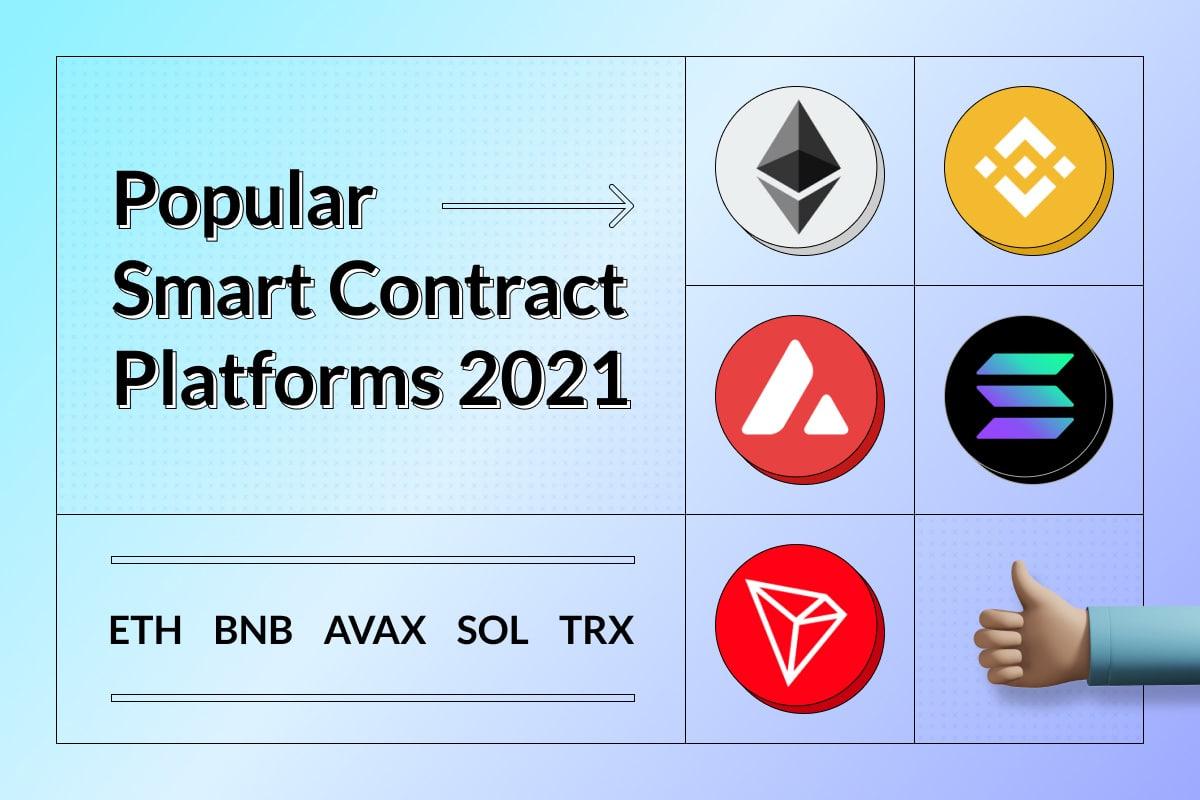
In 2021, many smart contract platforms competed for users’ attention and attempted to be the next Ethereum killer. The terms DeFi, GameFi, and NFT, have been all over the media lately, and any of these would not be possible without smart contracts. As more smart contract platforms are introduced, it becomes hard for newcomers to choose which is right for them. This article will examine some of the most popular smart contract platforms and share our hands-on experience with them.
Ethereum
Token: ETH
TPS: 10
Ethereum is the world’s first smart contract platform. Developers create decentralized applications (dApps) on the Ethereum Virtual Machine (EVM) with an object-oriented programming language called solidity. Users can interact with dApps that operate autonomously. Since Ethereum is the first smart-contract-enabled blockchain platform, it has a lot of active developers and has the most Total Value Locked (TVL) in DeFi as far as blockchains are concerned. However, despite being the most popular smart contract platform, it still has a few downsides that make us try to stay away from it when possible. One drawback is the slow transaction speed since Ethereum can only process around 10 transactions per second (TPS). The other problem is the hefty transaction fee it charges when the network is busy, in which the fee may sometimes cost more than the transaction per se.
Binance Smart Chain
Token: BNB
TPS: 60
Binance Smart Chain (BSC) is a smart contract blockchain that is fully compatible with the EVM, so developers can leverage existing tools to write dApps without having to learn an entirely new language. In addition, the increase in transaction speed compared to Ethereum is welcoming. BSC started to gain traction earlier last year, it forked a lot of Ethereum projects that bootstrapped the entire ecosystem, and in the latter part of last year, we see GameFi booms on BSC. One most notable concern that many community members have is the centralization of the Binance chain since Binance is a centralized exchange, and most of its validators are connected to Binance. Nonetheless, BSC has a unique and strategic position in the entire crypto ecosystem.
Avalanche
Token: AVAX
TPS: 4,500
Avalanche is an open-source platform for launching DeFi applications and enterprise blockchain deployments in one interoperable, highly scalable ecosystem. Avalanche is the first smart contract platform that confirms transactions in under one second with finality on every block. It provides a new consensus mechanism with an adaptable platform optimized for enterprise adoption and developer needs while solving the challenging problems of scaling and security. The AVAX rush incentive plan also ignited the whole Avalanche ecosystem last year, with large price swings in the latter half of the year. We miss the low transaction fees that Avalanche offered at the very start. Another concern we have is their failure to keep up to date with various promises such as burning the foundation’s staking rewards and the introduction of feeless transactions. If Avalanche could significantly reduce its fees and improve communication while keeping its promises, it’s still a smart contract platform worth keeping an eye on.
Solana
Token: SOL
TPS: 2,000
Solana is a high-performance open-source blockchain. It provides a platform for dApps and next-generation protocols. With its Proof of History (PoH) consensus mechanism, the Solana blockchain allows for breakneck transaction speeds, claiming to scale to over 50,000 TPS on an open network, which is said to be possible due to Solana’s novel approach.This deterministic checkpointing mechanism that is used in place of synchronous consensus. However, Solana’s actual TPS is around 2,000, with more than 3/4 of these transactions being vote transactions. The seemingly inflated TPS widely promoted to the public might reflect the questionable design of the Solana platform. Even though it was once regarded as a crypto rising star, with its six blockchain outages happening in the last month alone, Solana is facing fundamental questions about its network stability, as well as the ability to maintain itself as a Wall Street darling.
TRON
Token: TRX
TPS: 2,000
TRON is an innovative open-source blockchain that focuses on providing a cost-effective settlement solution with the ultimate goal of decentralizing the internet. The high level of scalability offered by the system and its mandate for low costs are attractive propositions for those considering taking their first step into the crypto world. Since last April, the amount of Tether USDT on TRON has surpassed Ethereum to become the No.1 worldwide. TRON became the preferred blockchain for many when transferring and converting stablecoins because of its low fees. The TRON network’s increasing dApps and NFT projects also attracted many new users from other blockchains. However, we noticed that newcomers sometimes brought up the concept of bandwidth and energy on the TRON network. Although understanding bandwidth and energy is not necessary to make a transaction, users should be encouraged to look into them as utilizing these resources by staking a certain amount of TRX would enable one to send transactions or interact with smart contracts for free.
Throughout last year, we saw many smart contract platforms rising to compete with Ethereum, and each of them has its pros and cons. There is an incredibly increasing demand for a good smart contract platform, and every platform will eventually have its place in the ecosystem. Investors, users, and developers should take a closer look at each of these blockchains and pick the one that matches their needs best.

Telcoin has done something no other crypto company has managed to do. After years of regulatory groundwork, the company has switched on real US bank accounts tied directly to an on-chain dollar stablecoin — and they’re open to US residents right now through version 5 of the Telcoin Wallet.
This isn’t a pilot program or a regulatory sandbox experiment. Telcoin Digital Asset Bank is a chartered depository institution, the first Digital Asset Depository Institution in the United States, operating under a full banking framework rather than the non-depository trust structures most of its peers have pursued.
How the Accounts Actually Work
The eUSD accounts link directly to Telcoin’s bank-issued on-chain stablecoin, backed by US dollar deposits and short-term Treasuries held in reserve. The integration means customer deposits directly back the on-chain tokens — a model that’s structurally different from how Tether or Circle operate, where stablecoin issuance and depository banking exist in separate legal entities with different regulatory treatment.
The result is what Telcoin describes as seamless movement of value between traditional banking infrastructure and blockchain rails under a single account. Users holding eUSD in Wallet V5 are holding a bank-issued stablecoin backed by their own deposits, not a token issued by a non-bank entity operating outside the traditional depository system.
That distinction carries real weight in the current regulatory environment. Federal regulators have repeatedly flagged systemic risk concerns around stablecoins issued outside the banking framework. Telcoin’s model addresses those concerns directly — not by lobbying for exceptions, but by operating within the full banking regulatory structure from day one.
The Regulatory Foundation That Made This Possible
The charter approval from the Nebraska Department of Banking and Finance didn’t happen quickly or accidentally. The groundwork was laid in 2021 when then-Nebraska state legislator Mike Flood — now a US Representative — introduced the Nebraska Financial Innovation Act. That legislation passed the same year and created the legal framework for Digital Asset Depository Institutions to exist in the United States.
Telcoin’s charter under that Act, combined with alignment to federal GENIUS Act guidelines, gives the company a unique position: the ability to issue stablecoins, accept customer deposits, and process eUSD payments all under a single charter. Most blockchain companies operating in the stablecoin space have to navigate multiple regulatory relationships to achieve the same outcome. Telcoin doesn’t.
The broader context matters here too. Bloomberg reported a 70% increase in stablecoin usage since July, driven in significant part by the passage of the GENIUS Act providing a federal regulatory framework for stablecoins. Telcoin’s bank-issued approach positions it as one of the few players that was already operating in compliance with that framework before it became a federal requirement rather than scrambling to adapt after the fact.
TEL Responds to the News
Markets didn’t need long to react. The TEL token jumped roughly 17% on the announcement and daily trading volume spiked more than 500% — a response that reflects how much investor appetite exists for projects with tangible, verifiable regulatory footing rather than regulatory aspirations.
The volume spike in particular is telling. A 500% surge in daily trading activity suggests the news reached well beyond the existing Telcoin holder base and pulled in traders who had been watching from the sidelines waiting for exactly this kind of concrete milestone.
For the stablecoin market more broadly, Telcoin’s launch introduces a genuinely new model — one where the issuer is also the bank, the deposits are real, and the regulatory framework is a full banking charter rather than a workaround. Whether that model attracts meaningful market share from Tether and Circle’s combined dominance is the longer-term question. The infrastructure to compete is now live.
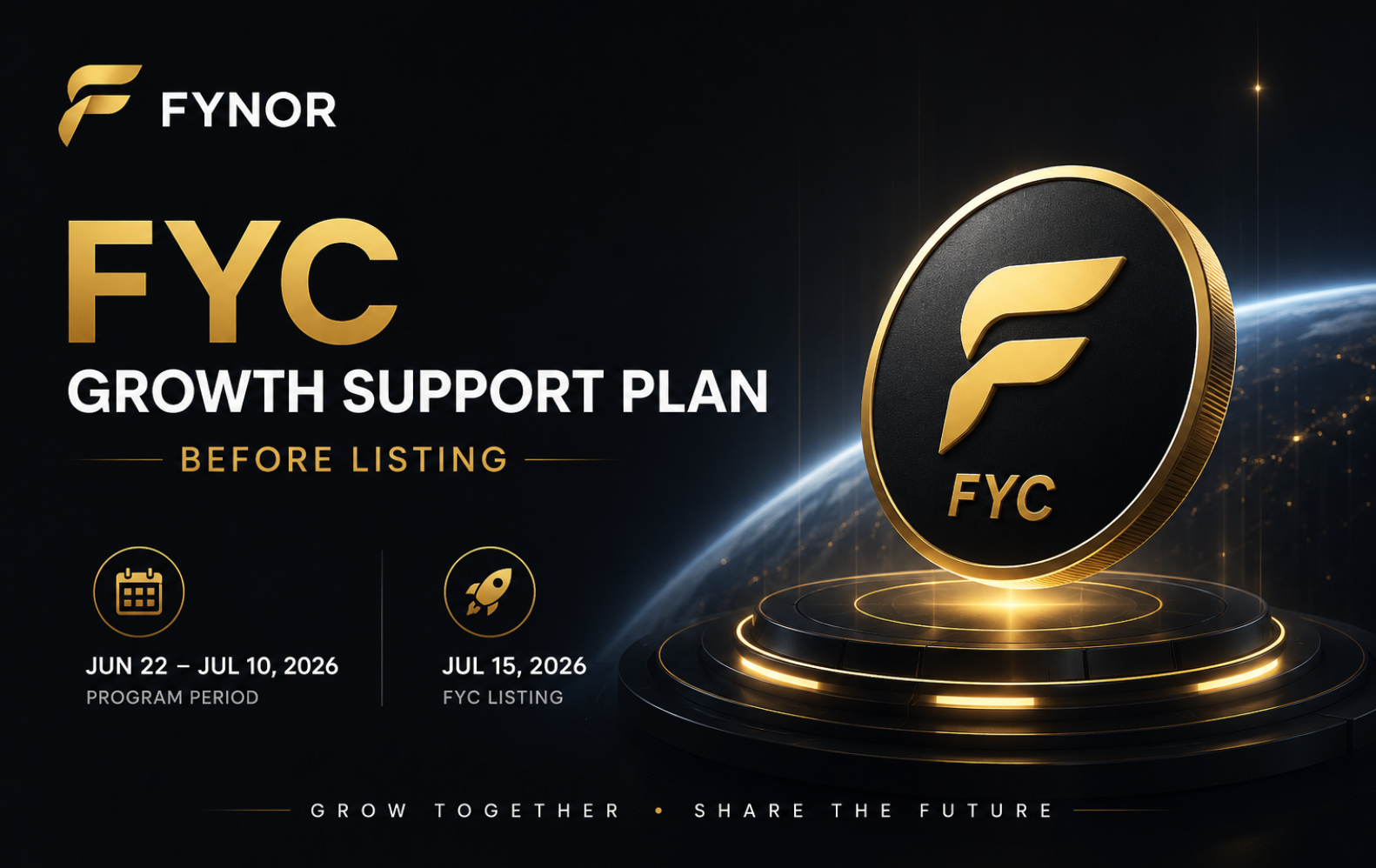
As part of the upcoming launch of the FYNOR platform token FYC, FYNOR is officially introducing the FYC Ecosystem Growth Support Program, designed to strengthen platform liquidity, expand ecosystem participation, and support sustainable community growth.
Program Period: June 22, 2026 – July 10, 2026
FYC Listing Date: July 15, 2026
Program Highlights
- Trading Support Allocation
During the campaign period, eligible users who allocate funds to their settlement accounts will receive an equivalent trading support allocation from the platform.
This additional allocation is intended to enhance strategy participation and improve ecosystem activity while maintaining users’ original capital ownership.
Upon completion of the campaign, the platform-provided support allocation will be automatically withdrawn, while users retain their original funds and any applicable trading results generated during the event period.
2. FYC Reward Distribution
Following the conclusion of the campaign, participants will receive FYC rewards based on their qualified participation amount.
The reward distribution will be completed after the official launch of FYC on July 15, 2026.
Ecosystem Development Initiative
The FYC Growth Support Program represents an important milestone in the development of the FYNOR ecosystem, focusing on:
• Expanding platform participation
• Enhancing ecosystem liquidity
• Supporting sustainable token growth
• Strengthening long-term community value
Important Notice
To ensure a stable operating environment and support the successful launch of FYC, settlement account assets participating in the program will remain within the strategy system during the campaign period.
Normal transfer functionality between settlement and spot accounts will resume after the campaign concludes on July 10, 2026.
FYNOR remains committed to building a transparent, technology-driven digital asset ecosystem where users can participate in the long-term growth of the platform.
#FYNOR #FYC #Crypto #Web3 #Blockchain #DigitalAssets #Trading #AITrading #TokenLaunch #EcosystemGrowth
Blockchain
StakeStone (STO) Faces Supply Pressure and Trust Questions After Volatile April and a Major June Unlock

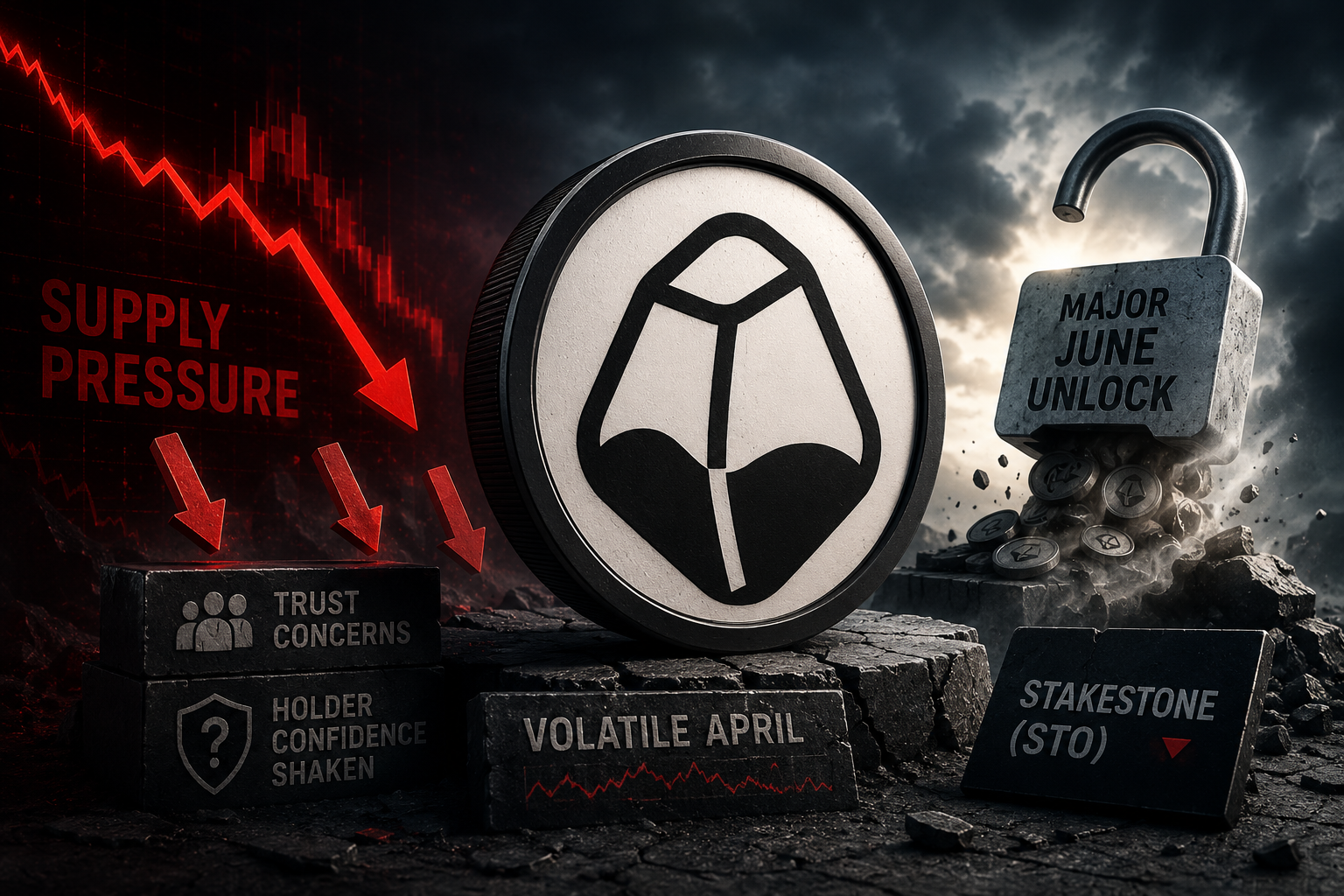
StakeStone has had a turbulent few months, and the chart tells the story bluntly. STO hit an all-time high of $1.75 on April 2, 2026, before collapsing roughly 97% to trade around $0.05 at the time of writing. That kind of round-trip in under three months raises hard questions — not just about market conditions, but about what actually drove the move and who benefited from it.
The answers don’t fully flatter the project’s near-term outlook.
The April Pump and What On-Chain Data Showed
In early April, STO rocketed from $0.11 to nearly $1.87 — a gain of over 1,600% within two days — before sharply correcting. On-chain analysis revealed the pump was preceded by a whale withdrawing 25.5 million STO, representing 11.32% of supply, from Binance, tightening exchange liquidity. The same entity later deposited 28 million tokens to Gate.io, signaling a distribution phase.
Shortly after, blockchain analytics spotted the StakeStone team transferring 16 million STO tokens worth approximately $2.87 million from its official distribution contract to a Bitget deposit wallet. The combination of whale activity and team transfers landing on exchange in the aftermath of a parabolic move was enough to shake confidence among holders who bought into the rally.
On-chain data also shows market makers including Wintermute and Amber active in STO, suggesting concentrated holdings that amplify volatility in both directions.
The June 3 Unlock Added More Pressure
Just as the token was trying to find a floor, a significant supply event arrived. A major unlock of 20.17 million STO — representing 2.02% of total supply and 8.95% of circulating supply, valued at approximately $18.22 million — occurred on June 3, 2026. The unlock ranked among the top five by dilution percentage for that week across all of crypto, with a 9.48% circulating supply increase arriving at exactly the wrong time — immediately after a sharp price decline and during a period of damaged community sentiment.
STO is currently trading around $0.05 with a market cap of approximately $11.4 million and a fully diluted valuation of $50.6 million against a total supply of 1 billion tokens — a ratio that highlights just how much supply pressure remains ahead regardless of near-term price direction.
What StakeStone Actually Builds
The protocol itself has genuine infrastructure value that the recent volatility has overshadowed. StakeStone is an omnichain liquidity infrastructure protocol designed to solve liquidity fragmentation by letting users stake ETH and BTC to receive liquid tokens usable across 20+ chains. Its core products include STONE, a yield-bearing liquid ETH token, SBTC and STONEBTC for Bitcoin exposure, and LiquidityPad — a customizable vault system for protocols to direct incentives and attract specific liquidity flows.
The most significant fundamental catalyst in the project’s recent history is its partnership with World Liberty Finance. StakeStone serves as the primary minting and cross-chain distribution channel for WLFI’s USD1 stablecoin, which grew to a $2.1 billion issuance within 100 days of launch. The integration aims to natively distribute USD1 across 20+ blockchains and embed it in DeFi yield products. If that partnership scales, it could drive meaningful protocol usage that the current market cap doesn’t reflect.
The STO governance model uses a veSTO vote-escrowed system where holders lock tokens for voting power and protocol emissions control, alongside a Swap and Burn mechanism where a portion of STO used for ecosystem bribes is burned — creating deflationary pressure over time. A governance DAO launch is also on the roadmap, which would formalize this structure.
Technical indicators are currently net bearish, with 23 signals pointing negative against 7 bullish, and the RSI sitting around 30.80 — near oversold territory but not yet showing a confirmed reversal signal. For a token that’s lost 97% from its peak in under three months, rebuilding confidence will require more than a governance announcement. The USD1 partnership gives StakeStone a legitimate growth narrative — whether it’s enough to offset supply dynamics and shaken sentiment is the question the market is working through.

Coinbase Base L2 Experiences Two-Hour Outage Following Consensus Failure

Sui rolls out gasless stablecoin transfers for agents

T-RIZE (RIZE) Surges 288% in a Week as $500M Canton Network Bond Programme and New Hire Signal Institutional Pivot

Heima (HEI) Surges 73% as Community Votes to Burn 16.5 Million Tokens

Unibase (UB) Pulls Back 30% After 10x Rally but ERC-8183 Agent Market Launch Keeps the Thesis Intact

Bless Network (BLESS) Recovers From All-Time Low as DePIN AI Compute Narrative Fights Back

Cardalonia Aiming To Become The Biggest Metaverse Project On Cardano

P2P2C BREAKTHROUGH CREATES A CONNECTION BETWEEN ETM TOKEN AND THE SUPER PROFITABLE MARKET

WOM Protocol partners with CoinPayments, the world’s largest cryptocurrency payments processor

ETHERSMART DEVELOPER’S VISION MADE FINTECH COMPANY BECOME DUBAI’S TOP DIGITAL BANK

Project Quantum – Decentralised AAA Gaming

WOM Protocol Recommended by Premier Crypto Analyst as only full featured project for August
-
 Crypto4 years ago
Cardalonia Aiming To Become The Biggest Metaverse Project On Cardano
-
 Press Release6 years ago
P2P2C BREAKTHROUGH CREATES A CONNECTION BETWEEN ETM TOKEN AND THE SUPER PROFITABLE MARKET
-
 Blockchain6 years ago
WOM Protocol partners with CoinPayments, the world’s largest cryptocurrency payments processor
-
 Press Release6 years ago
ETHERSMART DEVELOPER’S VISION MADE FINTECH COMPANY BECOME DUBAI’S TOP DIGITAL BANK
-
 Press Release5 years ago
Project Quantum – Decentralised AAA Gaming
-
 Blockchain6 years ago
WOM Protocol Recommended by Premier Crypto Analyst as only full featured project for August
-

 Press Release6 years ago
ETHERSMART DEVELOPER’S VISION MADE FINTECH COMPANY BECOME DUBAI’S TOP DIGITAL BANK
-
 Blockchain6 years ago
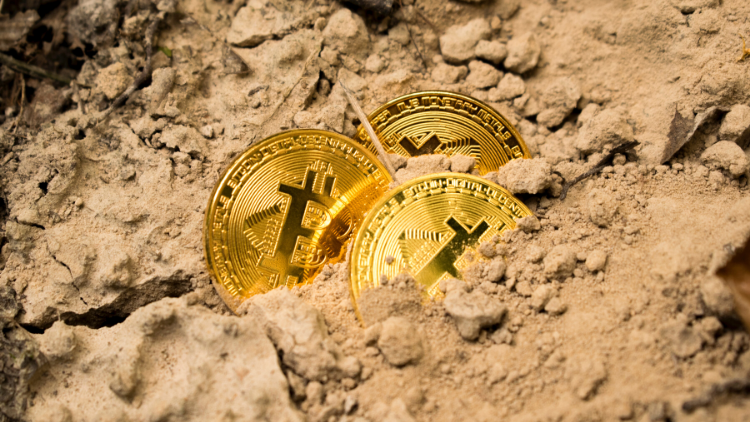
1.5 Times More Bitcoin is purchased by Grayscale Than Daily Mined Coins