
Tech
World Chain Activates Priority Blockspace for Humans


TL;DR
- World Chain activated Priority Blockspace for Humans, reserving block space for verified users during congestion without gas fee auctions.
- The feature is already live for 13 million verified users and was audited by Nethermind after public tests with Flashbots and Alchemy.
- Despite its expansion in the U.S., World has been suspended in Spain and Portugal over biometric data use in its digital identity network.
World Chain, the digital identity network tied to World — the project founded by Sam Altman — has activated a new feature on its mainnet called Priority Blockspace for Humans.
This tool automatically reserves part of each block for transactions from verified human users whenever the network faces congestion, eliminating gas fee auctions during those critical periods.
Priority Blockspace for Humans is live on World Chain. Introducing a new dimension of transaction ordering: humanness.
Only possible on World, the real human network. pic.twitter.com/AvLfeRGEXX
— World (@worldcoin) June 26, 2025
The goal is to guarantee that essential services like identity verifications, app access, and incentive claims remain operational and accessible without requiring users to pay elevated fees. The feature is already available for over 13 million people who completed biometric verification through the Orb device and aims to encourage developers to build applications within its ecosystem.
Priority Blockspace for Humans was tested on a public testnet with support from Flashbots and Alchemy and underwent independent audits by Nethermind. It was also integrated into World Chain’s Block Builder and Rollup Boost — a modular solution compatible with OP Stack that enables customized transaction ordering across various networks.

World Chain Seeks to Prioritize Humans Over Automated Bots
The company argues this approach prioritizes real human users over automated bots and maximizes efficiency during periods of high demand. According to Steven Smith, Vice President of Engineering at Tools for Humanity, the feature aims to make World Chain a more accessible and functional network for individuals while still taking advantage of the scalability and automation that artificial intelligence enables.
Since April, World Chain has expanded into six U.S. cities after previously avoiding the market due to restrictions around token distribution. However, its growth continues amid regulatory scrutiny. Authorities in countries like Spain and Portugal suspended World’s operations over privacy concerns tied to its biometric data practices — a controversy that remains unresolved.
The project maintains its target of surpassing one billion verified users and building blockchain infrastructure centered on digital identity, combining on-chain verification tools with custom solutions for prioritizing human transactions.
The post World Chain Activates Priority Blockspace for Humans appeared first on The Cryptocurrency Post.




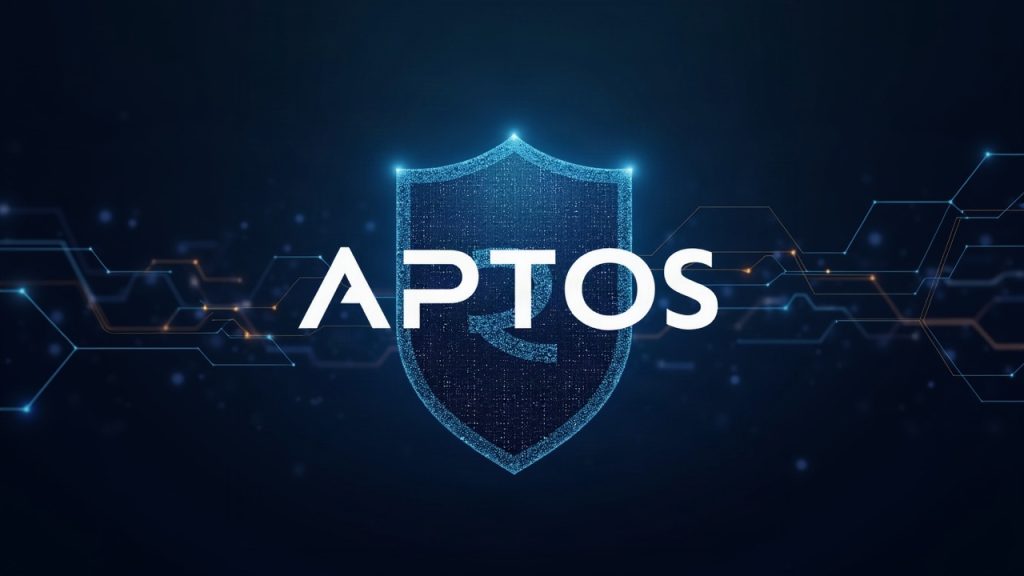
Aptos said its Encrypted Mempool is now live on mainnet, giving users the option to encrypt transaction details before block ordering is finalized. The company said the feature is designed to reduce maximal extractable value, or MEV, which can include practices such as front-running and sandwich attacks.
In an official blog post, Aptos described the rollout as an opt-in feature at the transaction level. The network said the payload is encrypted on the client side, ordered while still encrypted, and only decrypted by validators after block finalization.
The company’s official account and Aptos Labs also confirmed the mainnet launch on X, with the Labs post adding that encryption happens before submission and that decryption takes place only after block ordering is complete. That sequence is intended to keep transaction contents hidden during the period when they could otherwise be observed and used for MEV extraction.
Opt-in design keeps the feature at the transaction level
Aptos framed the launch as a user choice rather than a default network setting. According to the company, Encrypted Mempool can be enabled per transaction, allowing users to decide when they want that added layer of protection.
The mainnet launch means the feature is no longer just a technical concept or test-stage mechanism. It is now part of the live Aptos network, with the practical effect depending on whether users choose to activate it for individual transactions.
The post Aptos brings Encrypted Mempool to mainnet in move aimed at lowering MEV risk appeared first on The Cryptocurrency Post.

An official Exploit Summit post said @ExploitSummit that @xavi3rlu announced a partnership between pareton_ai and @engyai aimed at optimizing Engy inference latency and throughput using SN10 work.
@xavi3rlu announces a partnership between @pareton_ai and @engyai at Exploit Summit.
The goal: optimise Engy’s inference setup for lower latency and higher throughput, bringing Bittensor’s SN10 optimisation work to another provider’s customers. pic.twitter.com/id3V8uWUUy
— Exploit Summit (@ExploitSummit) September 29, 2026
The announcement frames the collaboration as a technical optimization effort rather than a broader product launch. According to the conference account, the work is intended to improve Engy’s inference performance through SN10-related optimization, with the stated goal of supporting Engy customers.
That is the clearest confirmed detail currently available: the partnership was presented publicly at the event, and the stated focus was on latency and throughput. No additional operational specifics were included in the post, such as implementation timing, deployment scope or whether the optimization is already live for users.
SN10’s role in the announcement
The mention of SN10 places Bittensor-related optimization work at the center of the update, but the announcement does not spell out technical mechanics beyond performance improvements for inference workloads. The post does not describe any token, market or governance implications, and it does not indicate whether the collaboration changes access, pricing or product availability.
For readers following AI-linked crypto projects, the update is best understood as a partnership claim around infrastructure performance. It signals that Pareto AI and Engy AI are positioning SN10 work as part of an effort to make inference more efficient, but the announcement itself stays narrow in scope.
The post Bittensor SN10 Work Tied to Pareto AI and Engy AI at Exploit Summit appeared first on The Cryptocurrency Post.

BNB Chain said NodeOps is now a deployment option in BNB Agent Studio v4, allowing builders to move from a prompt to a running agent without creating a cloud account or configuring infrastructure.
The update is part of a broader v4 release for BNB Agent Studio, which BNB Chain described as aimed at reducing the manual steps between writing a prompt and getting an agent live. In the company’s framing, the new NodeOps path removes a setup layer that would normally sit between development and deployment.
NodeOps also said agents can go live in BNB Agent Studio v4 using its infrastructure without manual setup. BNB Chain’s blog post described NodeOps alongside AWS and Azure as live deployment options.
The same release also adds stablecoin payment support for agents, with USDT, USDC and USD1 now working alongside $U. BNB Chain said wallet setup, funding and password handling are now automatic, while documentation, error messages and feedback tools have been improved to reduce friction for developers.
The changes make the studio feel more like a streamlined build environment than a setup-heavy toolchain, but the announcement remains centered on deployment convenience rather than a broader shift in the agent market. For developers using the platform, the practical change is that the path from prompt to live agent now appears to involve fewer manual steps.
The post BNB Chain Agent Studio v4 adds NodeOpsHQ for prompt-to-agent deployment appeared first on The Cryptocurrency Post.

Aptos brings Encrypted Mempool to mainnet in move aimed at lowering MEV risk

RWA WEEK Singapore Announces New Wave of Institutional Speakers as October Event Draws Closer

Bittensor SN10 Work Tied to Pareto AI and Engy AI at Exploit Summit

BNB Chain Agent Studio v4 adds NodeOpsHQ for prompt-to-agent deployment

BNB Chain releases Agent Studio v4 with simplified AI agent deployment and stablecoin support

ChainUp Brings The Institutional Ark to TOKEN2049 Singapore, Focusing on Digital Asset Infrastructure and High-Value Deal Flow

Cardalonia Aiming To Become The Biggest Metaverse Project On Cardano

P2P2C BREAKTHROUGH CREATES A CONNECTION BETWEEN ETM TOKEN AND THE SUPER PROFITABLE MARKET

WOM Protocol partners with CoinPayments, the world’s largest cryptocurrency payments processor

ETHERSMART DEVELOPER’S VISION MADE FINTECH COMPANY BECOME DUBAI’S TOP DIGITAL BANK

Project Quantum – Decentralised AAA Gaming

WOM Protocol Recommended by Premier Crypto Analyst as only full featured project for August
-
 Crypto4 years ago
Cardalonia Aiming To Become The Biggest Metaverse Project On Cardano
-
 Press Release6 years ago
P2P2C BREAKTHROUGH CREATES A CONNECTION BETWEEN ETM TOKEN AND THE SUPER PROFITABLE MARKET
-
 Blockchain6 years ago
WOM Protocol partners with CoinPayments, the world’s largest cryptocurrency payments processor
-
 Press Release6 years ago
ETHERSMART DEVELOPER’S VISION MADE FINTECH COMPANY BECOME DUBAI’S TOP DIGITAL BANK
-
 Press Release5 years ago
Project Quantum – Decentralised AAA Gaming
-
 Blockchain6 years ago
WOM Protocol Recommended by Premier Crypto Analyst as only full featured project for August
-

 Press Release6 years ago
ETHERSMART DEVELOPER’S VISION MADE FINTECH COMPANY BECOME DUBAI’S TOP DIGITAL BANK
-
 Blockchain6 years ago
1.5 Times More Bitcoin is purchased by Grayscale Than Daily Mined Coins