
Blockchain
While ETH Targets $10K & AVAX Eyes $130, BlockDAG’s $0.0016 Entry, Live Dashboard, & 10 BTC Auction Turn Heads

Crypto markets are heating up again, with big names like Ethereum (ETH) and Avalanche (AVAX) drawing attention. Ethereum has surged more than 78% since June, backed by major institutional demand and rising predictions of a $10,000 target. Avalanche is regaining interest too, with Avalanche 9000 and strong DeFi adoption fueling price expectations of $130 or higher. Still, while these familiar names move forward, a new player, BlockDAG, is stepping into the spotlight with strong adoption, real utility, and unmatched timing.
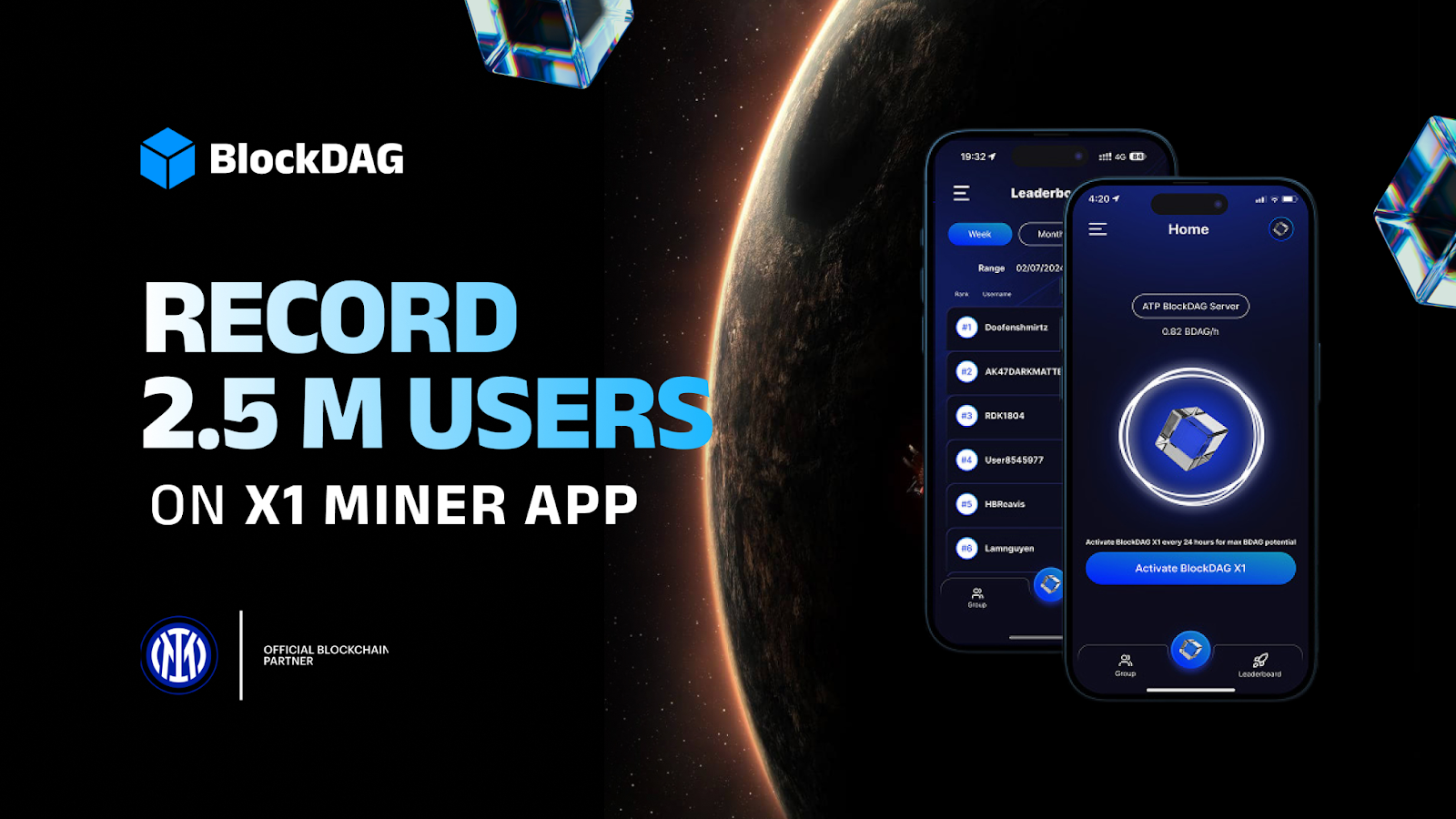
With over 2.5 million users on its X1 mining app, $364.5 million raised so far, and a live 10 BTC auction running through August 11, BlockDAG is no longer a wait-and-see project. It’s already delivering. And for anyone looking for the best new crypto to buy, its metrics are making a stronger case than forecasts alone.
While Ethereum builds on momentum and Avalanche outlines its roadmap, BlockDAG is turning growth into tangible results, and quickly.
Ethereum (ETH) Bullish Cycle: Strong Support, Limited Room to Climb
Ethereum has broken through $3,700 in recent days, helped by daily ETF inflows above $500 million and strong institutional interest. BitMEX co-founder Arthur Hayes even suggested ETH could climb to $10,000 in this cycle, citing increased liquidity and loose central bank policies.
Technically, Ethereum is still strong. It’s holding above major moving averages, and an RSI of 82 shows powerful buying interest, though it’s starting to look overbought. Layer 2 platforms like Arbitrum, Optimism, and zkSync are also seeing big gains in usage and locked value.
However, resistance near $3,800 is proving tough to break. Analysts expect a consolidation range between $3,500 and $3,600 before another leg up. Ethereum still plays a key role in crypto, but as a mature asset, it doesn’t offer the same explosive upside newer projects might.
So while the Ethereum (ETH) Bullish Cycle remains intact, newer investors may find better upside elsewhere.
Avalanche (AVAX) Future Potential: Impressive Speed, Slower Growth
Avalanche is often named among Ethereum’s top challengers when it comes to performance. It can process more than 4,500 transactions per second thanks to its unique consensus model that balances speed, decentralization, and flexibility. The Avalanche 9000 upgrade has made subnet creation faster and easier, lowering costs and boosting appeal.
AVAX has jumped 105% from its May lows and recently touched $37.20. Some forecasts suggest it could revisit $130 or even push to $300 in the coming rally. Its partnerships, like those with AWS, the California DMV, and gaming projects, add weight to its long-term outlook.

Still, challenges remain. Competing with Ethereum and Solana is no small task, and AVAX’s validator requirements may limit further expansion. While the Avalanche (AVAX) Future Potential is clear, its breakout moment is still developing.
That leaves the door open for BlockDAG to take the lead.
BlockDAG Delivers on Growth, Price Advantage, & Community Size Before August 11
BlockDAG is focused on action, not promises. It’s currently in Batch 29, where the usual price is $0.0276, but until August 11, the Global Launch release window offers BDAG at just $0.0016. That’s a 17x discount from the batch price and more than 30x lower than the $0.05 launch price.
The numbers say it all: $364.5 million raised, over 2.5 million users on the viral X1 app, and a 10 Bitcoin Auction still open for participants. Buyers in this phase can qualify to win part of the BTC pool, with winners announced August 15. Five exchange listings, MEXC, LBank, BitMart, XT.com, and CoinStore, are already confirmed.
The platform’s Dashboard V4 offers real-time charts, portfolio tracking, and simulated trading. With a hybrid blockchain-DAG structure, EVM compatibility, and a low-code contract builder, BlockDAG supports both speed and usability.

There’s also a 100 million BDAG airdrop running now to drive early community growth. For those searching for the best new crypto to buy, this is more than hype, it’s a full product with working tools and active users.
It’s About Timing, And BlockDAG’s Timing Is Right Now
Ethereum’s gains show strength. Avalanche’s development plan is progressing. But both are already valued at levels where new investors have limited room to grow.
BlockDAG, by contrast, is still early. It’s offering access at $0.0016, a price that vanishes after August 11. With millions of users, infrastructure already running, and momentum building fast, it’s a unique opportunity at a time when most other projects have already run up in price.
In a space where early access often defines success, BlockDAG stands out, not just because of what it promises, but because of what it’s already delivered.
For those looking ahead, this presale window may be the best chance to get in before the rest of the market catches up.
Join BlockDAG Presale Now:
Presale: https://purchase.blockdag.network
Website: https://blockdag.network
Telegram: https://t.me/blockDAGnetworkOfficial
Discord: https://discord.gg/Q7BxghMVyu








Blockchain
5 Reasons Why Delta Exchange is the Easiest Platform for Crypto Trading Strategies in the Indian Market
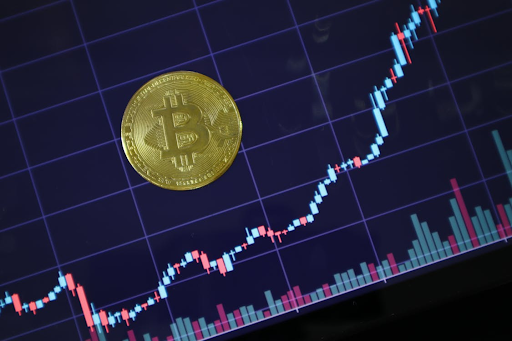
Crypto trading in India has grown exponentially in the last few years. In 2025, the market pulled in $258 million in revenue and is on track to hit nearly $732 million by 2033, growing at a 14.3% CAGR from 2026 onwards. That kind of money doesn’t come from people buying Bitcoin on a whim and hoping for a lucky spike. It comes from traders who plan entries, manage exits, build hedges, and run full-blown crypto trading setups.
This shift has created a new problem. Most Indian crypto exchange apps still feel built for basic spot buying without any advanced features to try. You open five tabs, check prices on one app, place orders on another, track risk on a third, and hope nothing slips through.
Delta Exchange transforms the story here. Instead of spots, Delta offers a safe trading platform to explore crypto derivatives (futures and options) across major currencies.
Let’s understand more about Delta Exchange and why so many Indian traders end up sticking with it once they try it.
Why Try Crypto Trading Strategies on Delta Exchange
Ranked among the top Indian crypto exchanges, Delta Exchange offers a range of features and analytics tools to simplify your crypto trading experience.
Here’s why many traders trust Delta Exchange:
- INR trading keeps things simple
If you’ve ever had to convert INR to USDT or USD just to trade Bitcoin, you know the hassle. Delta Exchange lets you deposit and withdraw in INR directly via UPI, IMPS, NEFT, and bank transfer, with your margin and profits shown in INR.
That means no awkward crypto conversions or extra wallets – you fund your account straight from your bank and start crypto trading like it’s normal money.
- Algo trading bots that actually work
Automation can save hours and reduce emotional stress and decisions, especially with fast moves in crypto F&O. Delta Exchange supports algo trading through APIs and bot integrations from platforms like TradingView and Tradetron.
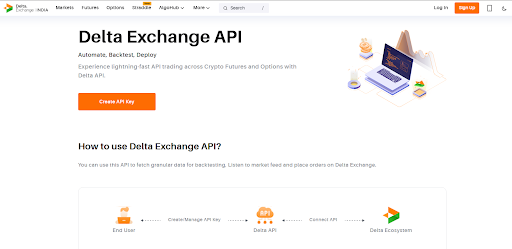
You can link your trading strategy to webhooks or APIs and let bots place trades for Bitcoin futures or other crypto options even when you’re away. If you want systematic, repeatable strategies with fewer missed opportunities, this setup feels practical and real.
And the best part? You don’t need to have any coding knowledge or degree – API Copilot does it all for you.
- Lower trading fees that don’t eat into your wins
Fees matter because every percentage point you pay is one less in your pocket after a winning trade. Delta Exchange offers competitive taker and maker fees, plus a fee cap on options that limits how much you pay on low premium trades.
This helps keep costs predictable, whether you’re trading Bitcoin or ETH futures and options. Traders who place frequent trades or use multi-leg strategies on the Indian crypto exchange can keep more of their gains, rather than having them eaten up by trading fees.
- Strategy Builder for practical trading plans
Strategy planning can get messy if the platform doesn’t help you visualize outcomes. Delta Exchange offers tools that let you craft crypto F&O setups with clear strike choices and expiries, plus daily, weekly, and monthly options for more precise timing. This helps you conveniently plan spreads, straddles, or hedges.
- Compliance and risk measures to know
It’s one thing to trade, another to trust the platform doing it. Delta Exchange is registered with India’s Financial Intelligence Unit (FIU) and follows local KYC and AML rules.
For risk management, the platform supports:
- Margin controls and stop-loss tools that help you manage positions while you trade Bitcoin or other crypto derivatives.
- Demo account to practice trades and understand the market without real money.
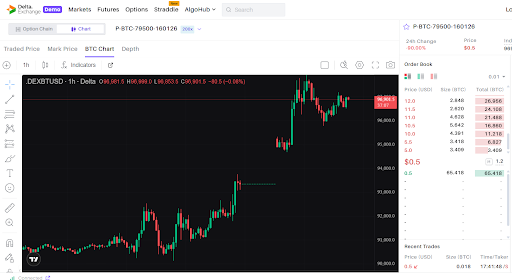
- Payoff charts show you how your trade will play out with breakeven points and maximum P&L.
This way, you can study your crypto trading strategy better before finalizing the trade.
Apart from these, Delta also offers leverage up to 200X – a good way to amplify your profits if the market moves in your favor.
The Bottomline
Indian crypto traders have moved far past the buy-and-hold phase. Spot crypto trading still has its place, yet most active users now want faster ways to make money from price swings, not wait months for a rally.
That’s where crypto F&O, spreads, and short-term setups step in. You want tools that let you react within minutes, control risk, and lock gains when the move shows up.
Platforms that only support basic coin buying just can’t keep up with that style of trading. Serious traders want flexibility, speed, and ways to work with volatility, not sit through it – and Delta Exchange caters to such traders well.
Disclaimer: Crypto trading carries inherent risks due to its high volatility. This article is for informational purposes only. Kindly do your own research before making any investment decisions.
Blockchain
MoonExe Aligns With the Next Phase of Stablecoin Payments as Global Regulation Accelerates
MoonExe today reaffirmed its strategic focus on stablecoin-powered payment infrastructure as global regulatory clarity continues to accelerate across major financial jurisdictions.
Regulators worldwide are advancing frameworks that formally recognize stablecoins as legitimate instruments for payment, settlement, and treasury operations. Legislative initiatives in the United States, expanded licensing regimes in Asia, and structured compliance approaches in other regions are collectively signaling a transition from experimental adoption to regulated, real-world deployment.
As stablecoins move deeper into mainstream financial infrastructure, demand is increasing for platforms capable of delivering real-time liquidity, transparent pricing, and verifiable settlement. MoonExe’s Exchange Finance (ExFi) model is designed to address these needs by enabling stablecoin-based currency conversions that operate continuously, without dependence on traditional banking cut-off times or geographic limitations.
The platform focuses on facilitating efficient value movement while maintaining transparency through public blockchain records. Transactions executed within the MoonExe ecosystem can be independently verified via standard blockchain explorers, reinforcing confidence through auditable, immutable data.
In parallel with regulatory progress, market participants are increasingly prioritizing infrastructure reliability over speculative activity. Stablecoins are being evaluated less as alternative assets and more as operational tools capable of supporting cross-border payments, digital commerce, and treasury flows.
MoonExe continues to expand its infrastructure and partnerships to support this evolution, positioning itself as part of the foundational layer required for stablecoins to function at global scale.
For more information about MoonExe and its stablecoin payment infrastructure, visit https://moonexe.com/
Blockchain
Playmaker to Launch in Q2 2026 as Midas Labs Expands Its AI-Powered Game Creation Ecosystem
Midas Labs, a UK-based Web3 technology company, has announced the upcoming launch of Playmaker, an AI-powered game creation and launchpad platform scheduled for Q2 2026. The platform is designed to lower barriers to game development and funding, operating as a core product within the UNIFI-powered Midas ecosystem.
Playmaker will provide creators, indie studios, and early-stage visionaries with an integrated environment to ideate, build, fund, and publish games without the traditional constraints of large teams or complex technical infrastructure. By combining AI-assisted creation tools with a structured launchpad and marketplace, the platform aims to streamline the path from concept to live product.
According to Jonathan Wheatley, Chief Marketing Officer of Midas Labs, Playmaker represents a natural progression of the company’s ecosystem strategy.
“Playmaker is about enabling participation at every level — from creators and developers to early supporters and players,” said Wheatley. “By integrating AI-driven creation with funding and publishing infrastructure, we’re building a system that allows ideas to move efficiently from concept to execution.”
The platform is powered by the $PLAY token, a fixed-supply utility asset used for project participation, creator payments, marketplace transactions, and ecosystem services. $PLAY operates within the broader UNIFI ecosystem, where UNIFI serves as the access and conversion layer, reinforcing liquidity and alignment across Midas Labs’ products.
Midas Labs has structured Playmaker’s token economy around a non-mintable, scarcity-driven model, designed to support long-term sustainability as platform adoption increases.
The Playmaker launch builds on recent Midas Labs milestones, including the expansion of the Midas Play Marketplace, multiple game releases, ecosystem partnerships, and the rollout of UNIFI staking infrastructure. Together, these components form a vertically integrated environment linking creation, funding, distribution, and participation.
Playmaker is scheduled to go live in Q2 2026, with phased ecosystem access beginning with early contributors before expanding globally.
About Midas Labs
Midas Labs is a United Kingdom–based Web3 technology company focused on building scalable digital ecosystems across gaming, AI, and creator-driven platforms. Powered by the UNIFI token, Midas Labs develops infrastructure designed for long-term participation, real utility, and sustainable growth.

Web3 Leader Programme is an official Platinum Sponsor at Hong Kong Web3 Festival 2026

WEEX Labs Announced as Primary Exhibition Sponsor at Hong Kong Web3 Festival

CF Blockchain Joins Hong Kong Web3 Festival as Secondary Exhibition Sponsor

ENI Announced as Gold Sponsor at Hong Kong Web3 Festival 2026

CoinPost Announced as Secondary Exhibition Sponsor at Hong Kong Web3 Festival 2026

CHAINISLE Announced as Secondary Exhibition Sponsor at Hong Kong Web3 Festival 2026

Cardalonia Aiming To Become The Biggest Metaverse Project On Cardano

P2P2C BREAKTHROUGH CREATES A CONNECTION BETWEEN ETM TOKEN AND THE SUPER PROFITABLE MARKET

WOM Protocol partners with CoinPayments, the world’s largest cryptocurrency payments processor

ETHERSMART DEVELOPER’S VISION MADE FINTECH COMPANY BECOME DUBAI’S TOP DIGITAL BANK

Project Quantum – Decentralised AAA Gaming

WOM Protocol Recommended by Premier Crypto Analyst as only full featured project for August
-
 Crypto4 years ago
Cardalonia Aiming To Become The Biggest Metaverse Project On Cardano
-
 Press Release5 years ago
P2P2C BREAKTHROUGH CREATES A CONNECTION BETWEEN ETM TOKEN AND THE SUPER PROFITABLE MARKET
-
 Blockchain6 years ago
WOM Protocol partners with CoinPayments, the world’s largest cryptocurrency payments processor
-
 Press Release5 years ago
ETHERSMART DEVELOPER’S VISION MADE FINTECH COMPANY BECOME DUBAI’S TOP DIGITAL BANK
-
 Press Release5 years ago
Project Quantum – Decentralised AAA Gaming
-
 Blockchain6 years ago
WOM Protocol Recommended by Premier Crypto Analyst as only full featured project for August
-

 Press Release5 years ago
ETHERSMART DEVELOPER’S VISION MADE FINTECH COMPANY BECOME DUBAI’S TOP DIGITAL BANK
-
 Blockchain6 years ago
1.5 Times More Bitcoin is purchased by Grayscale Than Daily Mined Coins