
Crypto
WEMIX Lands on Kraken as Web3 Gaming Token Makes Its Western Market Debut

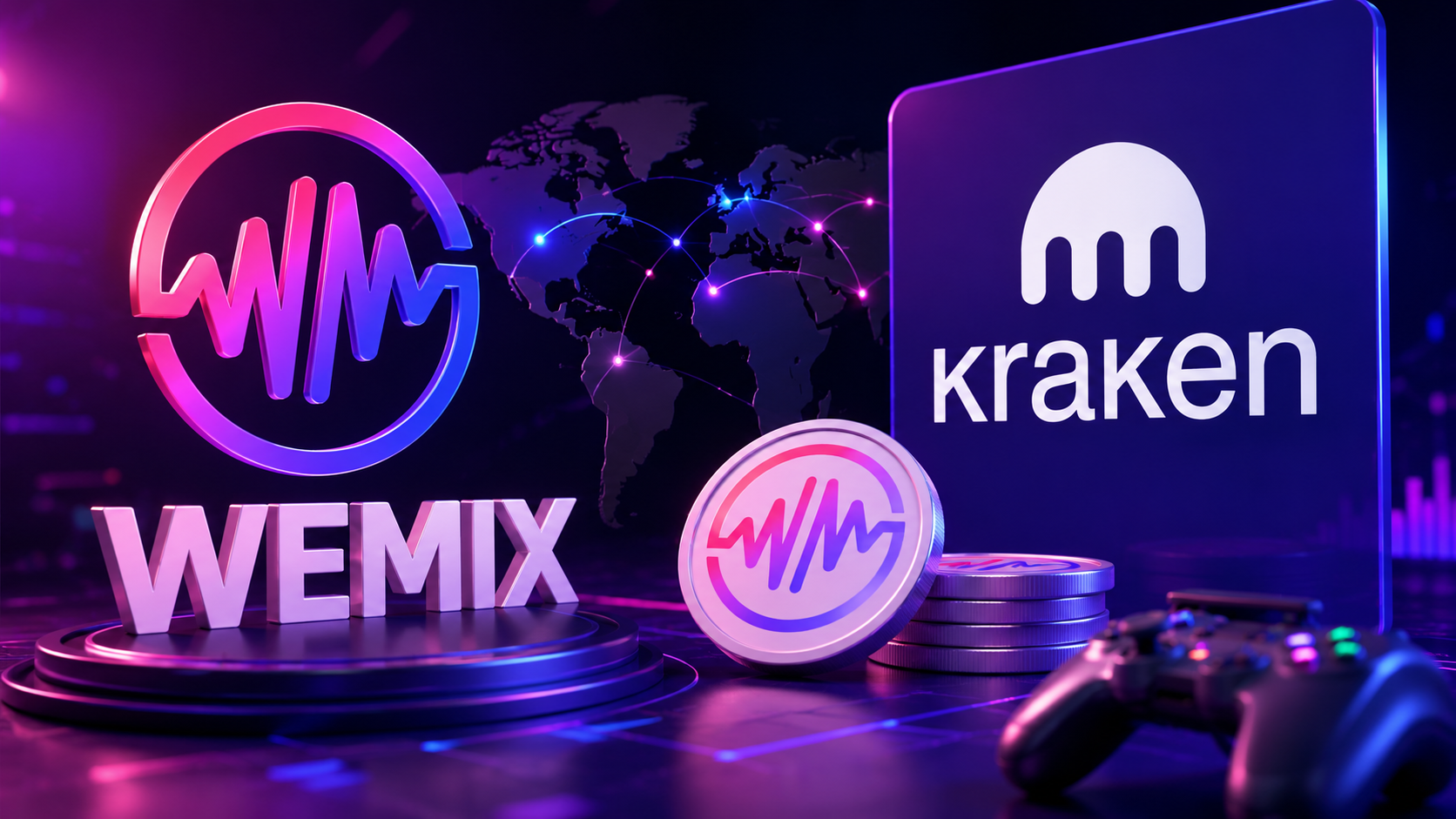
WEMIX has had a significant day. On July 7, 2026, Kraken officially launched trading for WEMIX against USD — the most consequential Western exchange listing the token has received and a direct opening to institutional and retail investors across the US, Canada, the UK, and Australia. For a token that has historically been concentrated in South Korean, South American, and regional Asian markets, the Kraken listing marks a genuine geographic pivot.
Trading went live on July 7, allowing Kraken’s global user base to deposit, withdraw, and trade WEMIX against the dollar. WEMIX is currently trading around $0.27 with a market cap of approximately $131 million, up 7.6% over the past seven days — outperforming the broader crypto market’s 7% gain over the same period.
Why the Kraken Listing Is Strategically Different
Most of WEMIX’s existing exchange presence has been concentrated on Asian platforms. While WEMIX has historically maintained an entrenched position within South Korea, South America, and regional Asian markets, the Kraken integration vastly expands its global reach, opening access for Western institutional and retail investors.
That shift matters for a project that has been navigating a complicated home market relationship. Following a high-profile delisting from major South Korean exchanges in 2022 over transparency concerns, WEMIX has been rebuilding its exchange credibility methodically. A Kraken listing — one of the longest-standing, most compliance-conscious exchanges in the Western market — signals meaningful rehabilitation of that credibility on a global stage.
WEMIX is a Layer 1 blockchain that powers one of the world’s largest Web3 gaming platforms, backed by WEMADE, a publicly listed South Korean gaming company with more than two decades of AAA game development success. WEMIX3.0 provides the infrastructure for a global ecosystem of blockchain games, decentralized applications, and Web3 services.
What WEMIX Is Building Beyond the Token
The product stack behind WEMIX is more comprehensive than most gaming blockchain projects. WEMIX PLAY serves as the primary gaming platform, hosting hundreds of thousands of active users across titles including the flagship MMORPG Legend of YMIR and MIR4. Legend of YMIR launched globally on Steam in April 2026 with a new Rune Fighter class — a move targeting the PC gaming audience and deeper engagement within the WEMIX3.0 ecosystem.
The tokenomics have been structurally improved through the Brioche hard fork, which permanently capped total supply at 590 million WEMIX and introduced a block minting halving mechanism that progressively reduces token issuance in two-year cycles. With approximately 497 million tokens currently in circulation against the 590 million cap, the remaining supply overhang is manageable relative to many comparable gaming tokens.
WEMADE is also developing StableNet — a separate blockchain infrastructure built around a compliant KRW-denominated stablecoin, with sub-second finality and partnerships with Chainalysis and CertiK for compliance and security. This positions the parent company across both gaming infrastructure and regulated financial rails simultaneously.
The Regulatory Overhang That Won’t Fully Go Away
The Korean exchange absence remains the most significant structural headwind. In March 2026, Seoul courts upheld exchanges’ rights to delist tokens — citing the original WEMIX case as precedent — when FLOW faced its own delisting. WEMIX’s continued absence from major Korean fiat exchanges limits access for a critical investor base that knows the project best and would otherwise be natural buyers.
The Kraken listing doesn’t solve that problem directly. What it does is demonstrate that credible Western exchanges have completed their due diligence and found WEMIX listing-worthy — a signal that may gradually shift the narrative on the Korean regulatory front, even if it doesn’t change exchange listings immediately.
For now, the Western market debut is the story. Whether it translates into sustained liquidity growth or a brief listing spike will become clear in the weeks ahead.

Crypto
Grass (GRASS) Pulls Back 34% After July 7 Community Call Reveals $52M Revenue But Shifts Payouts to USDC
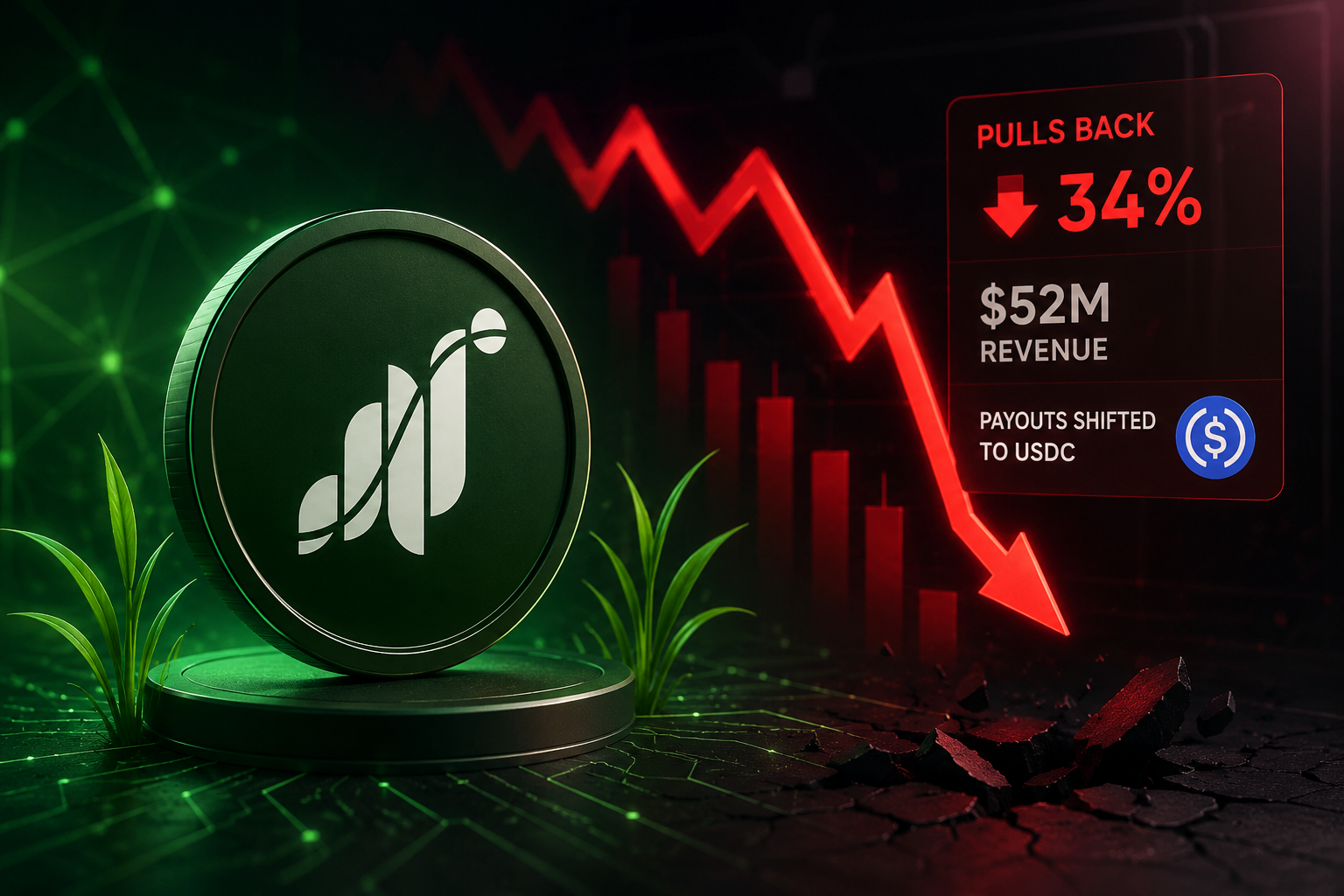
Grass has had a dramatic week that captures everything interesting and frustrating about DePIN tokens in a single 48-hour window. The token surged 12% ahead of its July 7 Token Holder and Network Participant Call — the most anticipated community event in the project’s history — before reversing sharply, falling 34% in the 24 hours following the call. GRASS is currently trading around $0.35 with a market cap of approximately $224 million, ranking #144 on CoinGecko.
The catalyst for both the surge and the selloff was the same event. What the call revealed was simultaneously impressive on the fundamentals and disappointing on the community reward front.
What the July 7 Call Actually Disclosed
The headline number from the call was significant: Grass reported $52 million in H2 2026 revenue, annualizing to roughly $104 million — meaningful commercial traction for a network that monetizes unused internet bandwidth into AI training data. A Retrieval Inference product was also cited as near launch, adding a new revenue stream on top of the existing data pipeline.
The network itself has scaled to over 2.5 million active nodes across 190 countries, indexing 20% of YouTube and over 7,000 terabytes of web data. With 8.5 million registered users and backing from Polychain Capital and Tribe Capital, the project’s fundamentals are more credible than most DePIN competitors at comparable market cap levels.
What spooked the market was the Season 2 airdrop structure. Grass confirmed that Stage 2 payouts will be distributed in USDC rather than GRASS tokens — a decision the foundation framed as reducing regulatory risk and improving earnings transparency. For node operators who spent months farming points expecting GRASS token rewards, receiving USDC instead removed the speculative upside they had been working toward. Claims open July 22, 2026 at 1:00 PM EST, with a six-month window to claim through January 22, 2027.
The Supply Picture Heading Into Distribution
The circulating supply currently sits at approximately 632 million GRASS out of a 1 billion maximum — 63.2% of total supply already in circulation. A 33.4 million token unlock released in late June added roughly 3.3% more supply into an already pressured market. A separate 170 million GRASS token Season 2 distribution is still expected in H2 2026 alongside the USDC payouts, which represents a meaningful additional supply event that the market is now pricing in more cautiously.
The shift to USDC payouts for Stage 2 GRASS claims is the mechanic most worth understanding for holders. It reduces token supply pressure from airdrop recipients who would otherwise sell immediately — but it also signals that the team is managing regulatory exposure actively, which can cut both ways in terms of how institutional buyers interpret the project’s positioning.
A Native Wallet Launching Mid-July Changes the UX Equation
One concrete positive from the call’s surrounding announcements is a native in-app non-custodial wallet expected to launch mid-July 2026. The wallet will be secured by passkey or email OTP — no MetaMask, no external extension setup — and integrates MoonPay for direct fiat withdrawals. It will serve as the primary method for claiming Season 2 rewards.
That user experience simplification matters more than it might seem on the surface. Grass’s addressable market for node operators includes millions of everyday internet users who are not crypto-native. Removing the friction of external wallet setup and replacing it with Face ID or fingerprint authentication is the kind of product decision that expands participation beyond the existing DePIN enthusiast base.
For existing holders, the $0.50 level is the near-term technical line that matters most. A hold above that zone keeps the medium-term uptrend intact and positions for a retest of recent highs around $0.55. A sustained break below opens a path toward $0.47 support — and with the supply events still ahead, the market’s capacity to absorb selling will be tested before the year is out.
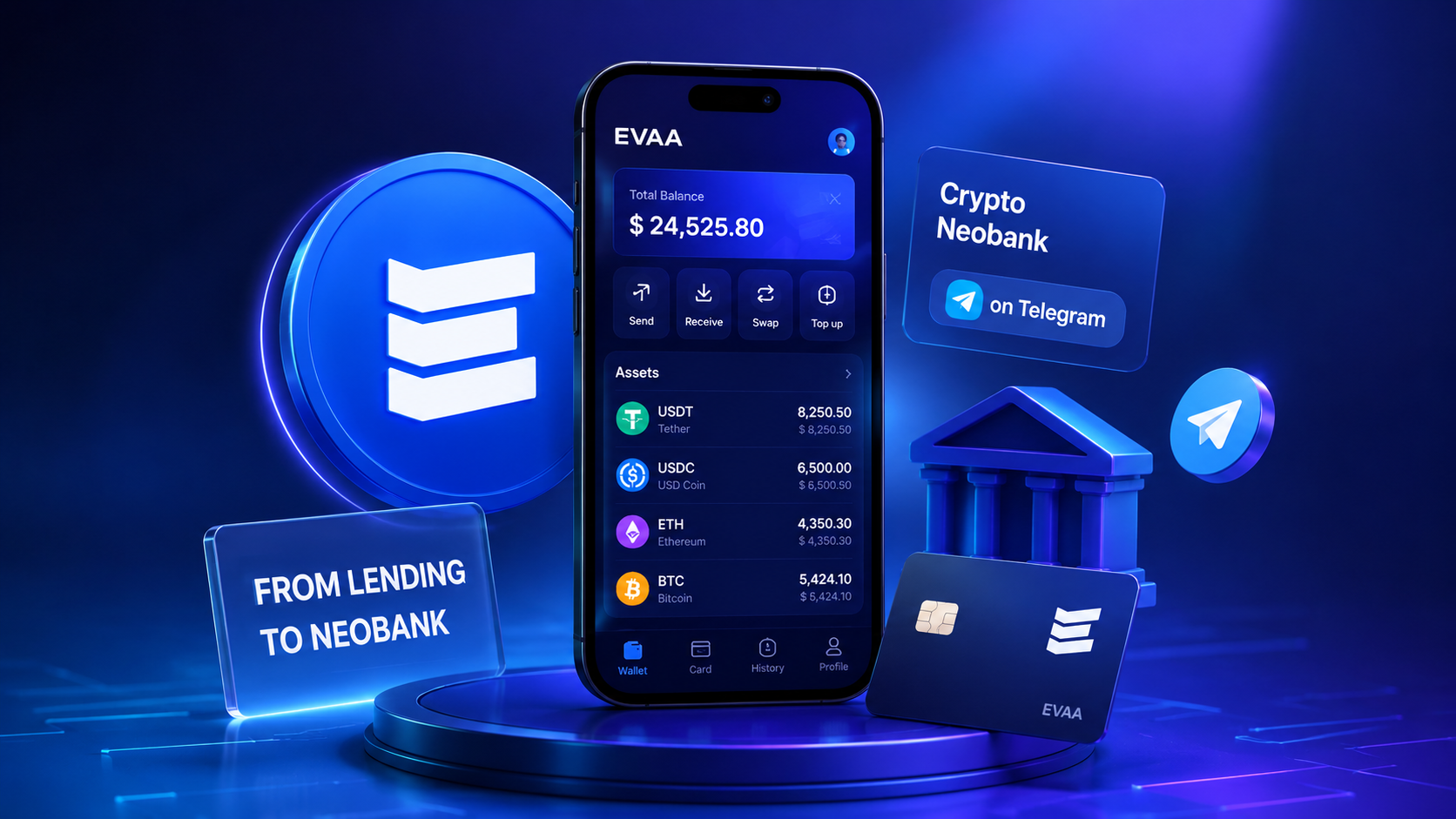
EVAA Finance has spent the past year building the most consequential DeFi infrastructure on the TON blockchain. As the network’s largest lending protocol — having processed over $1.4 billion in cumulative volume since launch — it now has its sights set on something considerably more ambitious: becoming a full-service crypto neobank embedded directly inside Telegram.
That pivot is underway in 2026, and the roadmap changes what EVAA is competing for entirely.
Where EVAA Stands Right Now
EVAA’s TVL currently sits at approximately $14.69 million on the TON blockchain — a modest figure in absolute terms, but a meaningful one within the context of TON’s still-developing DeFi ecosystem. The protocol raised $2.5 million in a private token sale in January 2025 from backers including Polymorphic, TON Ventures, Animoca Ventures, CMT Digital, and Mythos Ventures, before launching its token generation event in October 2025.
EVAA operates on a pool-based lending model — users deposit assets to earn yield, borrowers pledge collateral and take out loans, and interest rates adjust dynamically based on supply and demand. All of it is executed automatically by smart contracts on TON’s high-throughput, proof-of-stake architecture, with low fees and fast settlement times that make frequent DeFi interactions genuinely practical rather than cost-prohibitive.
The FIVA Integration That Expanded the Yield Stack
One of the most significant recent product moves was EVAA’s integration with FIVA — the first yield tokenization protocol on TON. The integration effectively brings a Pendle-style yield splitting mechanism to the TON ecosystem for the first time, giving EVAA users access to fixed-yield products, leveraged farming positions, and impermanent loss-protected liquidity — all within EVAA’s interface.
Through the integration, users can split deposits into Principal Tokens for fixed, guaranteed returns insulated from rate volatility, or Yield Tokens for leveraged exposure to EVAA yields and farming points. With EVAA’s historical lending rates swinging between 3% and 14% — and dropping as much as 75% in a year — the ability to lock in a fixed rate matters for passive investors who need predictable income. The FIVA integration addresses exactly that need.
The Neobank Pivot That Changes the Competitive Frame
The 2026 roadmap reveals that EVAA is no longer thinking of itself primarily as a lending protocol. The team is building toward a full crypto neobank experience accessible through Telegram — one that would include a crypto card, credit services expansion into undercollateralized loan products, AI-driven personalization of financial recommendations, and cross-chain interoperability extending beyond TON and BNB Chain to Ethereum and TRON.
That’s a large surface area for a protocol with $14.69 million in TVL. But the competitive logic makes sense in the context of Telegram’s reach. The messaging app has over 900 million monthly active users — a distribution layer that no other blockchain has access to in the same way. If EVAA can embed lending, borrowing, cards, and personalized financial services directly into a Telegram-native experience, the addressable market stops being “TON DeFi users” and starts approaching “Telegram users who want financial services without switching apps.”
Whether execution matches ambition is the honest question. Cross-chain development introduces security risk. Undercollateralized lending requires sophisticated risk models that are difficult to get right in DeFi. And AI personalization at the protocol level is largely unproven. Each of these is a meaningful capability gap to close simultaneously.
What the EVAA Token Does
The EVAA token has a capped supply of 50 million tokens and serves three roles — governance, fee rebates for active users, and staking rewards. A linear unlock schedule manages inflation, and an automatic buyback-and-burn mechanism funded by protocol revenue creates deflationary pressure as usage grows. The token’s price has faced headwinds, down roughly 47% over the past 30 days, reflecting a market that’s skeptical about the neobank ambitions more than the core lending product.
That skepticism is a fair lens. The lending infrastructure is working. The neobank pivot is the trade the market is being asked to take on faith — and the coming quarters will determine whether that faith is justified.
Blockchain
Grove Protocol (GROVE) Lands on Coinbase as Sky Ecosystem’s Institutional Credit Layer Goes Live

Grove Protocol has had a busy first two weeks of July. On July 6, 2026, Coinbase launched spot trading for GROVE-USD — but with a caveat: the exchange placed the pair in limit-only mode, meaning traders can place and cancel limit orders but cannot execute market orders. It’s a standard precaution for newly listed assets on thin order books, and it reflects both the significance of the listing and the reality that GROVE is still finding its price equilibrium in early trading.
GROVE was added to Coinbase’s listing roadmap on June 23, 2026, with the actual launch dependent on liquidity and technical readiness. About two weeks later, both conditions were met and trading went live.
What Grove Protocol Actually Is
Grove operates as a Star within the Sky Ecosystem — the rebranded evolution of MakerDAO — serving as its institutional credit allocation layer. The protocol routes USDS liquidity into diversified credit strategies through vault-based, non-custodial infrastructure.
The core contributor team — Mark Phillips, Kevin Chan, and Sam Paderewski — bring backgrounds from Deloitte, Hildene Capital Management, BlockTower Capital, and Citibank. The protocol was incubated by Steakhouse Financial, a firm that played a key role in bringing real-world assets into the Sky system.
Grove emerged from stealth with a $1 billion commitment to a tokenized asset strategy, starting with an allocation into the Janus Henderson Anemoy AAA CLO Strategy — a tokenized fund built on Centrifuge specializing in real-world asset tokenization. That opening position in institutional-grade collateralized loan obligations marked a step beyond where most DeFi protocols have gone with real-world assets, which have been primarily limited to tokenized US Treasuries.
The GROVE Token and What It Does
GROVE is the native token of Grove Protocol, deployed on Ethereum as an ERC-20 with a supply of 10 billion tokens. As one of Sky Ecosystem’s first Prime Agents, GROVE plays a central role in governance, allowing community members to influence key protocol decisions.
Sky governance has already passed proposals to initialize GROVE token rewards farms, whitelist Grove’s proxy infrastructure on LitePSM, and add a GROVE token reward distribution schedule — signaling that the broader Sky community is actively integrating GROVE into its incentive architecture rather than treating it as a peripheral addition.
Grove Points went live on May 21, with users able to supply USDS or USDC through Grove Savings on Ethereum to mint sUSDS and accrue points — a pre-token launch engagement mechanism that built an early user base ahead of the Coinbase listing.
The Bigger Picture Within Sky Ecosystem
Sky is undergoing an overhaul called Endgame that breaks the protocol into autonomous units called “Stars,” each responsible for its own governance and innovation. The first such entity was Spark, a yield-earning and borrowing protocol. Grove is now the second major Star to launch, focusing specifically on the institutional credit side of the ecosystem.
Grove will enable Sky to significantly increase the allocable universe of credit assets, particularly tokenized off-chain credit — historically limited to overcollateralized crypto loans, US Treasury bills, and PSM rewards. The hub-and-spoke model allows Grove to operate more flexibly with the autonomy to allocate into higher-yielding credit while adhering to stringent risk and liquidity requirements defined by the Sky Atlas.
The broader Sky Ecosystem currently holds $2.66 billion in total value locked, giving Grove a substantial liquidity base to work with from day one. Whether GROVE can attract meaningful governance participation and establish a stable trading market past the limit-only phase will be the near-term indicator of how the market values its institutional credit infrastructure thesis.

Grass (GRASS) Pulls Back 34% After July 7 Community Call Reveals $52M Revenue But Shifts Payouts to USDC

WEMIX Lands on Kraken as Web3 Gaming Token Makes Its Western Market Debut

EVAA Finance (EVAA) Pivots From Lending Protocol to Full Crypto Neobank on Telegram

Grove Protocol (GROVE) Lands on Coinbase as Sky Ecosystem’s Institutional Credit Layer Goes Live

BonkDAO Loses $20M in BONK Token Governance Attack

Upbit to List OpenGradient (OPG) for KRW Trading on July 7

Cardalonia Aiming To Become The Biggest Metaverse Project On Cardano

P2P2C BREAKTHROUGH CREATES A CONNECTION BETWEEN ETM TOKEN AND THE SUPER PROFITABLE MARKET

WOM Protocol partners with CoinPayments, the world’s largest cryptocurrency payments processor

ETHERSMART DEVELOPER’S VISION MADE FINTECH COMPANY BECOME DUBAI’S TOP DIGITAL BANK

Project Quantum – Decentralised AAA Gaming

WOM Protocol Recommended by Premier Crypto Analyst as only full featured project for August
-
 Crypto4 years ago
Cardalonia Aiming To Become The Biggest Metaverse Project On Cardano
-
 Press Release6 years ago
P2P2C BREAKTHROUGH CREATES A CONNECTION BETWEEN ETM TOKEN AND THE SUPER PROFITABLE MARKET
-
 Blockchain6 years ago
WOM Protocol partners with CoinPayments, the world’s largest cryptocurrency payments processor
-
 Press Release6 years ago
ETHERSMART DEVELOPER’S VISION MADE FINTECH COMPANY BECOME DUBAI’S TOP DIGITAL BANK
-
 Press Release5 years ago
Project Quantum – Decentralised AAA Gaming
-
 Blockchain6 years ago
WOM Protocol Recommended by Premier Crypto Analyst as only full featured project for August
-

 Press Release6 years ago
ETHERSMART DEVELOPER’S VISION MADE FINTECH COMPANY BECOME DUBAI’S TOP DIGITAL BANK
-
 Blockchain6 years ago
1.5 Times More Bitcoin is purchased by Grayscale Than Daily Mined Coins