
Blockchain
Trader burns $340,000 in one minute with TrumpCoin


A Memecoin investor had to pay a heavy price for his mistakes. The trader lost over 340,000 US dollars in one minute. How the faux pas could have happened.
Memecoin Trader Loses Over $340,000 in a Minute Due to Fraudulent Transaction
A memecoin trader has reportedly lost more than $340,000 in less than a minute, according to the on-chain analysis service Lookonchain on X (formerly Twitter). The incident involved two transactions on Solscan, revealing a significant financial mishap.
On June 18, the trader attempted to exchange 2,500 SOL (approximately $342,000) for the newly launched TrumpCoin (DJT) using a trading bot. However, instead of receiving the legitimate DJT tokens, the trader was duped into obtaining 92,000 fake DJT tokens created by fraudsters. These fraudulent tokens were worth significantly less than the genuine ones.
The transaction took place through a “fake” liquidity pool on Raydium. This pool was not sufficiently funded and was filled with DJT tokens created by scammers. When the trader attempted to convert the DJT tokens back to Solana, the scam became evident. Unfortunately, by this point, it was too late, and the trader’s initial 2,500 SOL had dwindled to just under 5 SOL—a loss of over $340,000. For the fake DJT tokens, the trader received only $673.
The DeFi (decentralized finance) space is rife with such scams, where fraudsters set up fake liquidity pools to exploit traders’ mistakes. Some decentralized exchanges (DEXes) issue warnings to users about these scams, but trading bots typically do not provide such alerts. This lack of warnings is especially problematic with newly launched coins, where traders can easily fall into the trap of exchanging for the wrong tokens.
This incident highlights the perils faced by crypto investors beyond the usual price volatility. The affected trader remarked on X, “Life goes on,” reflecting a resigned acceptance of the loss.
Despite this unfortunate event, the world of memecoin trading has its success stories. Some traders have achieved remarkable profits in short periods. For instance, one trader became a millionaire in just five hours, while another made a profit of $9.5 million in ten days by trading the celebrity token MOTHER, associated with US rapper Iggy Azalea.
This stark contrast between potential gains and significant losses underscores the high-risk nature of the cryptocurrency market, particularly in the memecoin sector. Investors are reminded to exercise extreme caution and conduct thorough research before engaging in such trades.


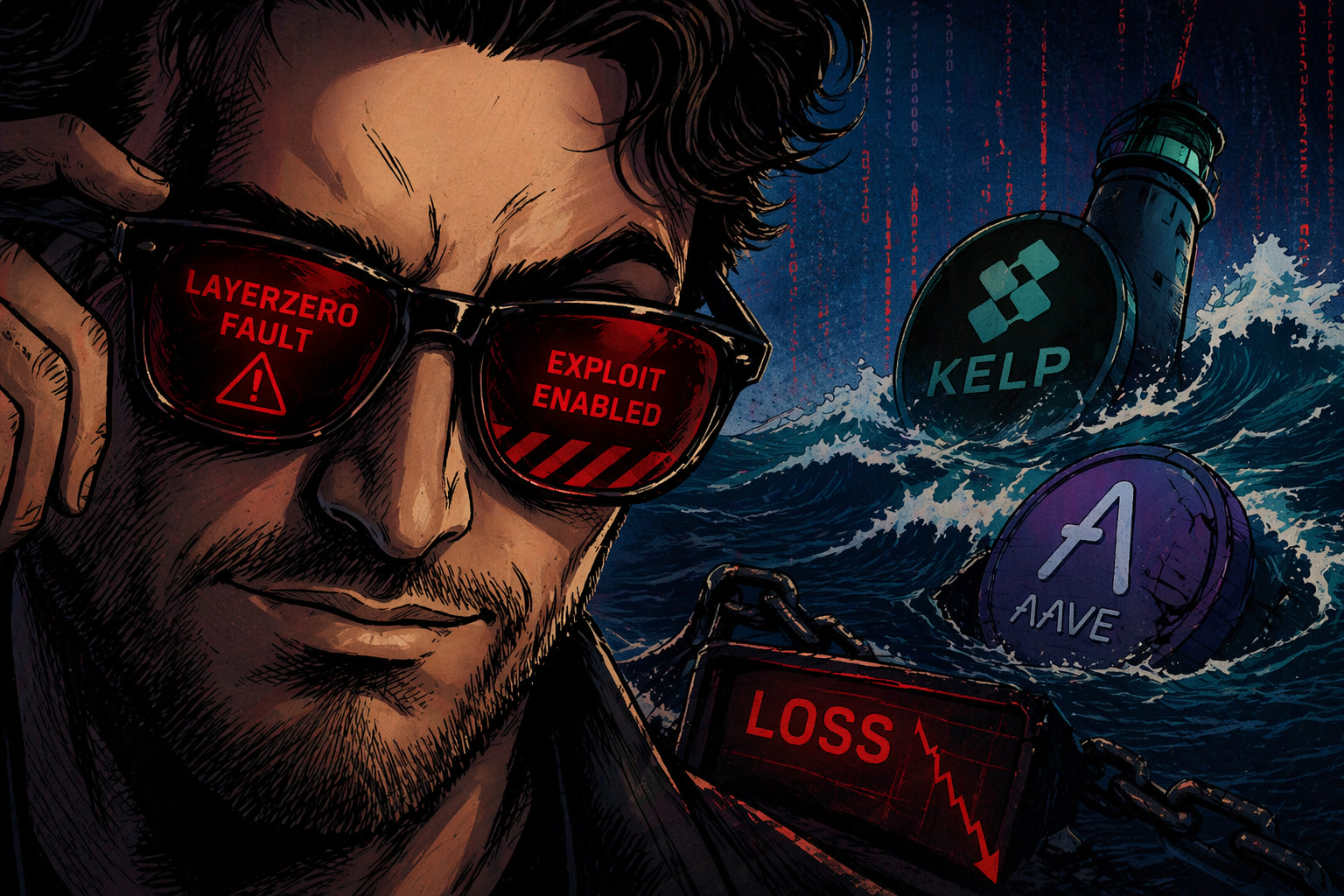
The fallout from the recent Kelp DAO exploit continues to ripple across the crypto ecosystem, with LayerZero pointing to a flawed system setup as the root cause of the attack.
Single Point of Failure Led to Exploit
LayerZero said the breach stemmed from how Kelp DAO configured its decentralized verifier network (DVN).
The attacker drained roughly 116,500 rsETH, valued at nearly $293 million, from Kelp’s LayerZero-powered bridge.
According to LayerZero:
- Kelp relied on a 1/1 DVN setup, meaning only one verifier was used
- This created a single point of failure
- Prior recommendations to diversify verifiers were not followed
As a result, the attacker was able to exploit the system without needing to bypass multiple verification layers.
LayerZero Distances Itself
LayerZero stressed that the issue was not a flaw in its protocol, but rather how Kelp implemented it.
The company is now:
- Urging all projects to adopt multi-DVN configurations
- Warning it may stop supporting apps that continue using single-verifier setups
Aave Hit With $195M in Bad Debt
The impact quickly spread to Aave, where the attacker used stolen assets as collateral to borrow funds.
This led to:
- Around $195 million in bad debt
- A sharp drop in Aave’s total value locked
- Billions withdrawn by users amid rising concerns
Liquidity issues have also emerged, especially around Ether-based lending pools.
Liquidity Risks Raise Alarm
Reduced liquidity on Aave is now creating additional risks.
Analysts warn that:
- Markets are nearing 100% utilization
- A 15% to 20% drop in Ether price could trigger further instability
- Liquidations may fail under current conditions
To limit further damage, Aave has frozen rsETH markets across its platforms.
Who Covers the Losses?
With no clear recovery plan, debate has intensified over who should absorb the losses.
Suggestions from industry figures include:
- Negotiating with the attacker for a partial return of funds
- Using ecosystem funds to cover losses
- Spreading losses across users
- Attempting a rollback to pre-hack balances
Each option carries trade-offs, and no consensus has emerged.
Broader Implications for DeFi
The incident highlights how interconnected DeFi protocols can amplify risk.
A vulnerability in one protocol can quickly:
- Spill into lending markets
- Trigger liquidity crises
- Impact multiple platforms simultaneously
Security Practices Under Scrutiny
LayerZero’s criticism of Kelp’s setup underscores a key lesson: security configurations matter as much as the underlying technology.
As protocols grow more complex, ensuring robust multi-layer verification systems may become essential to preventing similar exploits.
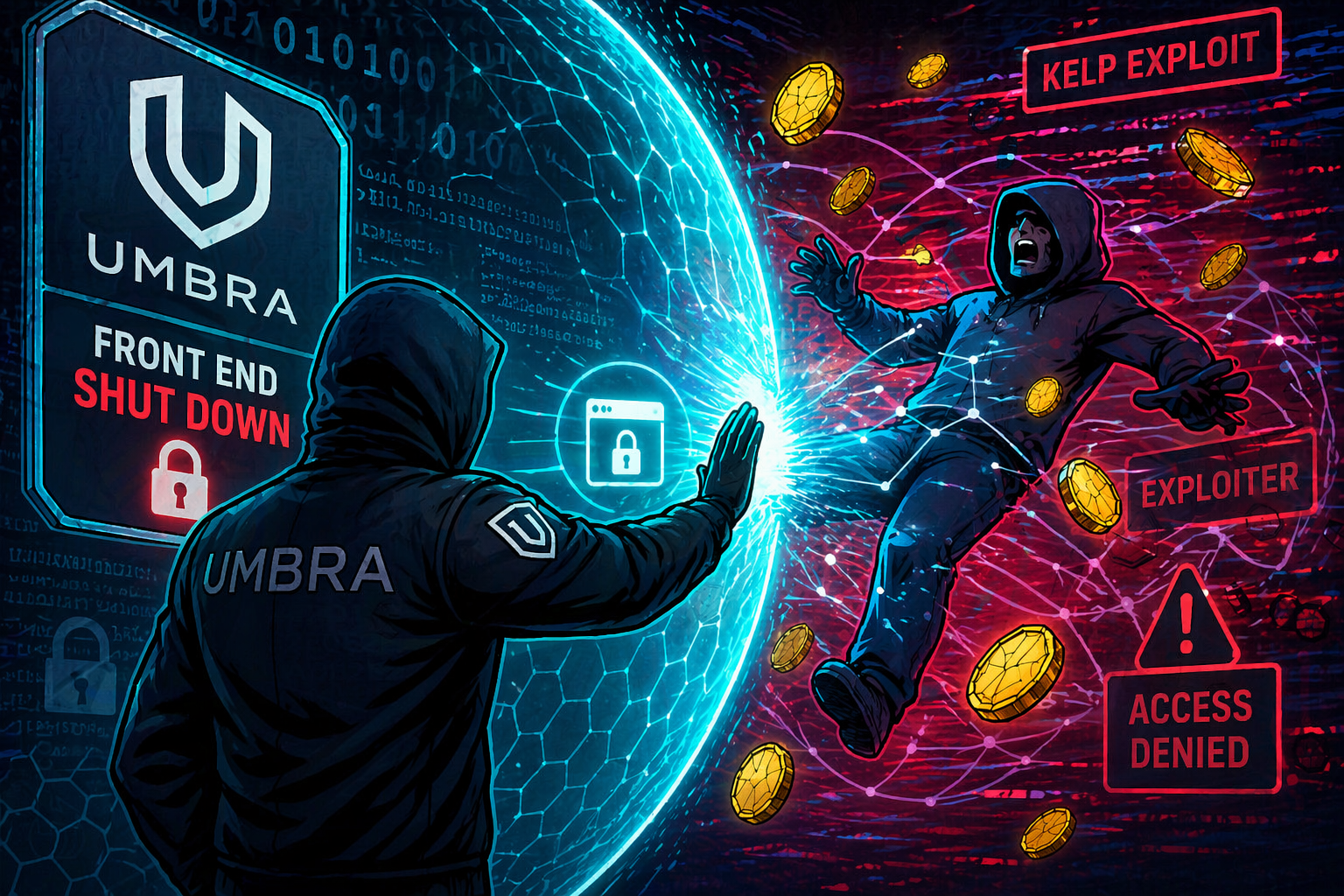
Privacy-focused crypto protocol Umbra has temporarily taken its front-end interface offline in an effort to slow down hackers attempting to move stolen funds.
The move comes amid heightened scrutiny following a series of major exploits across the crypto ecosystem.
Front-End Taken Offline After Suspicious Activity
Umbra said it identified roughly $800,000 in stolen funds being routed through its protocol. In response, the team placed its hosted front end into maintenance mode.
The protocol noted that the interface will remain offline until it is confident that restoring it will not interfere with ongoing recovery efforts.
This action follows the recent exploit of Kelp DAO, where attackers stole over $280 million, with some reports linking the movement of funds through Umbra.
Limits of Control in Decentralized Systems
Despite shutting down its front end, Umbra acknowledged a key limitation: it cannot stop users from interacting directly with its smart contracts.
Because the protocol is open-source:
- Users can access it through self-hosted interfaces
- Alternative front ends can be deployed independently
- Smart contracts remain fully operational onchain
This highlights the broader challenge of controlling decentralized infrastructure once it is live.
Debate Over Responsibility Intensifies
The situation has reignited debate around developer responsibility in decentralized systems.
Roman Storm, co-founder of Tornado Cash, argued that disabling a front end may not be enough to satisfy regulators.
Storm, who was previously convicted in a high-profile case, said authorities may still view control over a user interface as control over the protocol itself.
He warned that:
- Modifying or shutting down a front end could be interpreted as governance authority
- Developers may still face legal accountability regardless of decentralization claims
Umbra Defends Its Design
Umbra pushed back on claims that its protocol is useful for laundering funds.
The team emphasized that:
- The protocol primarily protects the receiver’s identity, not the sender’s
- Transactions remain traceable onchain
- Stolen funds routed through Umbra can still be identified
It also confirmed that it is working with security researchers to track suspicious activity.
Ongoing Pressure on Privacy Tools
The incident reflects growing pressure on privacy-focused crypto tools as regulators and law enforcement target illicit fund flows.
While some platforms have taken steps to freeze or block hacker activity, decentralized protocols like Umbra face structural limitations in enforcement.
A Balancing Act Between Privacy and Security
Umbra’s decision underscores a broader tension in crypto:
- Preserving user privacy
- Preventing misuse by bad actors
As exploits continue and scrutiny increases, protocols may face tougher choices around how much control they can or should exert over their systems.
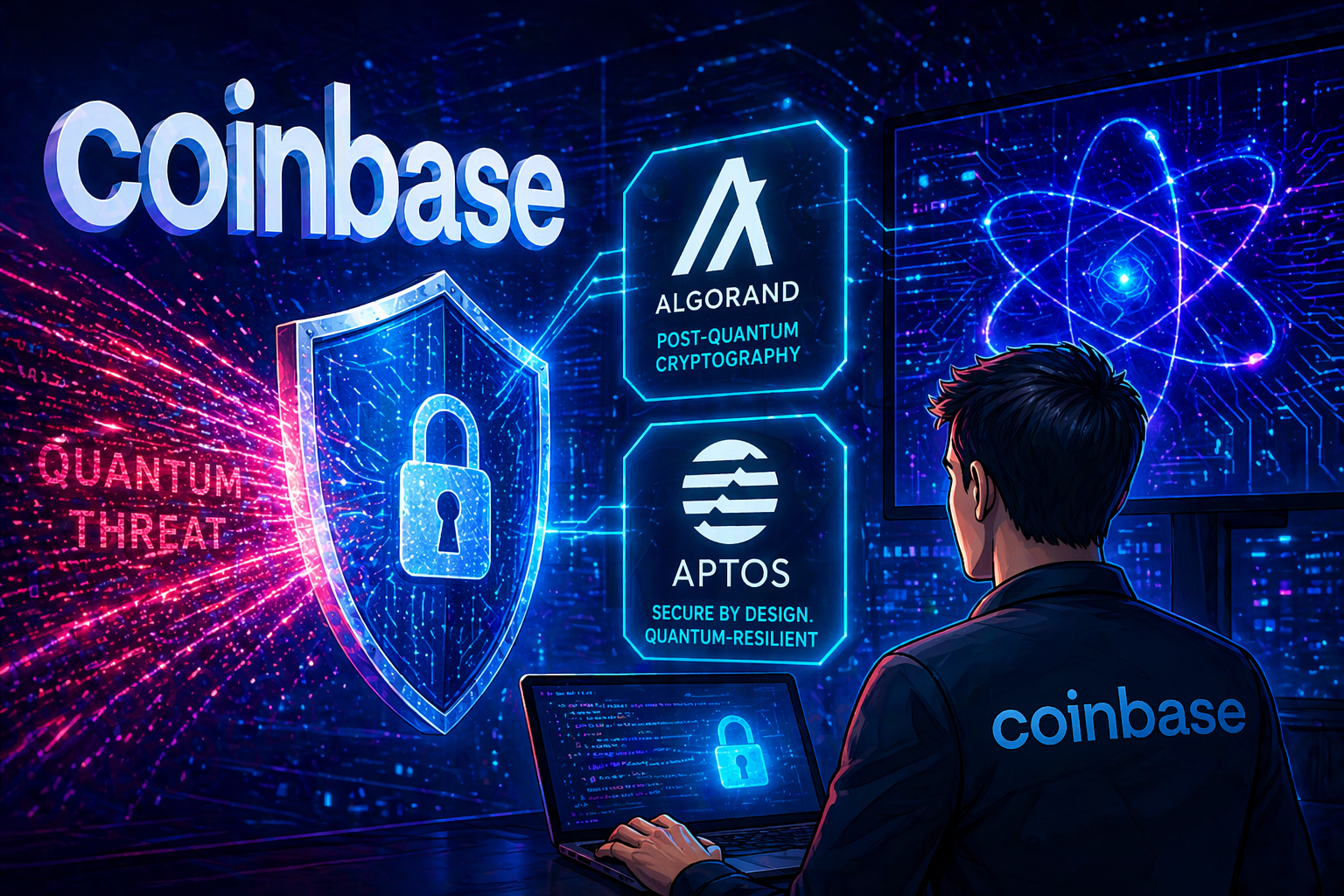
Coinbase is sounding the alarm on a future risk that could reshape blockchain security: quantum computing.
In a new report, its quantum advisory board highlighted how some networks are preparing early, while others may face greater challenges down the line.
Quantum Threat Not Here Yet, But Inevitable
Coinbase researchers emphasized that quantum computers capable of breaking blockchain cryptography do not yet exist, but likely will in the future.
Such machines could:
- Break private key cryptography
- Access crypto wallets
- Undermine blockchain security models
The board believes it is only a matter of time before this level of computing power becomes reality.
Algorand Leading in Quantum Readiness
Algorand was highlighted as one of the most prepared networks.
Key strengths include:
- A staged roadmap toward quantum resistance
- Existing support for quantum-secure accounts
- Successful quantum-resistant transactions on mainnet
However, some areas like validator coordination and block proposals still require upgrades.
Aptos Also Well Positioned
Aptos was also identified as a strong contender in the transition to post-quantum security.
Its design allows users to:
- Update their authentication keys easily
- Transition to quantum-safe cryptography without moving funds
- Maintain the same account structure
This flexibility could make upgrades smoother compared to other networks.
Proof-of-Stake Chains Face Higher Risk
The report warned that major proof-of-stake networks like:
- Ethereum
- Solana
may be more exposed due to how validator signatures are structured.
That said:
- Solana is already developing improved signature schemes
- Ethereum has a roadmap to adopt quantum-resistant cryptography
What Happens to Vulnerable Wallets?
One of the more controversial ideas discussed is how to handle existing wallets.
Potential solutions include:
- Encouraging users to migrate to quantum-safe wallets
- Revoking access to vulnerable wallets
- Treating un-upgraded funds as permanently inaccessible
This raises major questions about user responsibility and network governance.
A Long-Term, Not Immediate Risk
Despite the warnings, Coinbase stressed that a quantum computer capable of breaking crypto would need to be:
- Far more powerful than current systems
- Likely at least a decade away
Still, the report urges developers to begin preparing now rather than waiting.
Preparing for the Next Era of Security
The takeaway is clear: quantum computing may not be an immediate threat, but it is a structural risk that cannot be ignored.
Networks like Algorand and Aptos are taking early steps, while others are still developing their strategies.
How the industry responds could determine whether crypto remains secure in a post-quantum world.

Bitcoin Whales Accumulating Rapidly as BTC Nears $80K, Signals Potential Bull Run

Bitcoin Eyes Trend Reversal as Analysts Highlight Key $80K Breakout Level

Succinct launches Zcam to verify photos with applied cryptography on the iPhone

Crypto Protocols Pledge 43K ETH to Restore rsETH After Kelp Exploit

US Soldier Charged Over $400K Polymarket Bet on Maduro’s Capture

LayerZero Blames Kelp Setup for $290M Exploit as Aave Fallout Deepens

Cardalonia Aiming To Become The Biggest Metaverse Project On Cardano

P2P2C BREAKTHROUGH CREATES A CONNECTION BETWEEN ETM TOKEN AND THE SUPER PROFITABLE MARKET

WOM Protocol partners with CoinPayments, the world’s largest cryptocurrency payments processor

ETHERSMART DEVELOPER’S VISION MADE FINTECH COMPANY BECOME DUBAI’S TOP DIGITAL BANK

Project Quantum – Decentralised AAA Gaming

WOM Protocol Recommended by Premier Crypto Analyst as only full featured project for August
-
 Crypto4 years ago
Cardalonia Aiming To Become The Biggest Metaverse Project On Cardano
-
 Press Release5 years ago
P2P2C BREAKTHROUGH CREATES A CONNECTION BETWEEN ETM TOKEN AND THE SUPER PROFITABLE MARKET
-
 Blockchain6 years ago
WOM Protocol partners with CoinPayments, the world’s largest cryptocurrency payments processor
-
 Press Release5 years ago
ETHERSMART DEVELOPER’S VISION MADE FINTECH COMPANY BECOME DUBAI’S TOP DIGITAL BANK
-
 Press Release5 years ago
Project Quantum – Decentralised AAA Gaming
-
 Blockchain6 years ago
WOM Protocol Recommended by Premier Crypto Analyst as only full featured project for August
-

 Press Release5 years ago
ETHERSMART DEVELOPER’S VISION MADE FINTECH COMPANY BECOME DUBAI’S TOP DIGITAL BANK
-
 Blockchain6 years ago
1.5 Times More Bitcoin is purchased by Grayscale Than Daily Mined Coins