
Press Release
Top 10 Most Important Cryptocurrencies Other Than Bitcoin

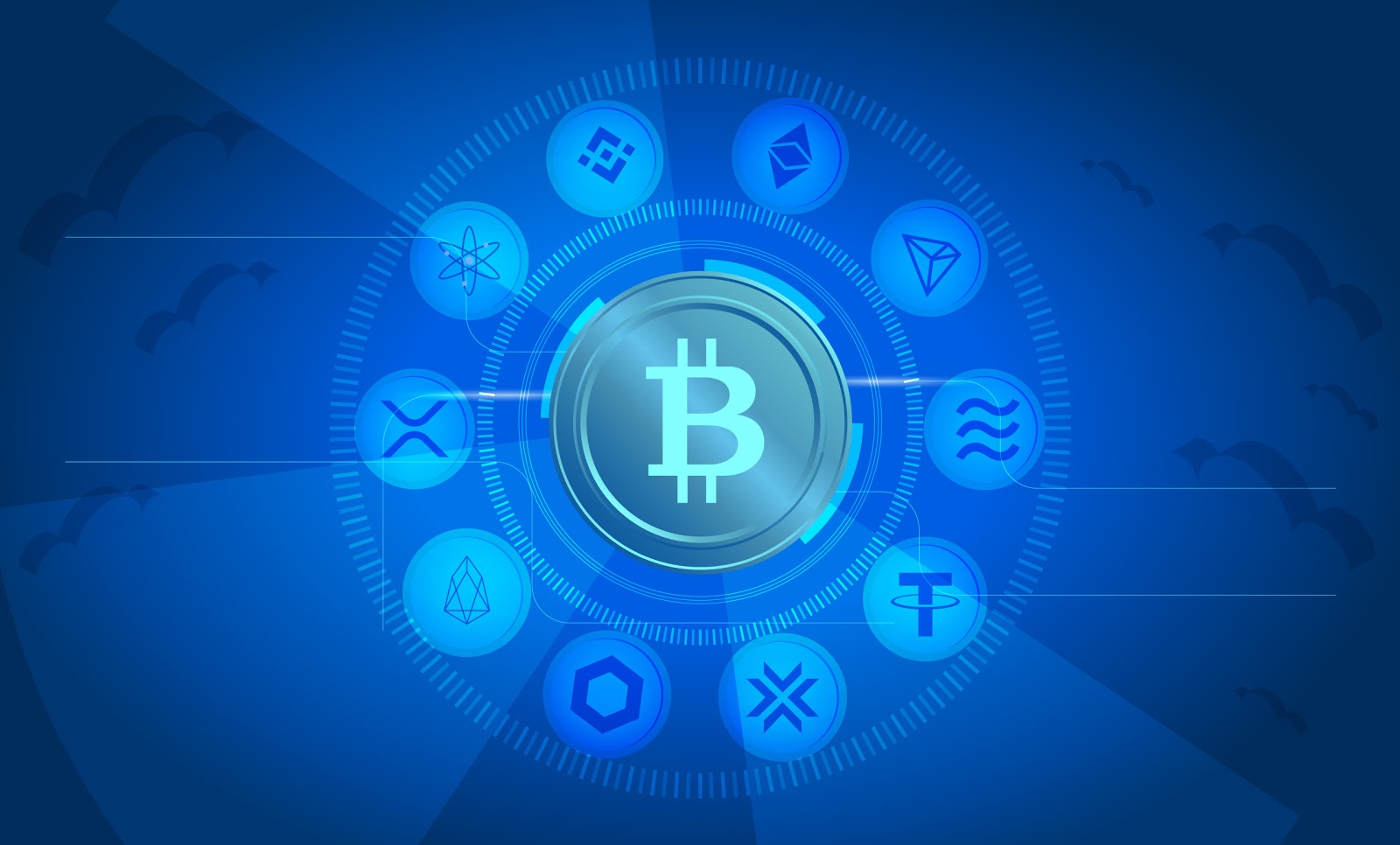
The crypto market is a diverse ecosystem filled with different projects all attempting to solve various problems. While it’s hard to argue against the belief that Bitcoin holds the crown as the originator, there are a ton of new projects worthy of praise. These new projects surpass Bitcoin’s technical capabilities and provide investors with some truly unique functionalities in the market. Here are the top 10 most important cryptocurrencies other than Bitcoin: $ETH, $BNB, $ATOM, $XRP, $EOS, $LINK, $LCX, $USDT, $Libra, $TRX.
Ethereum
Ethereum was one of the earliest altcoins to enter the market. Since its inception, Ethereum has been a driving force for innovation in the market. This second-generation blockchain introduced the world to smart contracts. Today, it would be hard to imagine the market without this titan.
Notably, Ethereum has a scheduled update planned for the end of the year. This update will replace the blockchains Proof-of-work consensus mechanism with a new Proof-of-Stake protocol. The update will reduce Ethereum’s carbon footprint significantly. Additionally, It will allow users to start staking their ETH to earn a passive income.
BNB – Binance Coin
Binance, the world’s largest exchange by volume, changed the market forever when it introduced the BNB token. BNB provided users with more flexibility, functionality, and lower fees. Wisely, Binance incorporated a variety of BNB trading pairs to bolster BNB’s value. The move was successful.
Today, it’s commonplace for exchanges to host a native utility token. Even with the competition, BNB remains the most successful exchange token in the market. Additionally, Binance continues to expand its operations. Each new functionality adds more to BNB’s utility. In turn, the token continues to gain value.
ATOM – Cosmos
Cosmos is another project that is worthy of recognition. The platform takes a unique approach to the sector. For one, Cosmos isn’t designed to compete against other cryptocurrencies. Instead, it functions as an interconnecting protocol. The developers behind ATOM describe Cosmos as an “ecosystem of connected blockchains.”
This strategy helps promote further innovation based on user’s requirements rather than competition. Cosmos introduces a new consensus mechanism called “Tendermint BFT.” The system is a byzantine fault-tolerant consensus engine that eliminates many of the concerns found in PoW blockchains such as Bitcoin.
XRP – Ripple
Ripple is one of the top ten cryptocurrencies in the world. This platform entered the market intending to service the banking sector. At that time, this strategy was unique. Ripple managed to secure huge strategic partnerships in a very short time. Specifically, Ripple has agreements in place with Santander, Money Gram, and VISA, to name a few.
Ripple continues to see adoption by institutional firms due to its fast transaction speeds and its proven track record. XRP eliminates middlemen for cross-border transactions and provides a more cost-effective and secure alternative to the status quo. The firm’s focus on cost-cutting means that there will always be a firm interested in its services.
EOS
EOS is a third-generation cryptocurrency that entered the market via one of the biggest ICOs of all time. The firm secured $4 billion during the record-breaking event. EOS’s goal is to provide a more efficient and developer-friendly alternative to the current smart contract programmable blockchains like Ethereum.
EOS incorporates various technologies to accomplish this task. The platform is very ICO friendly. Additionally, Dapp developers enjoy more flexibility using the platform. These features have led more developers to call EOS home. There are currently over 100 Dapps active on this new era blockchain today.
Chainlink
Chainlink is a project that has the potential to boost the entire market. Chainlink seeks to correct the biggest flaw found in oracles. Oracles are off-chain sensors that can communicate data to and from a blockchain. For example, an oracle could monitor your car payments. When you pay your vehicle off, the contract automatically sends you your title without the need for human intervention.
The possibilities are endless with oracles. However, they are centralized systems, until now. Chainlink introduces the world’s first oracle blockchain. The system monitors the network of oracles to ensure all data entry is correct. Through Chainlink, blockchain technology gains a huge advantage.
LCX
LCX is another token that raises the bar in terms of usability and efficiency. LCX allows users to trade on all major crypto exchanges within a single interface. This fourth-generation interface provides users access to powerful features. These features include Smart Order Routing, a portfolio management system, advanced analytics, and detailed reporting. Besides that, LCX keeps rolling out new products and services continuously such as a unique DeFi protocol and a security token and tokenization platform for STO’s. The Liechtenstein based company heavily invested in crypto compliance and regulation, preparing the launch of their own LCX Exchange. Rumored to be launched before the end of this year.
As the main utility token within the LCX ecosystem, this token is very flexible. You can use it to pay for all your fees including your LCX Terminal subscription or fees for security token offerings. Best of all, the token is ERC-20 compliant. The ERC-20 token ecosystem is by far the most robust and developed in the world. Consequently, LCX holders enjoy a high level of interoperability within this network.
Tether – USDT
No top ten list would be complete without USDT. USDT was the first successful stablecoin to see major adoption. Traders depend on this stable coin to avoid market volatility. You can watch the market cap of Tether rise during these times as investors seek shelter.
Tether is available on nearly every reputable exchange. Additionally, it’s consistently in the top cryptocurrencies globally in terms of market capitalization. Tether gained popularity because of its speed and low fees. It’s free to send Tether from one network wallet to another.
Libra
Libra makes this list because no other cryptocurrency was met with so much fear. The announcement of Libra sent shivers down regulators’ spines. Despite fears, the large social networks of the world must embrace cryptocurrencies. These established networks would give the technology the boost it needs to become mainstream.
Facebook seems determined to launch its Libra token. The platform has the financial backing to pull it off. In the coming year, it’s very possible that this project defies the odds and becomes one of the top coins in existence from day one of its launch. For now, the project remains one of the most relevant in the market, regardless of if it ever takes flight.
TRX – TRON
TRON has long been a favorite of investors. TRON has a forward-looking vision to power the Web3 revolution. This year saw TRON make major strides in its quest. The firm’s TRC-20 token standard is also seeing more adoption by developers. TRC-20 token provides developers with more scalability and efficiency when compared to ERC-20 tokens.
TRON remains a dominant force in the market mainly due to its network and community support. The platform’s founder, Justin Sun, is a vocal member of the crypto community. The coming year will see TRON’s network grow to new heights. Sun’s leadership and TRON’s investor appeal keeps this token on most top ten lists.


Hong Kong, 30th March 2026 — Hong Kong Web3 Festivalis honored to welcome CF Blockchain as a Secondary Exhibition Sponsor.
CF Blockchain focuses on the authority and professional information and services of fintech, artificial intelligence, digital currency and blockchain industries.
Hong Kong Web3 Festival (“Web3 Festival”), co-hosted by Wanxiang Blockchain Labs and HashKey Group, is Asia’s premiere crypto conference since 2023. The previous editions brought together over 350 exhibitors and more than 1,200 speakers for in-depth discussions, attracted a cumulative total of 100,000 visitors, and saw over 400 diverse side events. It has solidified its status as a leading crypto event, influencing Hong Kong’s Web3 landscape.
Following the sellout success of its previous editions, Hong Kong Web3 Festival has announced its return on 20–23 April at HKCEC. Now in its 4th year, this four-day event will once again bring tens of thousands of Web3 professionals, investors, and enthusiasts across the globe to connect, learn and be inspired.
Web3 Festival 2026 has set the agenda for Web3 growth and innovation, focusing mainly on traditional finance and crypto finance, AI + Web3, and RWAs.
The conference will also convene top experts and leading Web3 projects to exchange ideas, share best practices and gain perspectives on today’s evolving Web3 landscape.
Featured speakers include:
Paul CHAN Mo-po, GBM, GBS, MH, JP, Financial Secretary of the Government of the Hong Kong Special Administrative Region
Dr. YIP Chee Hang, Executive Director of Intermediaries, Securities and Futures Commission
Xiao Feng, Chairman of Wanxiang Blockchain, Chairman and CEO of HashKey Group
Duncan Chiu, Legislative Council Member (Technology & Innovation Constituency), Hong Kong
Lennix Lai, Chief Commercial Officer, OKX Global
Adeniyi Abiodun, Co-Founder & Chief Product Officer, Mysten Labs
Lily Liu, President, Solana Foundation
Joseph Chalom, CEO, Sharplink
Francis B. Zhou, CEO, Quantum Solutions
Abdelhamid Bizid, Managing Director, BlackRock
Phil Kang, CEO, ZR Financial Group
Yat Siu, Co-Founder and Chairman, Animoca Brands
Bugra Celik, Head of Digital Assets and Currencies at Global Macro, HSBC
Robert Lui, Deloitte China Hong Kong Digital Asset Leader; Member of Task Force on Promoting Web3 Development
DIAO Zhihai, Head of International Business of Wealth Management, CICC
Don Ng, Director, Digital Assets, China Asset Management (Hong Kong) Limited
Gavin Wang, Managing Partner & Chief Investment Officer, SNZ Holding & SNZ Capital
David Lee, Chairman, Global FinTech Institute
Min Lin, Managing Director, Head of Global Business Development at Ondo Finance
Join Hong Kong Web3 Festival on April 20–23 and be part of an epic Web3 journey: https://luma.com/hkweb3festival_2026
Hong Kong Web3 Festival 2026 is honored to welcome ENI as a Gold Sponsor.
Hong Kong, 27th March 2026 — The Hong Kong Web3 Festival (“Web3 Festival”), co-hosted by Wanxiang Blockchain Labs and HashKey Group and organized by W3ME, is Asia’s premiere crypto conference since 2023. It convenes the world’s smartest minds in the Web3 and crypto space to discuss the latest trends and policies.
Hong Kong Web3 Festival 2026 will take place from April 20 to 23 at Hong Kong Convention and Exhibition Centre. The previous three editions brought together over 350 exhibitors and more than 1,200 speakers for in-depth discussions, attracted a cumulative total of 100,000 visitors, and saw over 400 diverse side events. It has solidified its status as a leading crypto event, influencing Hong Kong’s Web3 landscape.
Web3 Festival 2026 ultimately will have up to 400 speakers representing all aspects of Web3 and crypto on its stages. It has also attracted registrations from thousands of executives and corporate decision-makers in traditional finance and real economies. This enables the conference to be a high-level platform for in-depth dialogues and high-value connections.
As Asia’s premier crypto event, Web3 Festival leverages Hong Kong’s unique position as a global financial center and innovation powerhouse, bridging the vast market potential of Mainland China with worldwide Web3 advancements. This unique positioning enables the event to bring together the best resources from across the globe, offering attendees first-hand Web3 updates and networking opportunities.
ENI is an ultra-high-performance, modular L1 blockchain engineered specifically for hyper-scale commercial adoption. More information: https://eni.top
Get tickets: https://luma.com/hkweb3festival_2026
Be our partner: https://tally.so/r/w5YEbP
Hong Kong Web3 Festival 2026 is honored to welcome CoinPost as a Secondary Exhibition Sponsor.
Hong Kong, 27th March 2026 — Hong Kong Web3 Festival (“Web3 Festival”), co-hosted by Wanxiang Blockchain Labs and HashKey Group, is Asia’s premiere crypto conference since 2023. The previous editions brought together over 350 exhibitors and more than 1,200 speakers for in-depth discussions, attracted a cumulative total of 100,000 visitors, and saw over 400 diverse side events. It has solidified its status as a leading crypto event, influencing Hong Kong’s Web3 landscape.
Following the sellout success of its previous editions, Hong Kong Web3 Festival has announced its return on 20–23 April at HKCEC. Now in its 4th year, this four-day event will once again bring tens of thousands of Web3 professionals, investors, and enthusiasts across the globe to connect, learn and be inspired.
Web3 Festival 2026 has set the agenda for Web3 growth and innovation, focusing mainly on traditional finance and crypto finance, AI + Web3, and RWAs.
The conference will also convene top experts and leading Web3 projects to exchange ideas, share best practices and gain perspectives on today’s evolving Web3 landscape.
Featured speakers include:
Paul CHAN Mo-po, GBM, GBS, MH, JP, Financial Secretary of the Government of the Hong Kong Special Administrative Region
Dr. YIP Chee Hang, Executive Director of Intermediaries, Securities and Futures Commission
Xiao Feng, Chairman of Wanxiang Blockchain, Chairman and CEO of HashKey Group
Duncan Chiu, Legislative Council Member (Technology & Innovation Constituency), Hong Kong
Lennix Lai, Chief Commercial Officer, OKX Global
Adeniyi Abiodun, Co-Founder & Chief Product Officer, Mysten Labs
Lily Liu, President, Solana Foundation
Joseph Chalom, CEO, Sharplink
Francis B. Zhou, CEO, Quantum Solutions
Abdelhamid Bizid, Managing Director, BlackRock
Phil Kang, CEO, ZR Financial Group
Yat Siu, Co-Founder and Chairman, Animoca Brands
Bugra Celik, Head of Digital Assets and Currencies at Global Macro, HSBC
Robert Lui, Deloitte China Hong Kong Digital Asset Leader; Member of Task Force on Promoting Web3 Development
DIAO Zhihai, Head of International Business of Wealth Management, CICC
Chris Lee, Vice President, ETF China Asset Management (Hong Kong)
Gavin Wang, Managing Partner & Chief Investment Officer, SNZ Holding & SNZ Capital
David Lee, Chairman, Global FinTech Institute
Min Lin, Managing Director, Head of Global Business Development at Ondo Finance
CoinPost is Japan’s largest crypto news outlet. More information: https://coinpost.jp/
Join Hong Kong Web3 Festival on April 20–23 and be part of an epic Web3
journey: https://luma.com/hkweb3festival_2026

CF Blockchain Joins Hong Kong Web3 Festival as Secondary Exhibition Sponsor

ENI Announced as Gold Sponsor at Hong Kong Web3 Festival 2026

CoinPost Announced as Secondary Exhibition Sponsor at Hong Kong Web3 Festival 2026

CHAINISLE Announced as Secondary Exhibition Sponsor at Hong Kong Web3 Festival 2026

KBW2026 Announced as Secondary Exhibition Sponsor at Hong Kong Web3 Festival 2026

Aspire Confirms Official Participation at Hong Kong Web3 Festival 2026

Cardalonia Aiming To Become The Biggest Metaverse Project On Cardano

P2P2C BREAKTHROUGH CREATES A CONNECTION BETWEEN ETM TOKEN AND THE SUPER PROFITABLE MARKET

WOM Protocol partners with CoinPayments, the world’s largest cryptocurrency payments processor

ETHERSMART DEVELOPER’S VISION MADE FINTECH COMPANY BECOME DUBAI’S TOP DIGITAL BANK

Project Quantum – Decentralised AAA Gaming

WOM Protocol Recommended by Premier Crypto Analyst as only full featured project for August
-
 Crypto4 years ago
Cardalonia Aiming To Become The Biggest Metaverse Project On Cardano
-
 Press Release5 years ago
P2P2C BREAKTHROUGH CREATES A CONNECTION BETWEEN ETM TOKEN AND THE SUPER PROFITABLE MARKET
-
 Blockchain6 years ago
WOM Protocol partners with CoinPayments, the world’s largest cryptocurrency payments processor
-
 Press Release5 years ago
ETHERSMART DEVELOPER’S VISION MADE FINTECH COMPANY BECOME DUBAI’S TOP DIGITAL BANK
-
 Press Release5 years ago
Project Quantum – Decentralised AAA Gaming
-
 Blockchain6 years ago
WOM Protocol Recommended by Premier Crypto Analyst as only full featured project for August
-
 Press Release5 years ago
ETHERSMART DEVELOPER’S VISION MADE FINTECH COMPANY BECOME DUBAI’S TOP DIGITAL BANK
-
 Blockchain6 years ago
1.5 Times More Bitcoin is purchased by Grayscale Than Daily Mined Coins