
News
Think You Missed the Meme Coin Boom? Troller Cat’s Presale Could Be Your Snek Momen

Those who enter early in the crypto market often see the biggest rewards. Just take a look at what happened with Snek. What started as a meme quietly gained massive traction and skyrocketed. By the time most investors noticed, the real profits had already been booked. But crypto doesn’t hit pause. A new meme coin is heating up the presale circuit and clawing for attention—Troller Cat ($TCAT).
The Troller Cat presale is live, and it’s purring with power. With over 12 00 holders and more than $225,000 raised, this isn’t just another meme coin—it’s a full-blown Web3 character universe backed by utility, humor, and a feral roadmap. If you missed Snek, this might be your redemption play.
Let’s break down why Troller Cat could be your breakout win of 2025.
Troller Cat: The Meme Coin Redemption Arc Everyone’s Talking About
If you fumbled the Snek play, this is your second chance—and this time, the claws are out. Troller Cat is not just another meme coin riding the hype wave. It’s gamified, edgy, and building a unique brand identity that stands out in a crowded field.

Why investors are racing into the Troller Cat frenzy:
- Stage 10 is live, with a token price of $0.00003684
- Launch price locked at $0.0005309 – that’s a 1300% potential ROI
- Over 1,200 holders, growing daily
- No minimum buy-in, only $25 minimum if using a referral code
- Next stage brings a 35.01% price increase – don’t blink.
Every presale stage unlocks a new troll-themed character, turning the community into an interactive, meme-powered storyline. Troller Cat is fully audited, KYC verified, and focused on building long-term value, not short-term hype.
Stake and Earn: Passive Gains with 69% APY
Troller Cat’s staking program dishes out a generous 69% APY during the presale, giving loyal holders a real reason to stick around. It’s not just about memes—it’s about making your tokens work for you. By locking in their coins, users can earn steady returns while supporting the project’s long-term stability.
Unlike many high-yield systems that risk flooding the market, Troller Cat’s staking model is crafted to be sustainable, rewarding commitment without triggering inflation. It strikes a smart balance between engagement and ecosystem health. As rewards are automatically distributed, holders can relax, troll on, and watch their stack grow—no effort needed, just gains.
Snek: The Meme Coin You Wish You Bought Earlier
Snek wasn’t just a quirky frog-themed meme—it became a full-fledged crypto cult. What started as a playful token quickly gained viral traction, sending early backers into a profit frenzy. Its low-cap entry point gave room for major upside, and it delivered.
Snek’s formula was clear: meme energy + early momentum = massive ROI. But the vast majority only heard about it once it was trending. By the time influencers were posting about it, the whales had already cashed out.
Snek became a harsh reminder of how fast opportunities vanish in crypto.

Final Thoughts: Troller Cat Might Just Be 2025’s Breakout Crypto Star
The meme coin cycle is merciless—either you act early, or you become someone else’s exit liquidity. While Snek made waves, Troller Cat is creating a tsunami. With real utility, a growing holder base, deflationary mechanics, and a fully gamified experience, this project has claws—and it’s scratching at the door of breakout stardom.
Presale prices are still low, but the next jump is coming fast. With over 1341% ROI potential from today’s price to launch, now is the time to pounce.

For More Information:
Website: https://www.trollercat.io/
Buy Now: https://www.trollercat.io/buy-now/
Frequently Asked Questions
1. What is the current stage of the Troller Cat presale?
The presale is in Stage 10, with a price of $0.00003684. Over $225,000 has been raised with more than 1,200 holders.
2. What’s the expected ROI if I join now?
Buying in now at Stage 10 offers a potential ROI of 1300% if held until launch at $0.0005309.
3. Is Troller Cat just another meme token?
No. Troller Cat features 69% APY staking, a P2E Game Center, and deflationary tokenomics—built for fun and function.
4. Is the project safe?
Yes. KYC verification and a full smart contract audit ensure transparency and investor security.
5. How do I participate?
Go to Troller Cat’s site, connect your wallet, and buy. No minimum required—except $25 if using a referral.
Glossary of Key Terms
- Presale: Early buying phase where tokens are sold before the official public launch.
- ROI (Return on Investment): Percentage profit earned based on your original investment amount.
- APY (Annual Percentage Yield): Yearly return percentage on staked tokens, compounding over time.
- Deflationary Token: A token with a decreasing supply over time, helping to increase scarcity and value.
- Staking: Locking tokens into a platform to earn passive rewards or interest over time.
- P2E (Play-to-Earn): Earning cryptocurrency by playing blockchain-based games or completing in-game tasks.
- KYC (Know Your Customer): A verification process requiring personal identification to ensure transparency.
- Smart Contract Audit: A thorough code review to detect vulnerabilities and confirm the contract’s security.
- Token Holder: An individual or entity that owns and holds a specific cryptocurrency token.
- Launch Price: The first official trading price when a token hits public exchanges or markets.





Crypto
Ethereum Contract Deployments Reach Record 8.7 Million in Q4, Highlighting Developer Momentum


Ethereum closed 2025 with a major milestone that underscores its continued leadership in the smart contract ecosystem. According to data from Token Terminal, developers deployed 8.7 million smart contracts on Ethereum in Q4 2025, marking the highest quarterly total in the network’s history.
The figure reflects more than just raw activity. It points to sustained confidence in Ethereum as the primary platform for building decentralized applications, even as competition from alternative blockchains intensifies.
Ethereum contract deployments have steadily increased over the past year, but the sharp acceleration in the final quarter signals that developers are not slowing down. Instead, they appear to be doubling down on Ethereum’s infrastructure as the foundation for long-term innovation.
Ethereum’s Developer Ecosystem Shows Structural Strength
The surge in Ethereum smart contract deployments is closely tied to the rapid expansion of its Layer 2 ecosystem. Rollup networks such as Arbitrum, Optimism, and Base have lowered costs and improved scalability while maintaining compatibility with Ethereum’s core architecture. As a result, developers can deploy contracts more frequently without facing the same economic constraints that once limited on-chain experimentation.
This rollup-driven model has effectively extended Ethereum’s reach. While contracts may execute on Layer 2 networks, they still rely on Ethereum for settlement and security. That relationship helps explain why Ethereum contract activity continues to rise even as usage spreads across multiple chains.
At the same time, developer tooling around Ethereum has matured significantly. Improved frameworks, clearer documentation, and broader grant support have reduced friction for teams launching new protocols or testing novel ideas. These improvements make it easier to move from concept to deployment, contributing directly to the record numbers seen in Q4.
DeFi and NFTs Contribute to Renewed On-Chain Activity
Another factor behind the increase in Ethereum contract deployments is a rebound in decentralized finance and NFT-related experimentation. While earlier cycles saw speculative excess, recent activity has leaned more toward infrastructure upgrades, protocol iterations, and utility-focused applications.
DeFi teams continue to refine lending, trading, and liquidity mechanisms, often deploying multiple contracts as part of iterative development. NFT projects, meanwhile, are expanding beyond simple collectibles into areas such as gaming, identity, and digital rights, each requiring more sophisticated smart contract architectures.
Together, these trends create consistent demand for new deployments rather than one-off launches.
Why the 8.7 Million Figure Matters
Reaching 8.7 million Ethereum contract deployments in a single quarter is not just a symbolic achievement. It highlights the depth of developer engagement and suggests Ethereum remains the default environment for building complex on-chain systems.
Unlike short-term metrics tied to price or speculation, developer activity tends to reflect long-term confidence. Builders invest time and resources where they expect ecosystems to remain relevant and secure. The Q4 data indicates that, despite higher competition and ongoing debates around scalability and fees, Ethereum still holds that position.
Looking ahead, Ethereum’s rollup-centric roadmap is likely to push deployment numbers even higher. As more activity shifts to Layer 2 networks, developers can experiment faster while relying on Ethereum as the settlement layer. That dynamic reinforces Ethereum’s role as the backbone of Web3 rather than diminishing it.
For now, the record-setting quarter sends a clear signal: Ethereum’s developer ecosystem remains one of the strongest indicators of its long-term resilience and relevance in the blockchain space.
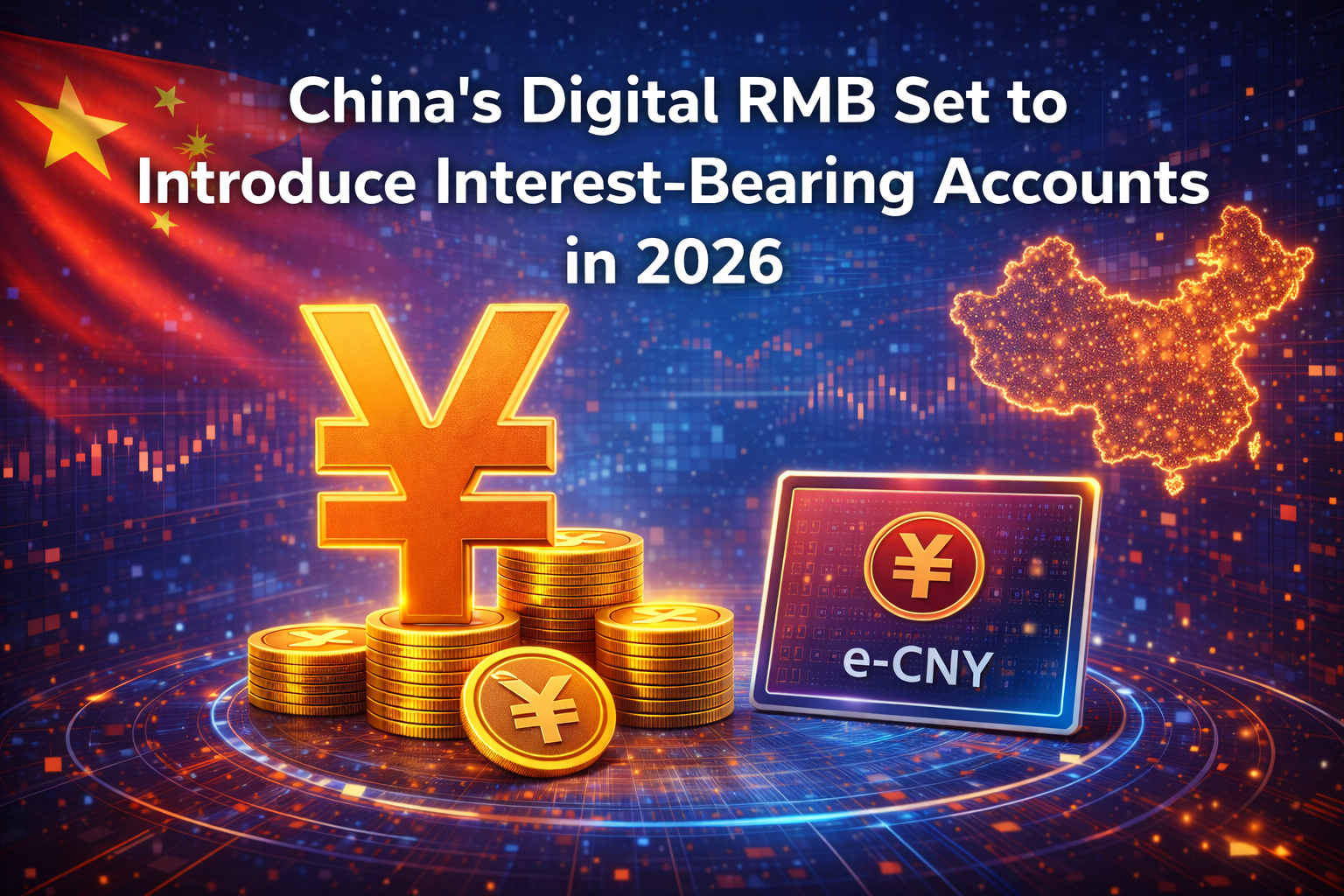
China’s digital RMB, also known as the e-CNY, is preparing for one of its most significant structural upgrades since its launch. Beginning January 1, 2026, the digital currency will shift to an interest-bearing model, a move that signals a deeper integration of the digital RMB into China’s traditional banking framework and broader financial system.
The planned change marks a clear evolution from the digital RMB’s original design, which emphasized strict reserve backing and non-interest-bearing balances. While final confirmation from the People’s Bank of China is still pending, the direction of policy is already reshaping expectations around how the e-CNY will function in practice.
A shift toward interest-bearing digital RMB accounts
Under the new framework, banks operating digital RMB wallets will be allowed to pay interest on user balances. More importantly, those balances will be recorded on banks’ balance sheets, rather than being fully segregated as off-balance-sheet liabilities. This change brings the digital RMB closer to how traditional bank deposits are treated today.
Previously, digital RMB holdings were backed by a 100% reserve requirement, limiting banks’ ability to manage liquidity or deploy funds efficiently. The upcoming model introduces partial reserve management, giving banks greater flexibility in asset-liability management while still preserving oversight through the existing dual-layer system. In this structure, the central bank remains responsible for issuance, while commercial banks handle distribution and customer-facing services.
By allowing interest payments, digital RMB wallets begin to resemble conventional savings or transaction accounts, rather than passive payment instruments. This shift may encourage broader usage, particularly among users and institutions that previously viewed the e-CNY as functionally inferior to bank deposits.
Deposit protection and regulatory alignment
One of the most consequential aspects of the upgrade is legal and regulatory alignment. Once digital RMB balances are treated as on-balance-sheet liabilities, they are expected to fall under China’s deposit insurance framework. This provides users with formal protection similar to that enjoyed by traditional depositors, reducing perceived risk and reinforcing trust in the system.
From a regulatory standpoint, the move also simplifies supervision. Treating the digital RMB as a deposit-like product allows regulators to apply existing banking rules more consistently, rather than maintaining a parallel framework for digital currency balances. For banks, this reduces compliance complexity and clarifies how digital RMB fits into capital and liquidity requirements.
Why China is making this move now
China has already seen large-scale adoption of the digital RMB under its non-interest-bearing model, with trillions of yuan reportedly circulated during pilot phases. However, usage has largely been driven by government programs, subsidies, and controlled use cases, rather than organic consumer preference.
Introducing interest is a practical incentive. It makes holding digital RMB economically neutral, or even advantageous, compared to cash or low-yield transaction accounts. At the same time, partial reserves give banks a reason to actively support and promote e-CNY wallets, rather than viewing them as operational overhead.
This shift also reflects broader strategic goals. China continues to modernize its payment infrastructure and reduce reliance on cash, while strengthening monetary oversight in an increasingly digital economy. An interest-bearing digital RMB supports those objectives without abandoning centralized control.
Potential implications beyond China
Although the digital RMB remains primarily a domestic project, its evolution is being closely watched internationally. An interest-bearing central bank digital currency challenges the assumption that CBDCs must be non-yielding to avoid competition with banks. China’s approach suggests that integration, rather than separation, may be the preferred long-term model.
For global institutions and policymakers, the changes offer a real-world case study in how digital currencies can coexist with commercial banking systems. If successful, the e-CNY could influence how other countries design their own digital currencies, particularly in emerging markets seeking both financial inclusion and system stability.
As the 2026 rollout approaches, attention will turn to implementation details, interest rate structures, and limits on balances. What is clear, however, is that China’s digital RMB is no longer an experimental payment tool. It is steadily becoming a core component of the country’s financial architecture, with implications that extend well beyond digital wallets.

Shisa is gaining fresh attention in the meme-coin sector as traders increasingly look beyond short-lived hype toward community-focused projects with clear on-chain activity. Built on the BNB Chain, Shisa positions itself as a decentralized, meme-inspired token that blends playful branding with straightforward token mechanics, appealing to retail participants drawn to social momentum and accessibility.
Unlike complex DeFi protocols or heavily venture-backed launches, Shisa leans into simplicity. The project emphasizes transparency, open participation, and organic growth, which has become a defining narrative for meme tokens that manage to sustain attention beyond initial launches.
Community Momentum Drives Shisa’s Market Presence
Shisa’s growth story is closely tied to community engagement rather than technical novelty. Activity surrounding the token has been fueled by social interaction, user-generated content, and grassroots promotion across crypto communities. This approach mirrors a broader trend in the meme-coin market, where visibility and cultural relevance often matter as much as utility.
On-chain data shows consistent participation from smaller holders, suggesting that Shisa’s supply distribution remains relatively broad. Such distribution patterns are often viewed favorably by traders who prefer tokens that are not overly concentrated in a handful of wallets, especially in speculative market segments like meme assets.
BNB Chain Infrastructure Lowers Entry Barriers
Operating on BNB Chain gives Shisa a structural advantage in terms of transaction costs and accessibility. Lower fees and faster confirmations make it easier for users to trade, hold, and transfer tokens without the friction commonly associated with higher-cost networks.
This infrastructure choice aligns with Shisa’s retail-oriented positioning. For newer participants entering the crypto market through meme tokens, ease of use can play a major role in adoption. BNB Chain’s established ecosystem also provides exposure to decentralized exchanges and liquidity venues already familiar to many users.
Meme Tokens Continue to Evolve Beyond Short-Term Hype
The rise of Shisa reflects a broader shift in how meme tokens are perceived. While the sector remains highly speculative, projects that maintain consistent branding, active communities, and steady on-chain behavior are increasingly separating themselves from short-lived launches.
Rather than promising complex roadmaps or aggressive utility claims, Shisa appears focused on sustaining relevance through engagement and visibility. This strategy aligns with the evolving meme-coin market, where long-term survival often depends on adaptability and community loyalty rather than technical milestones alone.
Market Outlook and Risk Considerations
As with all meme-based cryptocurrencies, Shisa carries elevated volatility and risk. Price movements are often driven by sentiment, social trends, and broader market conditions rather than fundamentals. Traders typically approach such assets with short-term strategies or limited allocations.
That said, sustained participation and growing awareness suggest that Shisa has entered a phase where market attention is no longer purely reactionary. Whether this momentum can translate into long-term positioning will depend on continued engagement and overall market conditions across the BNB Chain ecosystem.
For now, Shisa represents another example of how meme tokens continue to carve out space in crypto markets, driven less by promises and more by collective participation and cultural traction.

Conflux Joins Hong Kong Web3 Festival as Secondary Exhibition Sponsor

Web3 Leader Programme is an official Platinum Sponsor at Hong Kong Web3 Festival 2026

WEEX Labs Announced as Primary Exhibition Sponsor at Hong Kong Web3 Festival

CF Blockchain Joins Hong Kong Web3 Festival as Secondary Exhibition Sponsor

ENI Announced as Gold Sponsor at Hong Kong Web3 Festival 2026

CoinPost Announced as Secondary Exhibition Sponsor at Hong Kong Web3 Festival 2026

Cardalonia Aiming To Become The Biggest Metaverse Project On Cardano

P2P2C BREAKTHROUGH CREATES A CONNECTION BETWEEN ETM TOKEN AND THE SUPER PROFITABLE MARKET

WOM Protocol partners with CoinPayments, the world’s largest cryptocurrency payments processor

ETHERSMART DEVELOPER’S VISION MADE FINTECH COMPANY BECOME DUBAI’S TOP DIGITAL BANK

Project Quantum – Decentralised AAA Gaming

WOM Protocol Recommended by Premier Crypto Analyst as only full featured project for August
-
 Crypto4 years ago
Cardalonia Aiming To Become The Biggest Metaverse Project On Cardano
-
 Press Release5 years ago
P2P2C BREAKTHROUGH CREATES A CONNECTION BETWEEN ETM TOKEN AND THE SUPER PROFITABLE MARKET
-
 Blockchain6 years ago
WOM Protocol partners with CoinPayments, the world’s largest cryptocurrency payments processor
-
 Press Release5 years ago
ETHERSMART DEVELOPER’S VISION MADE FINTECH COMPANY BECOME DUBAI’S TOP DIGITAL BANK
-
 Press Release5 years ago
Project Quantum – Decentralised AAA Gaming
-
 Blockchain6 years ago
WOM Protocol Recommended by Premier Crypto Analyst as only full featured project for August
-

 Press Release5 years ago
ETHERSMART DEVELOPER’S VISION MADE FINTECH COMPANY BECOME DUBAI’S TOP DIGITAL BANK
-
 Blockchain6 years ago
1.5 Times More Bitcoin is purchased by Grayscale Than Daily Mined Coins