
Press Release
Rigel Finance Combines a DeFi AMM with Yield Farming to Boost ROIs

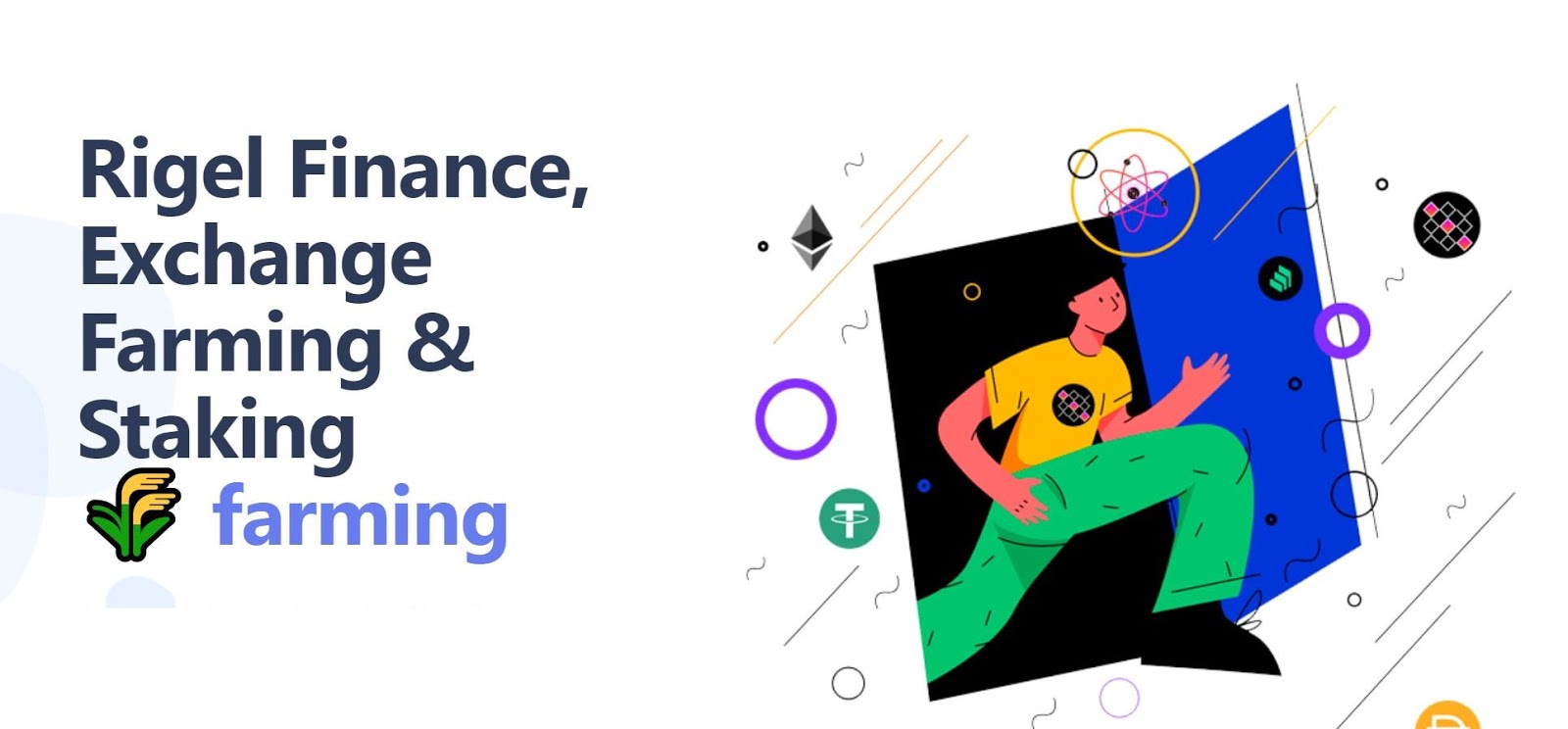
Rigel Finance seeks to enhance the way you trade via its unique yield farming AMM protocols. This Automated Market-Making (AMM) combines a Decentralized Exchange (DEX) with some of the world’s top DeFi features. Specifically, you can farm, stake, and trade with ease using this platform.
What is an AMM?
The first thing to understand is that Rigel Finance is an AMM. AMMs differ from traditional exchanges in a couple of important ways. When you trade using a conventional crypto exchange, you’re exchanging your tokens with another trader directly. In the case of centralized broker exchanges, you’re purchasing your crypto from the platform itself.
When you trade on an AMM, you are actually interacting with a smart contract that acts as a liquidity pool. This smart contract then “makes” the market for you. AMMs are growing in popularity because they provide a lot of benefits over their traditional counterparts. Primarily, they allow digital assets to be traded without permission and automatically.
Yield Farming
Rigel Finance leverages its powerful AMM engine and combines it with a yield farming protocol to provide users with more opportunities to earn. Yield farming is an investment strategy that involves locking your cryptocurrency into a liquidity pool. It’s very similar to staking.
The main difference between staking and yield farming is that yield farming usually has no required lockup period, whereas staking protocols can require 30-days or longer. Also, staking protocols usually have some early withdrawal fee or penalty if you need to access your crypto before the lockup ends. Consequently, yield farming has gained a lot of attention since it entered the market last year.
Rigel Yield Farming
In the Rigel ecosystem, you earn RIGEL tokens by farming RigelSwap V2 RLP. Impressively, the network currently supports 18 pairs of yield farming pools to suit your investment needs. The network rewards you with a respectable 15% of RIGEL/block in the pair RIGEL-ETH RLP and 5% of RIGEL/block for the other 17 pairs. Best of all, the yield farming protocol is deflationary.
Deflationary Yield Farming is the Future
One of the biggest complaints of yield farmers in the market currently is inflation. In most DeFi scenarios, the rewards tokens are issued whenever new liquidity is added to the pool. Sadly, this approach leaves investors suffering as time progresses because the token issuance rate begins to out weight the demand.
To combat these inflationary concerns, Rigel Finance introduces a proprietary deflationary mechanism. This system helps developers gain more control over their project’s token value. Every day, the network automatically trades all the LP (liquidity pool) tokens for RIGEL tokens. These tokens then get redistributed proportionally between all the xRIGEL holders in the pool.
In addition to the LP token conversion, the network also hosts bi-weekly burning events. The amount of tokens burned is based on a variety of factors, including the number of listings. Lastly, the network will conduct yearly burns. The schedule for these burnings starts the second year with 50% of all listing fees burned. From there, the annual burns will decrease by 50%.
Powerful Tokenomics Strategy
Uniquely, there are only 30.000 RIGEL scheduled for release, with the last coin issued sometime in December 2022. This low token supply means that the demand for RIGEL will see continued growth as the project matures. The value of the token has already risen since the private sale sold out. There are currently 7600 RIGEL in circulation.
A Multi-Token Approach to Combat Inflation
Rigel Finance was built to ensure that future yield farmers and stakers would enjoy healthy ROIs. The network utilizes a multi-token approach to accomplish this task. The network’s primary governance token is RIGEL.
RIGEL is what you hold to gain voting rights on vital upgrades to the network, such as adding a new farming pool. You also have a staking token called xRigel and a yield farming token called RigelSwap V2 RLP. Since all of these tokens are deflationary in nature, each is expected to increase in demand in the coming weeks.
Progress of Development
Rigel’s network is already live. The network intends to list its token in the coming weeks on seven top exchanges. Each listing will add liquidity to the platform and increase the demand for this scarce token. RIGEL is already available on Bithumb Global, Bilaxy, Rigel Swap, Uniswap, and 0x Protocol.
Notably, the network has a well-thought marketing and launch strategy dubbed the “Take Me To Rigel” campaign. This campaign includes multiple token listings, the full launch of the platform, early-bird investor bonuses, and the start of a wide-spread marketing push.
Rigel Wallet
Another feature to look out for is the Rigel Wallet. This DeFi wallet is available as a free download on all Android devices. The wallet has high interoperability due to its WalletConnect integration. You can save any ERC-20 token with ease and check the balances and other vital data at a glance. Best of all, 50% of all the network’s fees go to the deflationary protocol.
Stake and Earn
You can also stake your tokens on Rigel Finance. Staking is a core feature on most DeFi platforms nowadays. Staking is considered a better alternative to trading by many investors because it requires far less work. When you trade cryptocurrencies, you must research, analyze, and actively monitor and manage your investments.
When you stake your cryptocurrencies on Rigel, you simply lock your crypto into a smart contract. The more tokens you stake, and the longer you keep your holdings locked, the higher rewards you will earn. Best of all, these rewards are guaranteed, versus trading, where market movements are impossible to predict with 100% accuracy.
Unlimited Growth Potential
Rigel Finance’s tokenomics make it stand out from other projects in DeFi currently. The developers behind this platform found a nice balance between features and usability to attract investor interest. It will be interesting to see the effects of such a low token issuance.


Hong Kong, 30th March 2026 — Hong Kong Web3 Festivalis honored to welcome CF Blockchain as a Secondary Exhibition Sponsor.
CF Blockchain focuses on the authority and professional information and services of fintech, artificial intelligence, digital currency and blockchain industries.
Hong Kong Web3 Festival (“Web3 Festival”), co-hosted by Wanxiang Blockchain Labs and HashKey Group, is Asia’s premiere crypto conference since 2023. The previous editions brought together over 350 exhibitors and more than 1,200 speakers for in-depth discussions, attracted a cumulative total of 100,000 visitors, and saw over 400 diverse side events. It has solidified its status as a leading crypto event, influencing Hong Kong’s Web3 landscape.
Following the sellout success of its previous editions, Hong Kong Web3 Festival has announced its return on 20–23 April at HKCEC. Now in its 4th year, this four-day event will once again bring tens of thousands of Web3 professionals, investors, and enthusiasts across the globe to connect, learn and be inspired.
Web3 Festival 2026 has set the agenda for Web3 growth and innovation, focusing mainly on traditional finance and crypto finance, AI + Web3, and RWAs.
The conference will also convene top experts and leading Web3 projects to exchange ideas, share best practices and gain perspectives on today’s evolving Web3 landscape.
Featured speakers include:
Paul CHAN Mo-po, GBM, GBS, MH, JP, Financial Secretary of the Government of the Hong Kong Special Administrative Region
Dr. YIP Chee Hang, Executive Director of Intermediaries, Securities and Futures Commission
Xiao Feng, Chairman of Wanxiang Blockchain, Chairman and CEO of HashKey Group
Duncan Chiu, Legislative Council Member (Technology & Innovation Constituency), Hong Kong
Lennix Lai, Chief Commercial Officer, OKX Global
Adeniyi Abiodun, Co-Founder & Chief Product Officer, Mysten Labs
Lily Liu, President, Solana Foundation
Joseph Chalom, CEO, Sharplink
Francis B. Zhou, CEO, Quantum Solutions
Abdelhamid Bizid, Managing Director, BlackRock
Phil Kang, CEO, ZR Financial Group
Yat Siu, Co-Founder and Chairman, Animoca Brands
Bugra Celik, Head of Digital Assets and Currencies at Global Macro, HSBC
Robert Lui, Deloitte China Hong Kong Digital Asset Leader; Member of Task Force on Promoting Web3 Development
DIAO Zhihai, Head of International Business of Wealth Management, CICC
Don Ng, Director, Digital Assets, China Asset Management (Hong Kong) Limited
Gavin Wang, Managing Partner & Chief Investment Officer, SNZ Holding & SNZ Capital
David Lee, Chairman, Global FinTech Institute
Min Lin, Managing Director, Head of Global Business Development at Ondo Finance
Join Hong Kong Web3 Festival on April 20–23 and be part of an epic Web3 journey: https://luma.com/hkweb3festival_2026
Hong Kong Web3 Festival 2026 is honored to welcome ENI as a Gold Sponsor.
Hong Kong, 27th March 2026 — The Hong Kong Web3 Festival (“Web3 Festival”), co-hosted by Wanxiang Blockchain Labs and HashKey Group and organized by W3ME, is Asia’s premiere crypto conference since 2023. It convenes the world’s smartest minds in the Web3 and crypto space to discuss the latest trends and policies.
Hong Kong Web3 Festival 2026 will take place from April 20 to 23 at Hong Kong Convention and Exhibition Centre. The previous three editions brought together over 350 exhibitors and more than 1,200 speakers for in-depth discussions, attracted a cumulative total of 100,000 visitors, and saw over 400 diverse side events. It has solidified its status as a leading crypto event, influencing Hong Kong’s Web3 landscape.
Web3 Festival 2026 ultimately will have up to 400 speakers representing all aspects of Web3 and crypto on its stages. It has also attracted registrations from thousands of executives and corporate decision-makers in traditional finance and real economies. This enables the conference to be a high-level platform for in-depth dialogues and high-value connections.
As Asia’s premier crypto event, Web3 Festival leverages Hong Kong’s unique position as a global financial center and innovation powerhouse, bridging the vast market potential of Mainland China with worldwide Web3 advancements. This unique positioning enables the event to bring together the best resources from across the globe, offering attendees first-hand Web3 updates and networking opportunities.
ENI is an ultra-high-performance, modular L1 blockchain engineered specifically for hyper-scale commercial adoption. More information: https://eni.top
Get tickets: https://luma.com/hkweb3festival_2026
Be our partner: https://tally.so/r/w5YEbP
Hong Kong Web3 Festival 2026 is honored to welcome CoinPost as a Secondary Exhibition Sponsor.
Hong Kong, 27th March 2026 — Hong Kong Web3 Festival (“Web3 Festival”), co-hosted by Wanxiang Blockchain Labs and HashKey Group, is Asia’s premiere crypto conference since 2023. The previous editions brought together over 350 exhibitors and more than 1,200 speakers for in-depth discussions, attracted a cumulative total of 100,000 visitors, and saw over 400 diverse side events. It has solidified its status as a leading crypto event, influencing Hong Kong’s Web3 landscape.
Following the sellout success of its previous editions, Hong Kong Web3 Festival has announced its return on 20–23 April at HKCEC. Now in its 4th year, this four-day event will once again bring tens of thousands of Web3 professionals, investors, and enthusiasts across the globe to connect, learn and be inspired.
Web3 Festival 2026 has set the agenda for Web3 growth and innovation, focusing mainly on traditional finance and crypto finance, AI + Web3, and RWAs.
The conference will also convene top experts and leading Web3 projects to exchange ideas, share best practices and gain perspectives on today’s evolving Web3 landscape.
Featured speakers include:
Paul CHAN Mo-po, GBM, GBS, MH, JP, Financial Secretary of the Government of the Hong Kong Special Administrative Region
Dr. YIP Chee Hang, Executive Director of Intermediaries, Securities and Futures Commission
Xiao Feng, Chairman of Wanxiang Blockchain, Chairman and CEO of HashKey Group
Duncan Chiu, Legislative Council Member (Technology & Innovation Constituency), Hong Kong
Lennix Lai, Chief Commercial Officer, OKX Global
Adeniyi Abiodun, Co-Founder & Chief Product Officer, Mysten Labs
Lily Liu, President, Solana Foundation
Joseph Chalom, CEO, Sharplink
Francis B. Zhou, CEO, Quantum Solutions
Abdelhamid Bizid, Managing Director, BlackRock
Phil Kang, CEO, ZR Financial Group
Yat Siu, Co-Founder and Chairman, Animoca Brands
Bugra Celik, Head of Digital Assets and Currencies at Global Macro, HSBC
Robert Lui, Deloitte China Hong Kong Digital Asset Leader; Member of Task Force on Promoting Web3 Development
DIAO Zhihai, Head of International Business of Wealth Management, CICC
Chris Lee, Vice President, ETF China Asset Management (Hong Kong)
Gavin Wang, Managing Partner & Chief Investment Officer, SNZ Holding & SNZ Capital
David Lee, Chairman, Global FinTech Institute
Min Lin, Managing Director, Head of Global Business Development at Ondo Finance
CoinPost is Japan’s largest crypto news outlet. More information: https://coinpost.jp/
Join Hong Kong Web3 Festival on April 20–23 and be part of an epic Web3
journey: https://luma.com/hkweb3festival_2026

CF Blockchain Joins Hong Kong Web3 Festival as Secondary Exhibition Sponsor

ENI Announced as Gold Sponsor at Hong Kong Web3 Festival 2026

CoinPost Announced as Secondary Exhibition Sponsor at Hong Kong Web3 Festival 2026

CHAINISLE Announced as Secondary Exhibition Sponsor at Hong Kong Web3 Festival 2026

KBW2026 Announced as Secondary Exhibition Sponsor at Hong Kong Web3 Festival 2026

Aspire Confirms Official Participation at Hong Kong Web3 Festival 2026

Cardalonia Aiming To Become The Biggest Metaverse Project On Cardano

P2P2C BREAKTHROUGH CREATES A CONNECTION BETWEEN ETM TOKEN AND THE SUPER PROFITABLE MARKET

WOM Protocol partners with CoinPayments, the world’s largest cryptocurrency payments processor

ETHERSMART DEVELOPER’S VISION MADE FINTECH COMPANY BECOME DUBAI’S TOP DIGITAL BANK

Project Quantum – Decentralised AAA Gaming

WOM Protocol Recommended by Premier Crypto Analyst as only full featured project for August
-
 Crypto4 years ago
Cardalonia Aiming To Become The Biggest Metaverse Project On Cardano
-
 Press Release5 years ago
P2P2C BREAKTHROUGH CREATES A CONNECTION BETWEEN ETM TOKEN AND THE SUPER PROFITABLE MARKET
-
 Blockchain6 years ago
WOM Protocol partners with CoinPayments, the world’s largest cryptocurrency payments processor
-
 Press Release5 years ago
ETHERSMART DEVELOPER’S VISION MADE FINTECH COMPANY BECOME DUBAI’S TOP DIGITAL BANK
-
 Press Release5 years ago
Project Quantum – Decentralised AAA Gaming
-
 Blockchain6 years ago
WOM Protocol Recommended by Premier Crypto Analyst as only full featured project for August
-
 Press Release5 years ago
ETHERSMART DEVELOPER’S VISION MADE FINTECH COMPANY BECOME DUBAI’S TOP DIGITAL BANK
-
 Blockchain6 years ago
1.5 Times More Bitcoin is purchased by Grayscale Than Daily Mined Coins