
Blockchain
Polkadot Auctions and TRON Settlement Shape the Best Cryptos to Invest in 2025 with BullZilla Rising


TRON and Polkadot headline the conversation around the best cryptos to invest in 2025. TRON continues to dominate stablecoin settlement with massive USDT volume and fast, low-cost transactions, while Polkadot’s modular, cross-chain design is reshaping how blockchains connect and scale. Alongside these established players, BullZilla enters with a presale engine built around loyalty and referrals, aiming to convert early momentum into long-term growth.
Markets reward speed, proof, and story. The best cryptos to invest in 2025 share those traits by combining tokenomics, adoption drivers, and community incentives. When these align, projects can flip from niche experiments into sector leaders. TRON, Polkadot, and BullZilla are each chasing that breakout moment, one through payment rails, one through modular interoperability, and one through a referral-fueled vault that anchors its community.
BullZilla: A Presale That Ties Growth To Rewards
The best cryptos to invest in 2025 often create a simple flywheel. BullZilla attempts this with the Roarblood Vault. That vault funds referrals, pays loyal holders, and keeps incentives live after listing. The design pushes demand when attention peaks. It also tries to hold supply through a staking module called the HODL Furnace. The mechanics are clear. Community growth drives treasury flow. Treasury flow then returns to users through bonuses and yield.
This approach matters for investors who watch early momentum. The Roarblood Vault pays a 10% bonus to referred buyers on qualifying purchases. Referrers earn 10% of those buys as well. The system attracts new wallets while rewarding promoters. It also promises post-presale incentives so the pipeline does not end at TGE. These are project claims and should be verified on the official presale page and smart-contract docs before any commitment.
The HODL Furnace adds a second lever. It cites 70% APY with vesting that increases rewards over time. The aim is strong hands during volatile weeks. Holders lock and earn. Short-term sellers feel less welcome. The furnace frames are staking as a loyalty test rather than a pure yield farm. Again, readers should confirm contract terms, emissions math, and audits on official channels.
BullZilla ($BZIL) builds its narrative around compounding conviction. The best cryptos to invest in 2025 do this when they match story and math. Here, referral flow, staking rewards, and treasury design try to line up. The result is a loop that could amplify early ROI if the listing clears with depth.
BullZilla Presale Snapshot: Stage 6 Metrics and ROI Outlook
BullZilla has advanced into its 6th presale stage, labeled “Going Full Send!” and continues to show strong traction. The project is currently in Phase 1, with the token priced at $0.00014574. The presale tally has crossed $860,000, signaling steady capital inflows, while the number of holders has grown to more than 2,800. In total, over 31 billion tokens have already been sold, pushing BullZilla beyond the early interest test and into sustained momentum.
The current ROI of 3,690.47% when measured from Stage 6A to the projected listing price of $0.00527. For the earliest joiners, ROI calculations still stand at 2,318.60% through Stage 6A, highlighting how early participation has amplified potential upside. At today’s BullZilla meme coin presale price, a $1,000 purchase would secure approximately 7.19 million $BZIL tokens, a figure that underscores the scale of exposure possible at this stage.
Looking ahead, the project has flagged a 4.79% price increase as it prepares to step from Stage 6B to 6C, with the presale price of $0.0001524. These metrics frame BullZilla as an active and dynamic presale, where both participation and pricing continue to evolve in real time. Investors are reminded to verify figures directly on the official presale page before acting, as numbers may shift with each stage transition.
How To Buy BullZilla Coins
- Set up a Web3 wallet (MetaMask or Trust Wallet), enable hardware support, and back up your seed phrase offline.
- Buy ETH on a regulated exchange, transfer it to your wallet, and double-check gas fees and addresses.
- Visit the official BullZilla presale site, connect your wallet, and verify the contract and terms.
- Swap ETH for $BZIL, confirm the transaction, and save the hash. Tokens are claimable after the presale ends.

Scenario: $3,000 At Today’s Presale Price
At the current presale price of $0.00014574, a $3,000 allocation buys roughly 21.57 million $BZIL tokens. If the token lists at the stated target of $0.00527, that position would be worth about $113,673 on paper. The gain represents a multiple of roughly 37.9× compared to the initial cost, based on project-published ROI projections. These numbers are illustrative and hinge on execution, liquidity, and market conditions after listing.
BullZilla Use Case: The Roarblood Vault As Growth Engine
A presale needs more than hype. The Roarblood Vault positions itself as a working treasury with a clear plan. It funds user acquisition through 10% bonuses. It pays referrers 10% on referred buys. It continues incentives after TGE to maintain retention. The HODL Furnace complements this with 70% APY for stakers, with vesting to reward time in the market. The structure tries to turn social energy into durable ownership. That is how many best cryptos to invest in 2025 win their first cycle.
TRON: Settlement Rails At Internet Scale
TRON has become a backbone for stablecoin flows. Using delegated proof of stake, TRX holders vote for Super Representatives who validate blocks and share rewards. The design focuses on speed, low fees, and predictable settlement, making it highly efficient for payments and cross-border transfers. This model keeps millions of transactions flowing daily while offering modest staking rewards for holders who delegate carefully to active, low-commission validators.
TRON’s edge lies in scale. In Q2 2025, research showed USDT on TRON reaching about $80.3 billion in market cap, with daily transfers averaging $21.3 billion. That liquidity anchors its role as a settlement highway for remittances, exchanges, and market makers. While DeFi total value locked trails competitors, TRON’s dominance in stablecoin settlement keeps it central to global crypto payments. Its trade-off is clear: less yield-chasing, more dependable settlement rails.
Polkadot: Modular Design With Real Cross-Chain Plumbing
Polkadot’s design centers on interoperability. Its Relay Chain connects parachains, sovereign blockchains that use Cross-Chain Messaging (XCM) to pass assets and data securely. This removes reliance on centralized bridges and promotes composability across sectors. In Q1 2025, the network processed over 137 million transactions, with activity shifting by parachain.
Interoperability also brings practical benefits. XCM cuts the need for risky wrapped assets, while Substrate helps developers launch custom chains with less effort. For users, Nomination Pools lowered the staking threshold to just 1 DOT and now link directly to OpenGov, broadening access to governance and rewards.
What To Watch Next
BullZilla’s success depends on continued presale intake and efficient listings. The Roarblood Vault must convert attention into active holders after TGE. The HODL Furnace must deliver rewards without stressing emissions. TRON’s outlook hinges on stablecoin flows and cross-border usage. TRON USDT settlement volume will likely stay the headline metric. Polkadot’s path ties to Polkadot parachain adoption and Polkadot cross-chain interoperability gains under 2.0. Developer retention is the quiet leader there.
Conclusion: Where The Next Wave May Break
Polkadot and TRON highlight why the best cryptos to invest in 2025 are more than hype. Polkadot delivers modular rails that let parachains specialize without bottlenecks, while TRON anchors global stablecoin flows with billions in daily transfers and low-cost settlement. Both prove that infrastructure and consistency drive staying power.
BullZilla adds the spark. Its Roarblood Vault and HODL Furnace link presale momentum with loyalty rewards, creating a cycle designed to turn early interest into lasting ownership. Together, the three projects capture the full spectrum of growth: scalability, settlement, and incentives.

For More Information:
Follow BZIL on X (Formerly Twitter)
FAQs About Best Cryptos to Invest in 2025
How Do Referral Rewards Work For BullZilla?
The project says referred buyers earn a 10% bonus on eligible purchases. Referrers earn 10% on those buys. Confirm terms on the official site before acting.
Is 70% APY On BullZilla Sustainable?
It depends on treasury inflows, emissions schedules, and vesting. High APY needs durable sources. Check audits, contracts, and the vault’s funding plan.
What Is TRON’s Staking Model In Practice?
It uses delegated proof of stake. Holders vote for Super Representatives and share rewards. Returns depend on validator policy and network incentives.
Why Is TRON Popular For Stablecoins?
Low fees and reliable throughput attract remittances and exchange flows. Q2 2025 data shows large USDT volumes on TRON.
How Does Polkadot Staking Include Small Holders Now?
Nomination Pools let users stake with low amounts and still earn. Recent updates also allow pool members to engage in OpenGov.
Glossary
- Delegated proof of stake: A voting model where token holders elect validators and share rewards.
- Parachain: A sovereign blockchain connected to Polkadot’s Relay Chain.
- XCM: Polkadot’s cross-chain messaging format for assets and data.
- Relay Chain: Polkadot’s central chain that provides shared security.
- USDT transfer volume: The value of Tether transactions settled over a network.
- Vesting: A schedule that unlocks tokens over time.
- APY: Annual percentage yield for staking or rewards.
- Validator commission: The fee a validator takes from staking rewards.
- Nomination Pool: A Polkadot feature to pool DOT for staking and governance.
- TGE: Token Generation Event, when tokens are minted and often distributed.
Summary
This feature examines three assets through verifiable metrics and design choices. BullZilla centers its presale around a growth-funding vault and a staking furnace that claims 70% APY, aiming to convert attention into locked ownership with referral and vesting mechanics. TRON’s role as a stablecoin highway continues, with delegated proof of stake, low fees, and large USDT settlement volumes documented by independent research. Polkadot advances a modular, interoperable architecture with parachains and XCM, while Nomination Pools and OpenGov broaden participation. The article highlights risks, verification steps, and real data sources. It closes with tables and a scenario analysis to ground expectations, while reminding readers to confirm contracts, emissions, and liquidity plans before acting.
Keywords
BullZilla presale growth, TRON staking rewards, Polkadot parachain adoption, BullZilla Roarblood Vault APY, TRON delegated proof of stake, Polkadot cross-chain interoperability, BullZilla meme coin potential, TRON USDT settlement volume, Polkadot ecosystem projects, BullZilla listing price prediction

Blockchain
5 Reasons Why Delta Exchange is the Easiest Platform for Crypto Trading Strategies in the Indian Market

Crypto trading in India has grown exponentially in the last few years. In 2025, the market pulled in $258 million in revenue and is on track to hit nearly $732 million by 2033, growing at a 14.3% CAGR from 2026 onwards. That kind of money doesn’t come from people buying Bitcoin on a whim and hoping for a lucky spike. It comes from traders who plan entries, manage exits, build hedges, and run full-blown crypto trading setups.
This shift has created a new problem. Most Indian crypto exchange apps still feel built for basic spot buying without any advanced features to try. You open five tabs, check prices on one app, place orders on another, track risk on a third, and hope nothing slips through.
Delta Exchange transforms the story here. Instead of spots, Delta offers a safe trading platform to explore crypto derivatives (futures and options) across major currencies.
Let’s understand more about Delta Exchange and why so many Indian traders end up sticking with it once they try it.
Why Try Crypto Trading Strategies on Delta Exchange
Ranked among the top Indian crypto exchanges, Delta Exchange offers a range of features and analytics tools to simplify your crypto trading experience.
Here’s why many traders trust Delta Exchange:
- INR trading keeps things simple
If you’ve ever had to convert INR to USDT or USD just to trade Bitcoin, you know the hassle. Delta Exchange lets you deposit and withdraw in INR directly via UPI, IMPS, NEFT, and bank transfer, with your margin and profits shown in INR.
That means no awkward crypto conversions or extra wallets – you fund your account straight from your bank and start crypto trading like it’s normal money.
- Algo trading bots that actually work
Automation can save hours and reduce emotional stress and decisions, especially with fast moves in crypto F&O. Delta Exchange supports algo trading through APIs and bot integrations from platforms like TradingView and Tradetron.
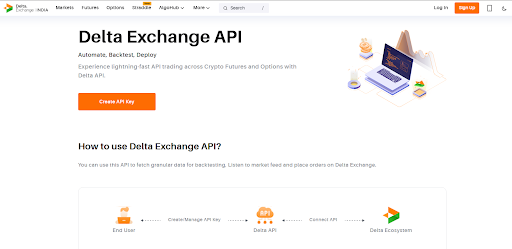
You can link your trading strategy to webhooks or APIs and let bots place trades for Bitcoin futures or other crypto options even when you’re away. If you want systematic, repeatable strategies with fewer missed opportunities, this setup feels practical and real.
And the best part? You don’t need to have any coding knowledge or degree – API Copilot does it all for you.
- Lower trading fees that don’t eat into your wins
Fees matter because every percentage point you pay is one less in your pocket after a winning trade. Delta Exchange offers competitive taker and maker fees, plus a fee cap on options that limits how much you pay on low premium trades.
This helps keep costs predictable, whether you’re trading Bitcoin or ETH futures and options. Traders who place frequent trades or use multi-leg strategies on the Indian crypto exchange can keep more of their gains, rather than having them eaten up by trading fees.
- Strategy Builder for practical trading plans
Strategy planning can get messy if the platform doesn’t help you visualize outcomes. Delta Exchange offers tools that let you craft crypto F&O setups with clear strike choices and expiries, plus daily, weekly, and monthly options for more precise timing. This helps you conveniently plan spreads, straddles, or hedges.
- Compliance and risk measures to know
It’s one thing to trade, another to trust the platform doing it. Delta Exchange is registered with India’s Financial Intelligence Unit (FIU) and follows local KYC and AML rules.
For risk management, the platform supports:
- Margin controls and stop-loss tools that help you manage positions while you trade Bitcoin or other crypto derivatives.
- Demo account to practice trades and understand the market without real money.
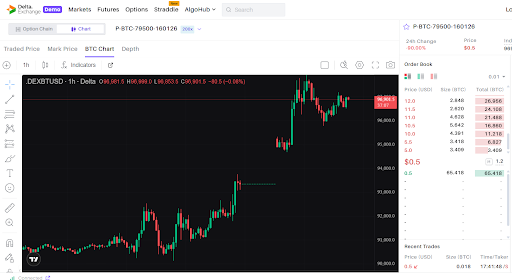
- Payoff charts show you how your trade will play out with breakeven points and maximum P&L.
This way, you can study your crypto trading strategy better before finalizing the trade.
Apart from these, Delta also offers leverage up to 200X – a good way to amplify your profits if the market moves in your favor.
The Bottomline
Indian crypto traders have moved far past the buy-and-hold phase. Spot crypto trading still has its place, yet most active users now want faster ways to make money from price swings, not wait months for a rally.
That’s where crypto F&O, spreads, and short-term setups step in. You want tools that let you react within minutes, control risk, and lock gains when the move shows up.
Platforms that only support basic coin buying just can’t keep up with that style of trading. Serious traders want flexibility, speed, and ways to work with volatility, not sit through it – and Delta Exchange caters to such traders well.
Disclaimer: Crypto trading carries inherent risks due to its high volatility. This article is for informational purposes only. Kindly do your own research before making any investment decisions.
Blockchain
MoonExe Aligns With the Next Phase of Stablecoin Payments as Global Regulation Accelerates
MoonExe today reaffirmed its strategic focus on stablecoin-powered payment infrastructure as global regulatory clarity continues to accelerate across major financial jurisdictions.
Regulators worldwide are advancing frameworks that formally recognize stablecoins as legitimate instruments for payment, settlement, and treasury operations. Legislative initiatives in the United States, expanded licensing regimes in Asia, and structured compliance approaches in other regions are collectively signaling a transition from experimental adoption to regulated, real-world deployment.
As stablecoins move deeper into mainstream financial infrastructure, demand is increasing for platforms capable of delivering real-time liquidity, transparent pricing, and verifiable settlement. MoonExe’s Exchange Finance (ExFi) model is designed to address these needs by enabling stablecoin-based currency conversions that operate continuously, without dependence on traditional banking cut-off times or geographic limitations.
The platform focuses on facilitating efficient value movement while maintaining transparency through public blockchain records. Transactions executed within the MoonExe ecosystem can be independently verified via standard blockchain explorers, reinforcing confidence through auditable, immutable data.
In parallel with regulatory progress, market participants are increasingly prioritizing infrastructure reliability over speculative activity. Stablecoins are being evaluated less as alternative assets and more as operational tools capable of supporting cross-border payments, digital commerce, and treasury flows.
MoonExe continues to expand its infrastructure and partnerships to support this evolution, positioning itself as part of the foundational layer required for stablecoins to function at global scale.
For more information about MoonExe and its stablecoin payment infrastructure, visit https://moonexe.com/
Blockchain
Playmaker to Launch in Q2 2026 as Midas Labs Expands Its AI-Powered Game Creation Ecosystem
Midas Labs, a UK-based Web3 technology company, has announced the upcoming launch of Playmaker, an AI-powered game creation and launchpad platform scheduled for Q2 2026. The platform is designed to lower barriers to game development and funding, operating as a core product within the UNIFI-powered Midas ecosystem.
Playmaker will provide creators, indie studios, and early-stage visionaries with an integrated environment to ideate, build, fund, and publish games without the traditional constraints of large teams or complex technical infrastructure. By combining AI-assisted creation tools with a structured launchpad and marketplace, the platform aims to streamline the path from concept to live product.
According to Jonathan Wheatley, Chief Marketing Officer of Midas Labs, Playmaker represents a natural progression of the company’s ecosystem strategy.
“Playmaker is about enabling participation at every level — from creators and developers to early supporters and players,” said Wheatley. “By integrating AI-driven creation with funding and publishing infrastructure, we’re building a system that allows ideas to move efficiently from concept to execution.”
The platform is powered by the $PLAY token, a fixed-supply utility asset used for project participation, creator payments, marketplace transactions, and ecosystem services. $PLAY operates within the broader UNIFI ecosystem, where UNIFI serves as the access and conversion layer, reinforcing liquidity and alignment across Midas Labs’ products.
Midas Labs has structured Playmaker’s token economy around a non-mintable, scarcity-driven model, designed to support long-term sustainability as platform adoption increases.
The Playmaker launch builds on recent Midas Labs milestones, including the expansion of the Midas Play Marketplace, multiple game releases, ecosystem partnerships, and the rollout of UNIFI staking infrastructure. Together, these components form a vertically integrated environment linking creation, funding, distribution, and participation.
Playmaker is scheduled to go live in Q2 2026, with phased ecosystem access beginning with early contributors before expanding globally.
About Midas Labs
Midas Labs is a United Kingdom–based Web3 technology company focused on building scalable digital ecosystems across gaming, AI, and creator-driven platforms. Powered by the UNIFI token, Midas Labs develops infrastructure designed for long-term participation, real utility, and sustainable growth.

ENI Announced as Gold Sponsor at Hong Kong Web3 Festival 2026

CoinPost Announced as Secondary Exhibition Sponsor at Hong Kong Web3 Festival 2026

CHAINISLE Announced as Secondary Exhibition Sponsor at Hong Kong Web3 Festival 2026

KBW2026 Announced as Secondary Exhibition Sponsor at Hong Kong Web3 Festival 2026

Aspire Confirms Official Participation at Hong Kong Web3 Festival 2026

VeZoom Joins Hong Kong Web3 Festival 2026 as Gold Sponsor

Cardalonia Aiming To Become The Biggest Metaverse Project On Cardano

P2P2C BREAKTHROUGH CREATES A CONNECTION BETWEEN ETM TOKEN AND THE SUPER PROFITABLE MARKET

WOM Protocol partners with CoinPayments, the world’s largest cryptocurrency payments processor

ETHERSMART DEVELOPER’S VISION MADE FINTECH COMPANY BECOME DUBAI’S TOP DIGITAL BANK

Project Quantum – Decentralised AAA Gaming

WOM Protocol Recommended by Premier Crypto Analyst as only full featured project for August
-
 Crypto4 years ago
Cardalonia Aiming To Become The Biggest Metaverse Project On Cardano
-
 Press Release5 years ago
P2P2C BREAKTHROUGH CREATES A CONNECTION BETWEEN ETM TOKEN AND THE SUPER PROFITABLE MARKET
-
 Blockchain6 years ago
WOM Protocol partners with CoinPayments, the world’s largest cryptocurrency payments processor
-
 Press Release5 years ago
ETHERSMART DEVELOPER’S VISION MADE FINTECH COMPANY BECOME DUBAI’S TOP DIGITAL BANK
-
 Press Release5 years ago
Project Quantum – Decentralised AAA Gaming
-
 Blockchain6 years ago
WOM Protocol Recommended by Premier Crypto Analyst as only full featured project for August
-
 Press Release5 years ago
ETHERSMART DEVELOPER’S VISION MADE FINTECH COMPANY BECOME DUBAI’S TOP DIGITAL BANK
-
 Blockchain6 years ago
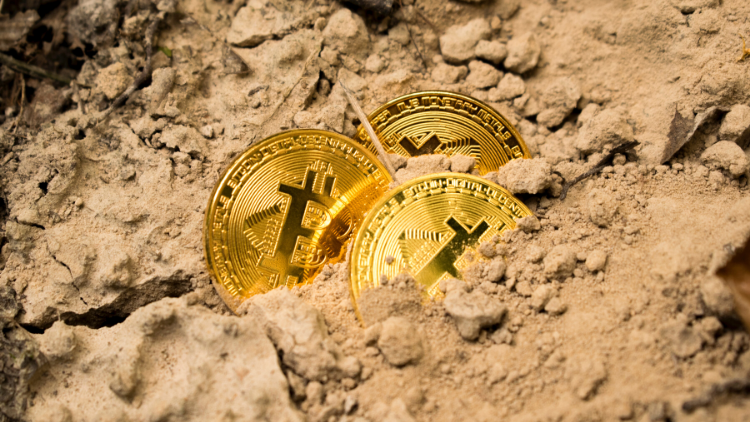
1.5 Times More Bitcoin is purchased by Grayscale Than Daily Mined Coins