
Tech
NEAR Protocol Outlines AI Money Thesis and Sovereign Agent Infrastructure


NEAR Protocol has detailed a comprehensive framework for the role of digital assets in an economy dominated by autonomous agents, introducing what it describes as an “AI money” thesis. The protocol is positioning its native infrastructure as the coordination layer for “sovereign AI,” a stack designed to allow AI agents to operate with independent identity, private execution, and native settlement capabilities.
According to official communications from NEAR Protocol, the new economic model for AI agents shifts the function of money into four primary roles. It serves as a store of value to ensure network sustainability, a settlement asset for high-frequency micro-transactions between agents, a bonding standard for security, and a metering unit used to price inference and compute tasks.
Money has to work differently in an agent economy:
✦ Store of value → network sustainability: an asset tied to the security and economic coordination of the network it supports ⁰✦ Medium of exchange → settlement asset: value clearing with finality, cheap enough for…
— NEAR Protocol (@NEARProtocol) July 26, 2026
Infrastructure for Autonomous Agents
The push toward sovereign AI infrastructure focuses on moving beyond open-source models to create a decentralized environment where agents can function without central intermediaries. NEAR has identified several “sovereign agent” requirements that it intends to support through its protocol, including:
- Identity and Verifiability: Procedures to ensure agent authenticity and the ability to verify actions on-chain.
- Private Inference and Confidential Execution: Technologies that allow AI models to process data without exposing sensitive information.
- Open Settlement Rails: Financial infrastructure that allows agents to trade and move value autonomously.
- Liquidity and Coordination: Mechanisms to facilitate interactions between millions of independent digital entities.
The protocol describes itself as a holistic stack that integrates the base blockchain layer with “Intents” and “NEAR AI” to act as a coordinator for this open AI ecosystem. This positioning is detailed in a Q2 2026 report, which frames NEAR’s evolution not as a pivot, but as a return to its founders’ original focus on distributed training and compute systems.
Economic Sustainability and Token Burn
A central component of this infrastructure is the “Intents” layer, which is already impacting the protocol’s tokenomics. Current estimates suggest that the burn mechanism associated with Intents volume is a primary driver of network sustainability. According to some projections, net buyback pressure could exceed total token issuance if daily volume on the Intents layer reaches approximately $175 million, a figure the team views as a milestone for the agent-to-agent economy.
Despite the growth in this sector, the protocol acknowledges significant competition. While NEAR is scaling its infrastructure through milestones such as Multi-Party Computation (MPC) node expansion, its agent framework faces competition from other industry standards. Practical adoption for enterprise AI remains in the proof-of-concept stage, with long-term validation depending on repeatable commercial contracts and the velocity of “post-human” or agent-driven transaction volume.
The success of the “AI money” thesis will likely depend on the protocol’s ability to differentiate its settlement integration as autonomous workloads increase.
The post NEAR Protocol Outlines AI Money Thesis and Sovereign Agent Infrastructure appeared first on The Cryptocurrency Post.




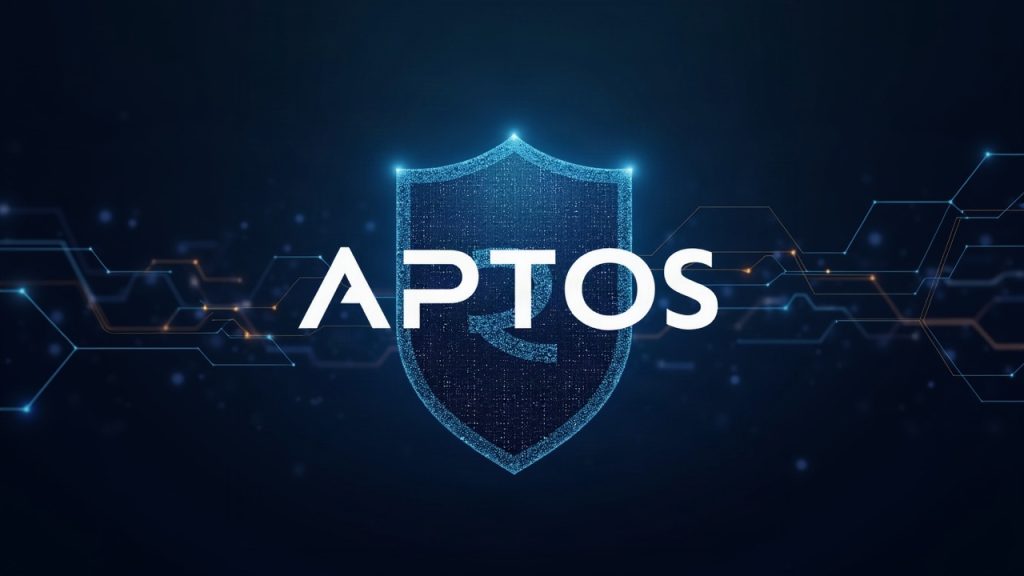
Aptos said its Encrypted Mempool is now live on mainnet, giving users the option to encrypt transaction details before block ordering is finalized. The company said the feature is designed to reduce maximal extractable value, or MEV, which can include practices such as front-running and sandwich attacks.
In an official blog post, Aptos described the rollout as an opt-in feature at the transaction level. The network said the payload is encrypted on the client side, ordered while still encrypted, and only decrypted by validators after block finalization.
The company’s official account and Aptos Labs also confirmed the mainnet launch on X, with the Labs post adding that encryption happens before submission and that decryption takes place only after block ordering is complete. That sequence is intended to keep transaction contents hidden during the period when they could otherwise be observed and used for MEV extraction.
Opt-in design keeps the feature at the transaction level
Aptos framed the launch as a user choice rather than a default network setting. According to the company, Encrypted Mempool can be enabled per transaction, allowing users to decide when they want that added layer of protection.
The mainnet launch means the feature is no longer just a technical concept or test-stage mechanism. It is now part of the live Aptos network, with the practical effect depending on whether users choose to activate it for individual transactions.
The post Aptos brings Encrypted Mempool to mainnet in move aimed at lowering MEV risk appeared first on The Cryptocurrency Post.

An official Exploit Summit post said @ExploitSummit that @xavi3rlu announced a partnership between pareton_ai and @engyai aimed at optimizing Engy inference latency and throughput using SN10 work.
@xavi3rlu announces a partnership between @pareton_ai and @engyai at Exploit Summit.
The goal: optimise Engy’s inference setup for lower latency and higher throughput, bringing Bittensor’s SN10 optimisation work to another provider’s customers. pic.twitter.com/id3V8uWUUy
— Exploit Summit (@ExploitSummit) September 29, 2026
The announcement frames the collaboration as a technical optimization effort rather than a broader product launch. According to the conference account, the work is intended to improve Engy’s inference performance through SN10-related optimization, with the stated goal of supporting Engy customers.
That is the clearest confirmed detail currently available: the partnership was presented publicly at the event, and the stated focus was on latency and throughput. No additional operational specifics were included in the post, such as implementation timing, deployment scope or whether the optimization is already live for users.
SN10’s role in the announcement
The mention of SN10 places Bittensor-related optimization work at the center of the update, but the announcement does not spell out technical mechanics beyond performance improvements for inference workloads. The post does not describe any token, market or governance implications, and it does not indicate whether the collaboration changes access, pricing or product availability.
For readers following AI-linked crypto projects, the update is best understood as a partnership claim around infrastructure performance. It signals that Pareto AI and Engy AI are positioning SN10 work as part of an effort to make inference more efficient, but the announcement itself stays narrow in scope.
The post Bittensor SN10 Work Tied to Pareto AI and Engy AI at Exploit Summit appeared first on The Cryptocurrency Post.

BNB Chain said NodeOps is now a deployment option in BNB Agent Studio v4, allowing builders to move from a prompt to a running agent without creating a cloud account or configuring infrastructure.
The update is part of a broader v4 release for BNB Agent Studio, which BNB Chain described as aimed at reducing the manual steps between writing a prompt and getting an agent live. In the company’s framing, the new NodeOps path removes a setup layer that would normally sit between development and deployment.
NodeOps also said agents can go live in BNB Agent Studio v4 using its infrastructure without manual setup. BNB Chain’s blog post described NodeOps alongside AWS and Azure as live deployment options.
The same release also adds stablecoin payment support for agents, with USDT, USDC and USD1 now working alongside $U. BNB Chain said wallet setup, funding and password handling are now automatic, while documentation, error messages and feedback tools have been improved to reduce friction for developers.
The changes make the studio feel more like a streamlined build environment than a setup-heavy toolchain, but the announcement remains centered on deployment convenience rather than a broader shift in the agent market. For developers using the platform, the practical change is that the path from prompt to live agent now appears to involve fewer manual steps.
The post BNB Chain Agent Studio v4 adds NodeOpsHQ for prompt-to-agent deployment appeared first on The Cryptocurrency Post.

Aptos brings Encrypted Mempool to mainnet in move aimed at lowering MEV risk

RWA WEEK Singapore Announces New Wave of Institutional Speakers as October Event Draws Closer

Bittensor SN10 Work Tied to Pareto AI and Engy AI at Exploit Summit

BNB Chain Agent Studio v4 adds NodeOpsHQ for prompt-to-agent deployment

BNB Chain releases Agent Studio v4 with simplified AI agent deployment and stablecoin support

ChainUp Brings The Institutional Ark to TOKEN2049 Singapore, Focusing on Digital Asset Infrastructure and High-Value Deal Flow

Cardalonia Aiming To Become The Biggest Metaverse Project On Cardano

P2P2C BREAKTHROUGH CREATES A CONNECTION BETWEEN ETM TOKEN AND THE SUPER PROFITABLE MARKET

WOM Protocol partners with CoinPayments, the world’s largest cryptocurrency payments processor

ETHERSMART DEVELOPER’S VISION MADE FINTECH COMPANY BECOME DUBAI’S TOP DIGITAL BANK

Project Quantum – Decentralised AAA Gaming

WOM Protocol Recommended by Premier Crypto Analyst as only full featured project for August
-
 Crypto4 years ago
Cardalonia Aiming To Become The Biggest Metaverse Project On Cardano
-
 Press Release6 years ago
P2P2C BREAKTHROUGH CREATES A CONNECTION BETWEEN ETM TOKEN AND THE SUPER PROFITABLE MARKET
-
 Blockchain6 years ago
WOM Protocol partners with CoinPayments, the world’s largest cryptocurrency payments processor
-
 Press Release6 years ago
ETHERSMART DEVELOPER’S VISION MADE FINTECH COMPANY BECOME DUBAI’S TOP DIGITAL BANK
-
 Press Release5 years ago
Project Quantum – Decentralised AAA Gaming
-
 Blockchain6 years ago
WOM Protocol Recommended by Premier Crypto Analyst as only full featured project for August
-
 Press Release6 years ago
ETHERSMART DEVELOPER’S VISION MADE FINTECH COMPANY BECOME DUBAI’S TOP DIGITAL BANK
-
 Blockchain6 years ago
1.5 Times More Bitcoin is purchased by Grayscale Than Daily Mined Coins