
Press Release
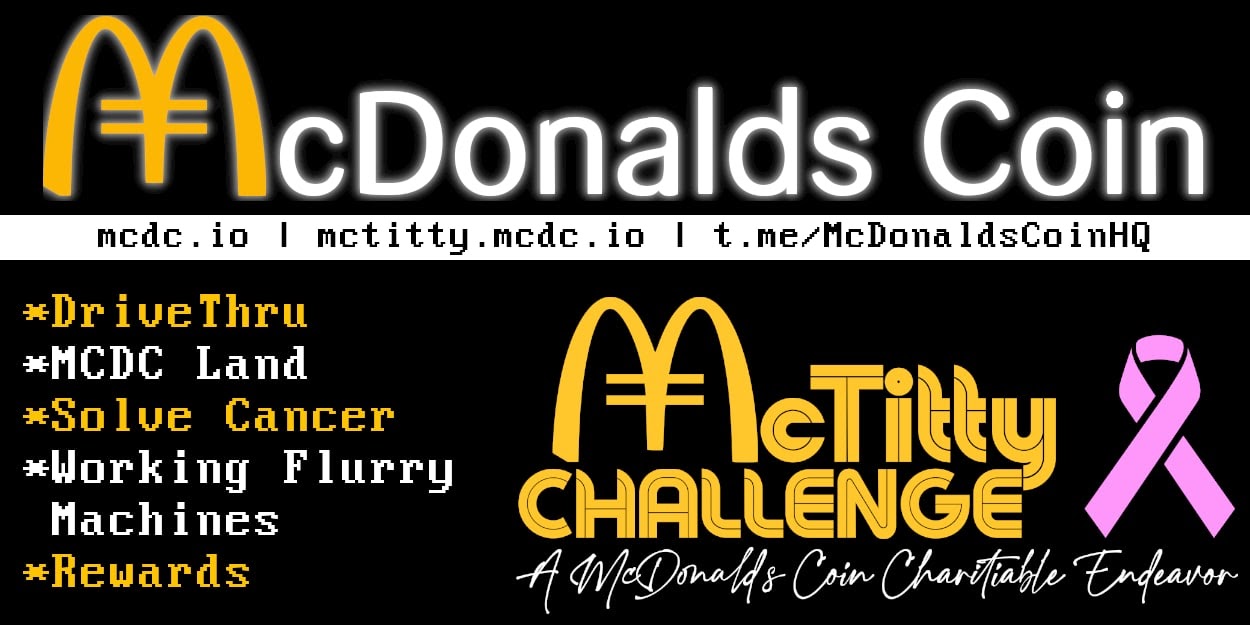
MCDC Introduces The McTitty Challenge to Spread Breast Cancer Awareness

Breast Cancer Management
Breast cancer is a major health crisis for women globally that develops from breast tissue. One in eight women is affected with breast cancer in her lifetime. At the moment, there is no known cure for breast cancer, and its early diagnosis is imperative to survival. Early symptoms of breast cancer may include a lump in the breast, a newly inverted nipple, dimpling of the skin, a change in breast shape, and a red or scaly patch skin. It can grow more significant in the affected breast and spread to nearby lymph nodes or through your bloodstream to other organs. Breast cancer cases are increasing in the developing world because of increased life expectancy, western lifestyles, and increased urbanization. Even though prevention measures can reduce some risks, most strategies cannot eliminate most breast cancers developing in marginalized countries where breast cancer is detected in its last stages. Thus, early detection remains the key to breast cancer control. Presently the only breast cancer screening procedure that seems effective is mammography screening. Mammography screening is costly and feasible in countries with advanced health infrastructure that can afford long-term organized population-based screening programs. Several Non-profit Organizations have directed their efforts to help individuals in diagnosis, treatment, and counseling. Some of the top breast cancer Non-profit Organizations listed that deserve your support include the following;Breast Cancer Research Foundation
The organization was founded in 1993 by Evelyn Lauder, a breast cancer survivor and senior corporate vice president of Estee Lauder Companies. It is a non-profit organization that has raised over $500 million to support clinical and translational research on the disease at medical institutions in the United States and abroad. The independent foundation currently funds about 300 researchers in 15 countries. Lauder is also the co-founder of the original pink ribbon established in 1992 with Alexandra Penney. To assist, please donate to BRCF online, through the mail, or over the phone.Susan G. Komen Foundation
Established in 1982, the Susan G. Komen Foundation raises awareness, supports research, and pays for community health and education programs worldwide. The organization conducts its multi-city Race for the Cure charity run event annually that is considered the most successful breast cancer fundraiser globally. The charity’s funds give a boost towards breast cancer research, screening, treatment, and education. In 2018, the Dallas-based charity devoted $26.18 million in breast cancer research grants. To assist, please donate to the Susan G. Komen Foundation onlineNational Breast Cancer Foundation
Established in 1991, the National Breast Cancer Foundation (NBCF) targets to help women affected by breast cancer through early detection, education, and support. The organization devotes over 80% of its funds to programs. The Texas-based charity provides free mammograms to women in need; NBCF also funds breast cancer education programs, awareness campaigns, and research. To assist, please donate to NBCF online or through the mail Other foundations that you can contribute to include;Breast Cancer Alliance, Breast Cancer Society of Canada, Lynn Sage Cancer Research Foundation, Dr. Susan Love Research Foundation. American Cancer Society – Breast Cancer Research, Memorial Sloan Kettering Cancer Center

GEORGETOWN, Cayman Islands, November 16, 2026, lockchain network Kava has published an incident report following a security incident involving its decentralised lending platform, HARD Lend, on November 14. The network said a confirmed attack targeting a vulnerability was blocked and that Kava’s underlying blockchain infrastructure was not compromised.
The incident has drawn attention to the risks facing decentralised finance applications, where vulnerabilities in lending markets and collateral calculations can expose deposited assets to losses even when the underlying blockchain continues operating normally.
Background
HARD Lend is a decentralised lending protocol within the Kava ecosystem. Such platforms allow users to deposit digital assets and borrow against collateral without relying on a conventional bank or centralised lender.
Their operation depends on smart contracts that calculate collateral values, borrowing limits and repayment obligations. If a contract uses incorrect pricing information or handles unusual market conditions poorly, an attacker may be able to borrow more than the value of the assets deposited.
Security incidents involving lending protocols can therefore affect users and liquidity providers even when the wider blockchain network remains operational.
Key Developments
The incident occurred on November 14 and involved Kava Lend’s lending infrastructure. The Block reported that approximately 55.2 million KAVA tokens, worth about $3.76 million at pre-incident prices, were borrowed out of the protocol following manipulation involving a dormant BUSD lending market.
According to the publication’s on-chain analysis, the attacker exploited an extremely small market supply to inflate the calculated value of deposits. The inflated collateral was then used to borrow KAVA through repeated transactions.
The Block reported that approximately 49.2 million KAVA was transferred to BNB Chain through LayerZero and sold for around $2.09 million in BNB and USDT.
Kava’s subsequent position was that the attack was contained within HARD Lend and did not compromise the core Kava chain. The network’s statement and the on-chain figures reported by The Block describe different parts of the incident: the former addresses the wider network’s security, while the latter examines activity and asset movements involving the lending protocol.
Industry Implications
The incident highlights the importance of testing smart contracts against unusual conditions, including dormant markets with very low liquidity. Protocols must account for edge cases that may not appear during ordinary market activity.
For users, the event is a reminder that depositing assets into a decentralised lending platform carries risks beyond the security of the underlying blockchain. Smart contract design, price calculations, collateral rules and emergency controls can all affect the safety of funds.
For developers, detailed incident reporting can help identify weaknesses and provide information that other protocols may use to review their own systems.
What’s Next
Kava has released an official incident report, and the next important developments will concern any additional technical findings, recovery measures and the status of affected lending markets.
Users should rely on official Kava and HARD Lend announcements for information about service availability and asset recovery. The precise financial impact and any final resolution should be assessed using confirmed updates rather than estimates alone.

SINGAPORE, November 16, 2026, DBS Bank and JPMorgan’s blockchain business, Kinexys, have launched a system that allows institutional clients to transfer tokenised US dollar deposits between blockchain-based banking networks in Singapore and the United States around the clock.
The service connects DBS Token Services with Kinexys’ permissioned blockchain deposit network. Ant International is the first client to use the arrangement, applying it to treasury and liquidity management across its operations in both markets.
Background
Traditional international bank transfers often depend on operating hours, intermediary institutions and settlement processes that can delay access to funds. These limitations can be particularly challenging for companies with operations across several time zones.
Tokenised deposits are digital representations of money held in conventional bank accounts. They allow banks to record and transfer deposit value using blockchain infrastructure while retaining the underlying relationship with the regulated banking institution.
They should not be confused with privately issued cryptocurrencies or public stablecoins. The funds involved in this service remain bank deposits, represented through digital tokens on networks accessible to approved participants.
Key Developments
The new service enables participating institutional clients to move US dollar liquidity between DBS and Kinexys blockchain accounts outside conventional banking hours, including weekends.
The system uses Partior for settlement orchestration. It also builds on an interoperability framework announced by DBS and JPMorgan in November 2025, which was designed to connect their respective tokenised deposit ecosystems.
Ant International is the first client to adopt the service. The company will use it to manage liquidity and treasury requirements across its entities in Singapore and the United States.
The banks say the development addresses growing demand for cross-border payments in Asia. Their announcement cites projections that outbound cross-border payments in the region could reach $24 trillion by 2033, compared with $13.5 trillion in 2025.
There is an important operating limitation. Transfers within the Kinexys blockchain deposit network are available around the clock, but moving funds between traditional demand deposit accounts and blockchain deposit accounts still has a three-hour weekend downtime, from 3 p.m. to 6 p.m. Eastern Time on Saturdays.
Industry Implications
The launch gives businesses another option for managing liquidity across international operations. Companies that need to settle payments outside normal banking hours may benefit from having access to funds through connected digital deposit networks.
For the wider financial sector, interoperability is a key issue. Individual banks can develop their own tokenised money systems, but their usefulness is limited if those networks cannot communicate with one another.
The DBS and JPMorgan arrangement is an example of two established financial institutions connecting separate permissioned blockchain systems for a commercial use case. It also demonstrates that blockchain adoption in banking is not limited to cryptocurrency trading.
What’s Next
The service is commercially available to eligible institutional clients, with Ant International acting as its first user. DBS and Kinexys have also indicated that improvements to the weekend connection between traditional accounts and blockchain deposit accounts are under development.
Further adoption by corporate clients will help show whether the system can support wider cross-border treasury operations.
Press Release
Brazil Central Bank Warns Certain Stablecoin Transfers Could Create Money Laundering Risks


BRASILIA, Brazil, November 16, 2026, A senior official at Brazil’s central bank has warned that certain stablecoin-based international payment arrangements could expose financial institutions to money laundering risks, even when the funds involved originally come from legitimate sources.
Gerson Romantini, head of the central bank’s foreign exchange department, raised the issue at a private industry event. His remarks focused on how money is converted into stablecoins, transferred overseas and exchanged into another currency. The comments have renewed attention on Brazil’s rules for cryptocurrency-related foreign exchange services and the responsibilities of fintech companies operating in the payments market.
Background
Stablecoins are widely used for cryptocurrency trading, international transfers and digital payments because their value is generally linked to currencies such as the US dollar or euro.
In Brazil, regulators have been examining how these assets interact with conventional foreign exchange services. The central bank is particularly concerned about arrangements that allow money to move between countries through multiple conversion stages without following the controls normally associated with regulated currency transactions.
Resolution BCB No. 561, which took effect on October 1, 2026, introduced restrictions affecting the use of virtual assets in certain settlements between regulated electronic foreign exchange providers and their overseas counterparties. It did not create a blanket prohibition on all cryptocurrency transfers.
Key Developments
Romantini discussed a structure described as a stablecoin sandwich. In this arrangement, a company receives Brazilian reais, converts the funds into a dollar or euro-backed stablecoin, transfers the tokens overseas and converts them into local currency for the recipient.
The central bank distinguishes between different ways this structure can operate. A regulated financial institution may use virtual assets as part of the infrastructure supporting a conventional foreign exchange transaction. However, the regulator considers a different arrangement problematic when a company directly sells stablecoins to customers as part of a structured service designed to move reais into foreign currency through an overseas conversion.
This distinction is important because the central bank’s concerns relate to the structure and ownership of the transaction, not simply the use of stablecoins.
The reporting also points to additional compliance requirements. Covered institutions must report qualifying self-custody transfers of at least $10,000 to Brazil’s financial intelligence authority, Coaf, under the rules that took effect in October.
Industry Implications
The comments could affect payment providers and fintech companies that use stablecoins for international transfers. Businesses may need to review how they receive customer funds, convert currencies and transfer digital assets between jurisdictions.
For users, tighter oversight could influence which services remain available and how quickly cross-border payments can be processed. For the wider cryptocurrency industry, Brazil’s approach illustrates the difficulty regulators face in distinguishing legitimate blockchain-based payment infrastructure from arrangements that may bypass established foreign exchange controls.
Importantly, the central bank has not announced a general ban on stablecoins. The current distinction between permitted and restricted transaction structures remains central to understanding the policy.
What’s Next
An industry source cited in the reporting indicated that a meeting expected on November 19 could bring further discussion of restrictions affecting fintech stablecoin services. The possibility of reserving certain activities for banks has been raised, but no formal decision has been confirmed.
Market participants will also watch for further guidance from the central bank on how the existing rules apply to international transfers and digital asset intermediaries.

Gensyn opens registration for agent competition built around evidence markets

NEAR AI Cloud adds Claude Fable 5.2 model

Kava Publishes HARD Lend Security Report After Exploit Attempt

DBS and JPMorgan Connect Blockchain Deposit Networks for 24/7 US Dollar Transfers

Brazil Central Bank Warns Certain Stablecoin Transfers Could Create Money Laundering Risks

Japan’s Three Largest Banks Target Yen Stablecoin Transactions by March 2027

Cardalonia Aiming To Become The Biggest Metaverse Project On Cardano

P2P2C BREAKTHROUGH CREATES A CONNECTION BETWEEN ETM TOKEN AND THE SUPER PROFITABLE MARKET

WOM Protocol partners with CoinPayments, the world’s largest cryptocurrency payments processor

ETHERSMART DEVELOPER’S VISION MADE FINTECH COMPANY BECOME DUBAI’S TOP DIGITAL BANK

Project Quantum – Decentralised AAA Gaming

WOM Protocol Recommended by Premier Crypto Analyst as only full featured project for August
-
 Crypto4 years ago
Cardalonia Aiming To Become The Biggest Metaverse Project On Cardano
-
 Press Release6 years ago
P2P2C BREAKTHROUGH CREATES A CONNECTION BETWEEN ETM TOKEN AND THE SUPER PROFITABLE MARKET
-
 Blockchain6 years ago
WOM Protocol partners with CoinPayments, the world’s largest cryptocurrency payments processor
-
 Press Release6 years ago
ETHERSMART DEVELOPER’S VISION MADE FINTECH COMPANY BECOME DUBAI’S TOP DIGITAL BANK
-
 Press Release5 years ago
Project Quantum – Decentralised AAA Gaming
-
 Blockchain6 years ago
WOM Protocol Recommended by Premier Crypto Analyst as only full featured project for August
-
 Press Release6 years ago
ETHERSMART DEVELOPER’S VISION MADE FINTECH COMPANY BECOME DUBAI’S TOP DIGITAL BANK
-
 Blockchain6 years ago
1.5 Times More Bitcoin is purchased by Grayscale Than Daily Mined Coins