
Trading Analysis
EstateX ($ESX) – Navigating the Post-Launch Waters: A 7-Day Trade Analysis

The past seven days have been momentous for EstateX ($ESX), marking its highly anticipated Token Generation Event (TGE) and subsequent listings on major cryptocurrency exchanges. As a nascent token entering the public trading arena, $ESX has exhibited the characteristic volatility of new listings, presenting both opportunities and risks for traders.
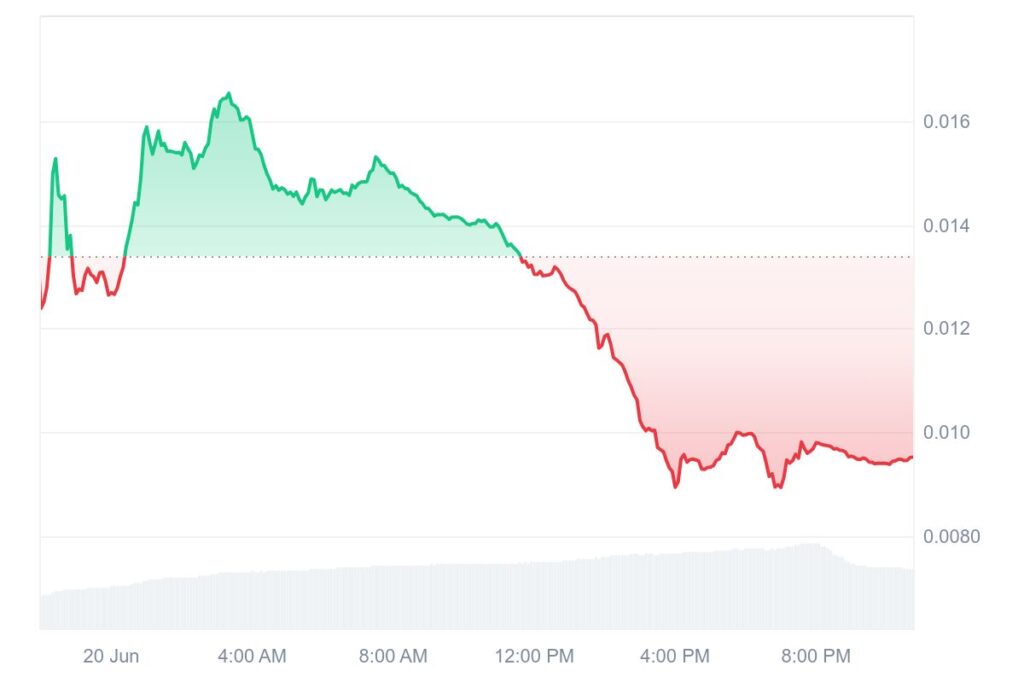
The Week in Review: A Rollercoaster Ride
While precise, consistent 7-day historical price data across all platforms remains somewhat fragmented due to the very recent listings (primarily around June 18th/19th, 2025), a clear picture of high volatility and significant trading activity has emerged:
- Initial Surge & Correction: Following its debut on exchanges like Kraken, HTX, and MEXC, $ESX likely experienced an initial surge, driven by pre-launch hype and early investor excitement. This is a common pattern for new tokens with strong narratives and backing. However, this was quickly followed by a notable correction, as early buyers took profits and the market discovered a fair price. Some reports indicate a significant percentage drop within 24-48 hours post-listing.
- High Trading Volume: Despite price fluctuations, $ESX has maintained robust 24-hour trading volumes, consistently in the multi-million dollar range (e.g., $8.51M reported on CoinGecko, $6.25M on CoinMarketCap). This indicates strong market interest and liquidity, allowing traders to enter and exit positions.
- Price Discovery Phase: The token is currently in a crucial price discovery phase. Without a substantial historical chart, technical indicators for long-term trends are yet to solidify. The price movements reflect the ongoing tug-of-war between buyers accumulating at perceived lows and sellers locking in profits or cutting losses from the initial volatility.
Key Influencing Factors This Week:
- Exchange Listings (June 18th/19th): The primary catalyst for this week’s activity was undoubtedly the TGE and simultaneous listings. These events provide initial exposure and liquidity, but also introduce the token to a wider market, leading to aggressive buying and selling.
- Strong Backing and Narrative: The project’s association with figures like Brock Pierce (Tether co-founder) and the CEO of RE/MAX England & Wales has provided a strong foundational narrative. This institutional confidence likely fueled early investor interest and helped sustain some demand even during price corrections.
- Real-World Asset (RWA) Tokenization Hype: EstateX operates in the rapidly growing RWA tokenization sector. The successful, rapid sell-out of its first tokenized luxury beach resort offering (reportedly in five minutes) demonstrated tangible demand for the platform’s core utility, which could positively influence token sentiment.
- Market Sentiment: Broader cryptocurrency market sentiment also plays a role. If the overall market experiences a downturn, newly listed tokens, often considered higher risk, can be disproportionately affected. Conversely, a bullish market can provide tailwinds.
Trading Observations and Considerations:
- High Volatility, High Risk: The past seven days underscore that $ESX, as a newly launched token, carries inherent high volatility. This presents opportunities for agile day traders but significantly higher risk for long-term holders looking for immediate stability.
- Support and Resistance Levels: While charting is nascent, traders will be looking for key support levels where buying interest emerges after dips and resistance levels where selling pressure becomes strong. These levels are still being established.
- Volume Analysis: Persistent high trading volume, even amidst price drops, suggests continued interest. A significant drop in volume could indicate waning interest or a period of consolidation.
- News-Driven Moves: Given its newness, $ESX is highly susceptible to news and announcements regarding partnerships, ecosystem development (e.g., PropXChange, CapitalX launches), and regulatory clarity in the RWA space.
Looking Ahead for Traders:
For the next 7 days, traders should expect continued volatility. The market will be closely watching for:
- Stabilization of Price: A period of price consolidation would indicate that the initial post-listing excitement and profit-taking are subsiding, potentially establishing a more stable trading range.
- Ecosystem Development Updates: News regarding the rollout and adoption of EstateX’s core features (PropXChange, CapitalX, EstateX Pay) will be crucial. Tangible progress and successful real-world integrations could provide strong bullish catalysts.
- Broader Market Conditions: Keep an eye on Bitcoin and the overall crypto market. A significant shift in macro crypto trends will invariably impact $ESX.
In conclusion, the past week has been a baptism by fire for EstateX ($ESX). While the immediate post-listing phase has seen significant price swings, the underlying project’s strong narrative, influential backing, and clear use case in the burgeoning RWA sector suggest that it bears watching. Traders should approach $ESX with caution, utilizing appropriate risk management strategies, and remain highly attuned to both on-chain data and project developments.


Zcash’s 4% pullback over the past 24 hours isn’t a sign of panic — it’s what typically happens when a token that just delivered a 10x rally hits a pause in a Bitcoin-led, low-momentum market. With no fresh catalyst pushing traders to chase higher, ZEC simply became the latest high-flyer to take a breather.
Zcash Leads the Privacy Surge — Then Takes a Healthy Pullback
The biggest context behind ZEC’s decline is how far it had already climbed. Privacy coins have been one of the strongest crypto sectors since October, fueled by tightening surveillance rules in Europe and renewed excitement around zero-knowledge technology. Coverage of Midnight Network’s NIGHT token even emphasized that Zcash kicked off the entire trend, jumping tenfold between early October and mid-November.
After that explosive move — plus another 16% gain this past week — ZEC entered “extended” territory on higher timeframes. In environments like that, even mild profit-taking or market cooling can create sharper percentage pullbacks, especially when there’s no new Zcash-specific development to keep momentum running. The sector is hot, but ZEC wasn’t riding a new upgrade, governance shift, or listing this week. It’s behaving like the senior leader of a narrative, not a coin with a fresh trigger.
Macro Conditions Made Profit-Taking the Easy Choice
Zoom out, and the broader market tone made chasing ZEC less appealing. Derivatives commentary shows traders widely expected a 25 bps Fed cut — typically supportive for risk assets — yet analysts still projected a range-bound December. Altcoins have been lagging, and CoinMarketCap’s altcoin-season indicator sitting near 16/100 underscored that we’re still in a “Bitcoin season.”
Meanwhile, Bitcoin is struggling near resistance around $94,000, and Fed Chair Jerome Powell remains cautious about inflation and future cuts. With no green light for full risk-on positioning, it’s hard for a niche, high-volatility sector like privacy coins to maintain vertical momentum. In a market defined by “Bitcoin leads, altcoins follow,” a 10x mover like ZEC becomes the first place traders lock in gains.
Price Action Shows Rotation, Not Panic
ZEC slid from about $440.97 to $421.05 over the 24-hour period — a 4.24% pullback — but still holds a strong +16.64% seven-day performance. Intraday action also supports the idea of routine rotation rather than capitulation. ZEC dipped into the $390s early on before rebounding above $420 — a standard “selloff and partial recovery” pattern.
Volume cooled during the decline, dropping from above $1 billion to the mid-$800 million range, then climbing back toward $955 million near the close. That’s consistent with profit-taking and fresh dip-buying, not an accelerating exit.
No Zcash-Specific News Behind the Decline
There have been no major headlines in the past day involving Zcash upgrades, security issues, exchange news, or major governance events. Recent commentary focuses mostly on ZEC being the original privacy coin that sparked the sector’s breakout, with newer tokens like NIGHT currently refreshing the narrative. Without a coin-specific catalyst, ZEC simply traded in line with broader sector cooling and macro hesitation.
A Natural Pullback After Extraordinary Gains
ZEC’s 4% drop is best read as a normal correction for a privacy-sector leader that just enjoyed a massive, multi-week rally. With Bitcoin dictating market flow, altcoins underperforming, and no ZEC-exclusive developments in play, traders who profited from the run took the opportunity to rotate out — while dip buyers stepped in near $400.

ardano’s ADA has ignited fresh excitement across the crypto market after shattering a multi-month downtrend on the 4-hour chart. The token surged 10% to $0.47, backed by a strong spike in trading volume that confirms growing institutional interest. This abrupt breakout comes as the ecosystem gears up for the highly anticipated launch of Midnight, Cardano’s privacy-focused sidechain, which founder Charles Hoskinson calls the project’s “biggest milestone to date.” Adding to the momentum, a new 70 million ADA treasury allocation aimed at infrastructure growth signals accelerated expansion in DeFi and enterprise sectors.
A Long-Awaited Breakout Signals a Trend Shift
ADA’s recent surge marks a dramatic reversal from its months-long consolidation. The token climbed from lows near $0.42 to $0.47 within hours, making it the top performer among the leading 10 cryptocurrencies. A widely shared 4-hour TradingView chart highlights the breakout clearly: ADA had been locked inside a descending channel since late October, with a dominant red trendline repeatedly rejecting upward moves. That changed on December 9 when ADA broke above the resistance zone at $0.43–$0.44, forming a powerful bullish engulfing candle. Rising volume and a recovery in RSI to near 60 confirm strengthening momentum without the threat of immediate overbought conditions.
Key Levels to Watch: $0.50 Resistance and $0.40 Support
Traders now set their sights on the crucial $0.50 resistance, a psychological and historical ceiling that could determine ADA’s next leg upward. Should Bitcoin maintain stability above $90,000, ADA’s tight correlation suggests further upward spillover that could expand Cardano’s $17 billion market cap. However, analysts caution that failure to hold above the breakout trendline may attract early profit-taking, potentially dragging ADA back toward $0.40 support.
Midnight Sidechain Fuels Fundamental Strength
Beyond the charts, Cardano’s fundamentals are entering a transformative phase. Hoskinson has spotlighted the upcoming Midnight sidechain—launching first on Binance Alpha—as a breakthrough moment for Cardano. Midnight integrates zero-knowledge proofs with Cardano’s scalable PoS design, delivering confidential smart contracts that appeal to DeFi innovators and enterprise clients alike. In parallel, the approved 70 million ADA treasury injection strengthens tooling, infrastructure, and developer incentives. With decentralized governance now fully active under the Voltaire era, Cardano is positioning itself as a formidable rival to Ethereum’s smart-contract dominance.
Trading Strategies Around the Breakout
Short-term traders are watching for a confirmed push above $0.50 to validate continuation toward higher targets. Swing traders may look to retests of the breakout zone for entries, while long-term holders see this move as a reaffirmation of Cardano’s slow-but-steady development philosophy. As Midnight attracts developers and Total Value Locked rises on platforms like Minswap and SundaeSwap, the broader narrative of Cardano’s resurgence is gaining renewed confidence.
Why This Matters for ADA’s Future
This breakout isn’t just technical—it reflects years of groundwork finally converging. With privacy integration, governance maturity, and infrastructure funding all aligning, Cardano’s ecosystem is entering a pivotal growth phase. In a year defined by regulatory clarity and emerging AI-blockchain synergies, ADA’s momentum feels both overdue and well-timed, reinforcing its status as a key asset in diversified portfolios.

GoTyme Bank has officially rolled out its integrated cryptocurrency service, becoming the first digital bank in the Philippines to allow users to buy and hold crypto directly inside their banking app. The move marks a major leap forward for local digital finance and could accelerate mainstream crypto adoption across Southeast Asia.
Crypto Trading Built Directly Into Banking
Through a partnership with U.S. fintech firm Alpaca, GoTyme now lets customers trade 11 major cryptocurrencies—including Bitcoin (BTC), Ethereum (ETH), and Binance Coin (BNB)—without needing a separate exchange account. Everything happens inside the GoTyme mobile app, allowing users to check balances, move funds, and buy digital assets within one regulated interface.
Because GoTyme operates under the Bangko Sentral ng Pilipinas (BSP), the new crypto feature carries the same compliance and security standards as traditional banking services.
A Major Convenience Upgrade for Filipino Crypto Users
The integration solves several long-standing pain points in the local crypto space:
- No more switching between apps: Bank deposits, cash-ins, and crypto purchases happen in one place.
- Bank-grade security: Assets benefit from GoTyme’s authentication and encryption systems.
- Lower barriers to entry: New investors can access crypto without dealing with complicated onboarding or third-party platforms.
- Institutional trust: Many Filipinos remain wary of independent crypto exchanges; GoTyme’s banking framework reduces that friction.
Why the Alpaca Partnership Matters
Alpaca provides the backend crypto brokerage technology, enabling GoTyme to meet international standards for digital asset trading. This reflects a growing global trend: banks are increasingly integrating crypto instead of competing with standalone Web3 platforms.
For GoTyme, the partnership ensures the service is scalable, compliant, and capable of evolving as crypto regulations mature.
Regulatory and Market Challenges Ahead
While innovative, the service launches amid a cautious regulatory environment. The BSP maintains strong oversight of crypto activity, requiring strict anti-money laundering monitoring. Volatility also remains a core risk, particularly for first-time investors.
GoTyme’s regulated structure may, however, help set a responsible precedent for Philippine banks exploring digital asset services.
A Boost for Financial Inclusion
By offering digital assets through an accessible platform, GoTyme could help introduce investing to a wider population—especially younger, tech-savvy Filipinos. The move positions the Philippines as a regional fintech innovator and may push other local banks to explore similar offerings.
A New Era for Digital Finance in the Philippines
GoTyme’s crypto service marks a turning point for the country’s financial ecosystem. By merging traditional banking with digital assets, the bank is democratizing access, improving convenience, and breaking down barriers for millions of potential crypto participants.
As Southeast Asia’s crypto landscape grows, this launch could influence how Filipinos—and eventually neighboring countries—interact with digital assets in their everyday financial lives.

BytePlus Joins Hong Kong Web3 Festival 2026 as Gold Sponsor

SignalPlus Announced as Title Sponsor for Hong Kong Web3 Festival

MEET48 Announced as Diamond Sponsor at Hong Kong Web3 Festival

New AI cybercrime tool breaches banking KYC systems using advanced deepfake technology

Bitfire Group Joins Hong Kong Web3 Festival as Diamond Sponsor

ZA Bank Confirms Participation at Hong Kong Web3 Festival

Cardalonia Aiming To Become The Biggest Metaverse Project On Cardano

P2P2C BREAKTHROUGH CREATES A CONNECTION BETWEEN ETM TOKEN AND THE SUPER PROFITABLE MARKET

WOM Protocol partners with CoinPayments, the world’s largest cryptocurrency payments processor

ETHERSMART DEVELOPER’S VISION MADE FINTECH COMPANY BECOME DUBAI’S TOP DIGITAL BANK

Project Quantum – Decentralised AAA Gaming

WOM Protocol Recommended by Premier Crypto Analyst as only full featured project for August
-
 Crypto4 years ago
Cardalonia Aiming To Become The Biggest Metaverse Project On Cardano
-
 Press Release5 years ago
P2P2C BREAKTHROUGH CREATES A CONNECTION BETWEEN ETM TOKEN AND THE SUPER PROFITABLE MARKET
-
 Blockchain6 years ago
WOM Protocol partners with CoinPayments, the world’s largest cryptocurrency payments processor
-
 Press Release5 years ago
ETHERSMART DEVELOPER’S VISION MADE FINTECH COMPANY BECOME DUBAI’S TOP DIGITAL BANK
-
 Press Release5 years ago
Project Quantum – Decentralised AAA Gaming
-
 Blockchain6 years ago
WOM Protocol Recommended by Premier Crypto Analyst as only full featured project for August
-

 Press Release5 years ago
ETHERSMART DEVELOPER’S VISION MADE FINTECH COMPANY BECOME DUBAI’S TOP DIGITAL BANK
-
 Blockchain6 years ago
1.5 Times More Bitcoin is purchased by Grayscale Than Daily Mined Coins