
Tech
Cardano Foundation outlines ADA plans for 2023 – here are the key notes

While the cryptocurrency market continues to struggle with the reverberations of the FTX crash, the Cardano (ADA) team is optimistic about its platform’s future, including the CEO of the Cardano Foundation, Frederik Gregaard.
Indeed, Gregaard expressed excitement over the plans for Cardano in 2023, which he believes will “really move the needle, both short-term and long-term,” as well as expecting the ecosystem to mature outside its community, as he told Learn Cardano’s Peter Bui in an interview published on November 15.
As he explained:
“There are so many things I’m excited about. There are certain integrations that I’m not able to talk about right now, but I’m hoping they will land because they will really move the needle, both short-term and long-term. But I think what I’m mainly excited about is to see Cardano maturing outside the people who know and love Cardano today because what we see around us is mayhem.”
Further listing the advantages of Cardano against the current mayhem, Gregaard said that the platform “keeps running, improving, implementing, and adding value in local communities, and we keep exploring new ways of building blockchain and implementing it around the world.”
Spreading the word and educating
Asked by the host what the community can do to help the platform thrive, the Cardano Foundation CEO said that the most important thing was to spread the word about Cardano’s use cases beyond token ownership:
“There is so little information about where blockchain truly adds value and (…) there are so many industries where we can move the needle, (…) save jobs, create new jobs, create a sustainable footprint, change operating models, but there’s so little information about those use cases.”
The second part is to “ensure that education [about blockchain] becomes much more available, consumable, and accessible in multiple languages and styles of delivery.”
As he stressed, the Cardano Foundation would be “very happy to try and supply” the tools necessary for achieving this, including when volunteering for blockchain lessons in local communities, such as schools and workplaces.
Ecosystem keeps expanding
Meanwhile, Cardano has gone through many improvements over the past two years, including introducing smart contracts and scalability, recording an accelerated growth of its crypto wallets, and adding over 30,000 in a week, as Finbold reported.
It is also worth noting that Cardano is developing a new lightweight multi-chain crypto wallet called Lace, which promises to seamlessly link Web2 and Web3 elements into a single interface and which the team considers a game-changer.
At press time, Cardano’s ADA token was changing hands at the price of $0.3362, down 1.30% on the day and 6.49% across the week, as the decline of the cryptocurrency market starts to slow down after last week’s shock.
Watch the entire video below:
The post Cardano Foundation outlines ADA plans for 2023 – here are the key notes appeared first on Finbold.


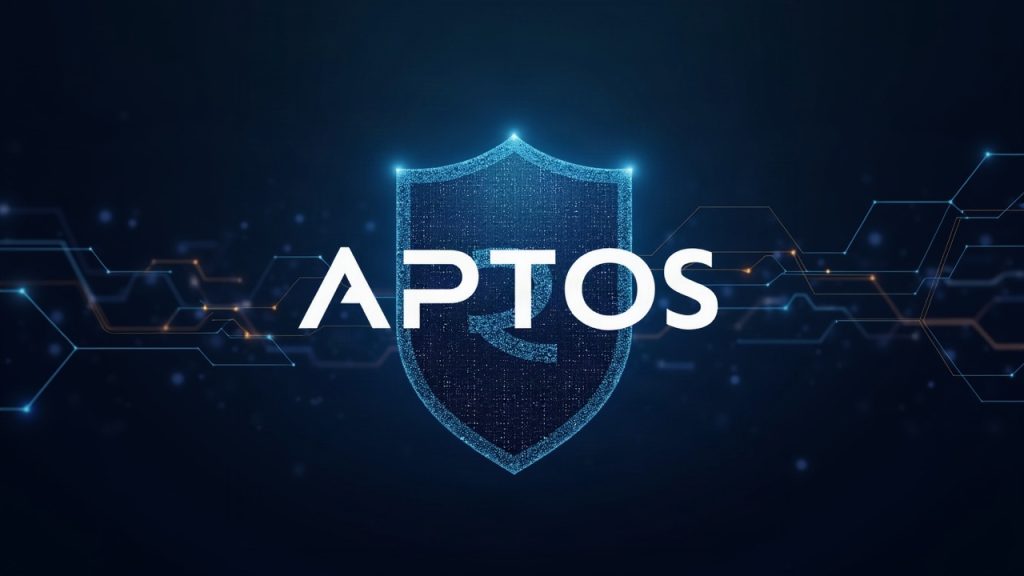
Aptos said its Encrypted Mempool is now live on mainnet, giving users the option to encrypt transaction details before block ordering is finalized. The company said the feature is designed to reduce maximal extractable value, or MEV, which can include practices such as front-running and sandwich attacks.
In an official blog post, Aptos described the rollout as an opt-in feature at the transaction level. The network said the payload is encrypted on the client side, ordered while still encrypted, and only decrypted by validators after block finalization.
The company’s official account and Aptos Labs also confirmed the mainnet launch on X, with the Labs post adding that encryption happens before submission and that decryption takes place only after block ordering is complete. That sequence is intended to keep transaction contents hidden during the period when they could otherwise be observed and used for MEV extraction.
Opt-in design keeps the feature at the transaction level
Aptos framed the launch as a user choice rather than a default network setting. According to the company, Encrypted Mempool can be enabled per transaction, allowing users to decide when they want that added layer of protection.
The mainnet launch means the feature is no longer just a technical concept or test-stage mechanism. It is now part of the live Aptos network, with the practical effect depending on whether users choose to activate it for individual transactions.
The post Aptos brings Encrypted Mempool to mainnet in move aimed at lowering MEV risk appeared first on The Cryptocurrency Post.

An official Exploit Summit post said @ExploitSummit that @xavi3rlu announced a partnership between pareton_ai and @engyai aimed at optimizing Engy inference latency and throughput using SN10 work.
@xavi3rlu announces a partnership between @pareton_ai and @engyai at Exploit Summit.
The goal: optimise Engy’s inference setup for lower latency and higher throughput, bringing Bittensor’s SN10 optimisation work to another provider’s customers. pic.twitter.com/id3V8uWUUy
— Exploit Summit (@ExploitSummit) September 29, 2026
The announcement frames the collaboration as a technical optimization effort rather than a broader product launch. According to the conference account, the work is intended to improve Engy’s inference performance through SN10-related optimization, with the stated goal of supporting Engy customers.
That is the clearest confirmed detail currently available: the partnership was presented publicly at the event, and the stated focus was on latency and throughput. No additional operational specifics were included in the post, such as implementation timing, deployment scope or whether the optimization is already live for users.
SN10’s role in the announcement
The mention of SN10 places Bittensor-related optimization work at the center of the update, but the announcement does not spell out technical mechanics beyond performance improvements for inference workloads. The post does not describe any token, market or governance implications, and it does not indicate whether the collaboration changes access, pricing or product availability.
For readers following AI-linked crypto projects, the update is best understood as a partnership claim around infrastructure performance. It signals that Pareto AI and Engy AI are positioning SN10 work as part of an effort to make inference more efficient, but the announcement itself stays narrow in scope.
The post Bittensor SN10 Work Tied to Pareto AI and Engy AI at Exploit Summit appeared first on The Cryptocurrency Post.

BNB Chain said NodeOps is now a deployment option in BNB Agent Studio v4, allowing builders to move from a prompt to a running agent without creating a cloud account or configuring infrastructure.
The update is part of a broader v4 release for BNB Agent Studio, which BNB Chain described as aimed at reducing the manual steps between writing a prompt and getting an agent live. In the company’s framing, the new NodeOps path removes a setup layer that would normally sit between development and deployment.
NodeOps also said agents can go live in BNB Agent Studio v4 using its infrastructure without manual setup. BNB Chain’s blog post described NodeOps alongside AWS and Azure as live deployment options.
The same release also adds stablecoin payment support for agents, with USDT, USDC and USD1 now working alongside $U. BNB Chain said wallet setup, funding and password handling are now automatic, while documentation, error messages and feedback tools have been improved to reduce friction for developers.
The changes make the studio feel more like a streamlined build environment than a setup-heavy toolchain, but the announcement remains centered on deployment convenience rather than a broader shift in the agent market. For developers using the platform, the practical change is that the path from prompt to live agent now appears to involve fewer manual steps.
The post BNB Chain Agent Studio v4 adds NodeOpsHQ for prompt-to-agent deployment appeared first on The Cryptocurrency Post.

Aptos brings Encrypted Mempool to mainnet in move aimed at lowering MEV risk

RWA WEEK Singapore Announces New Wave of Institutional Speakers as October Event Draws Closer

Bittensor SN10 Work Tied to Pareto AI and Engy AI at Exploit Summit

BNB Chain Agent Studio v4 adds NodeOpsHQ for prompt-to-agent deployment

BNB Chain releases Agent Studio v4 with simplified AI agent deployment and stablecoin support

ChainUp Brings The Institutional Ark to TOKEN2049 Singapore, Focusing on Digital Asset Infrastructure and High-Value Deal Flow

Cardalonia Aiming To Become The Biggest Metaverse Project On Cardano

P2P2C BREAKTHROUGH CREATES A CONNECTION BETWEEN ETM TOKEN AND THE SUPER PROFITABLE MARKET

WOM Protocol partners with CoinPayments, the world’s largest cryptocurrency payments processor

ETHERSMART DEVELOPER’S VISION MADE FINTECH COMPANY BECOME DUBAI’S TOP DIGITAL BANK

Project Quantum – Decentralised AAA Gaming

WOM Protocol Recommended by Premier Crypto Analyst as only full featured project for August
-
 Crypto4 years ago
Cardalonia Aiming To Become The Biggest Metaverse Project On Cardano
-
 Press Release6 years ago
P2P2C BREAKTHROUGH CREATES A CONNECTION BETWEEN ETM TOKEN AND THE SUPER PROFITABLE MARKET
-
 Blockchain6 years ago
WOM Protocol partners with CoinPayments, the world’s largest cryptocurrency payments processor
-
 Press Release6 years ago
ETHERSMART DEVELOPER’S VISION MADE FINTECH COMPANY BECOME DUBAI’S TOP DIGITAL BANK
-
 Press Release5 years ago
Project Quantum – Decentralised AAA Gaming
-
 Blockchain6 years ago
WOM Protocol Recommended by Premier Crypto Analyst as only full featured project for August
-

 Press Release6 years ago
ETHERSMART DEVELOPER’S VISION MADE FINTECH COMPANY BECOME DUBAI’S TOP DIGITAL BANK
-
 Blockchain6 years ago
1.5 Times More Bitcoin is purchased by Grayscale Than Daily Mined Coins