
Tech
California Passes Historic AI Chatbot Regulation to Protect Minors


Governor Gavin Newsom has signed a pioneering bill that establishes the first AI chatbot regulation in California, focusing on platforms that simulate friendship or intimacy. The legislation, known as Senate Bill 243 and introduced by State Senator Steve Padilla, was signed into law this Monday, marking a milestone in artificial intelligence oversight and the protection of vulnerable users, especially minors.
The new regulation requires developer companies of these chatbots to implement clear safeguards. The law mandates the explicit disclosure of the chatbot’s artificial identity, ensuring users know they are interacting with software and not a person. Furthermore, it specifically prohibits chatbots from engaging in conversations about sexual or self-harm topics with minors and establishes protocols for reporting detected cases of suicidal ideation to the state’s Office of Suicide Prevention.
This legislation is relevant because it shifts the focus of AI supervision. Instead of concentrating solely on model architecture or data bias, it directly addresses the emotional interaction between humans and machines. California becomes the first state to set clear boundaries for “companion” chatbots, setting a precedent that could influence future regulations nationwide. The measure seeks to balance innovation with protection, an increasingly present debate in the tech sector.
Real Protection or a Symbolic Gesture?
Despite its passage, the bill is not without controversy. Advocacy groups like Common Sense Media withdrew their support, arguing that the final version was “watered down” after industry lobbying. They label the law as a hollow gesture rather than meaningful policy, as key provisions like external audits were removed. For developers, implementation presents challenges, such as age verification and the risk of restricting legitimate mental health conversations out of caution.
The debate over this law’s actual impact is just beginning. While Governor Newsom defends it as a necessary guardrail, the industry and advocacy groups are closely watching its implementation. The success of this regulation will shape the future of AI governance, determining whether it is possible to create a safer digital environment without stifling the potential of these emerging technologies to offer support and connection.
The post California Passes Historic AI Chatbot Regulation to Protect Minors appeared first on The Cryptocurrency Post.







According to data published by Dark Web Informer, the actor Jinkusu is marketing an AI cybercrime tool capable of compromising security in 200,000 fraud cases via deepfakes. This fraudulent kit allows bypassing identity verification protocols on financial platforms, marking a critical turning point in protecting today’s global digital assets efficiently.
The system employs cutting-edge technology to perform real-time face swaps with alarming precision and speed. By integrating tools such as InsightFace, attackers achieve fluid gesture transfers that effectively deceive traditional biometrics in real-time. Since these methods evolve rapidly, trust in remote identification processes is currently under an unprecedented technical threat within the global financial infrastructure.
Jinkusu’s sophistication redefines global synthetic identity fraud
Unlike conventional impersonation methods, Jinkusu utilizes sophisticated voice modulation algorithms to personify legitimate users. This capability allows cybercriminals to bypass auditory security layers in banking institutions, generating a structural vulnerability in modern financial systems today. Despite regulatory efforts, the accessibility of these tools democratizes organized crime on a massive and dangerous scale.
Deddy Lavid, an executive at a leading platform in the blockchain sector, warns about the ecosystem’s systemic shortcomings. The expert points out that artificial intelligence drastically lowers barriers to synthetic identity fraud, making the platforms’ front doors a critical failure point. Therefore, it is imperative to adopt a layered security approach that combines verification with proactive monitoring.
Technical analysis performed by Vecert Analyzer reveals a worrying tactical transition compared to previous cycles. While 2022 attacks focused on basic phishing, in 2026 we observe a complete automation of social engineering through deep neural networks globally. This metamorphosis of the attack vector suggests that static defense methods have become obsolete against these dynamic adversaries.
How does artificial intelligence alter the current cryptographic security landscape?
Investors faced historical losses worth 5.5 billion dollars during the last fiscal year alone. These data, linked to psychological manipulation schemes, demonstrate the lethal effectiveness of combining social engineering and technology advanced artificial. Since the software does not require deep technical knowledge, the volume of potential attacks could scale exponentially during the current financial economic cycle.
The same actor, Jinkusu, has been previously linked to the launch of the dangerous Starkiller phishing kit. This malware uses a headless Chrome browser inside a Docker container, allowing to intercept credentials through a real-time reverse proxy invisibly. Although total losses from traditional attacks recently decreased, AI cybercrime keeps the alert level at maximum throughout the global markets.
The evolution of these AI cybercrime tools suggests that visual validation no longer guarantees authenticity. The use of reverse proxies and automated browsers allows attackers to replicate legitimate sessions with fidelity that current firewalls cannot detect. However, cybersecurity companies are already working on AI-based anomaly detection models to counter this growing criminal trend.
The future of security in the cryptographic environment will depend exclusively on the integration of autonomous defenses. Platforms must implement systems that not only verify the static image but also analyze behavioral patterns and network metadata suspiciously and continuously. Proactive surveillance and the constant updating of biometric detection engines will be the pillars of digital resistance moving forward.
The post New AI cybercrime tool breaches banking KYC systems using advanced deepfake technology appeared first on The Cryptocurrency Post.

Google researchers have detected the DarkSword exploit on iOS 18 devices affecting versions 18.4 through 18.7, according to the Google Threat Intelligence report. This exploit chain utilizes six critical vulnerabilities to inject the Ghostblade malware, which extracts sensitive data from six exchange platforms and multiple digital wallets without leaving any apparent trace.
The intrusion chain is activated when users access compromised web portals that execute arbitrary code in the background. This silent process leverages flaws in the system’s rendering engine to install malicious components without requiring direct interaction from the owner of the affected device. The sophistication of DarkSword demonstrates a level of engineering previously reserved for government-level espionage operations.
Mobile espionage reaches critical levels of technical precision
Once inside the Apple environment, the Ghostblade component scans the system for centralized exchange applications such as Binance and Kraken. The objective is to capture login credentials and session tokens that allow total control over the user’s funds. This surgical approach minimizes system alerts, allowing the data extraction to occur within a matter of seconds.
The danger extends to self-custody solutions, including cold and hot wallets such as MetaMask, Ledger, and Phantom. By intercepting seed phrases and private keys during transaction processes, the malware nullifies the inherent security of physical storage for digital assets. The vulnerability puts the financial integrity of both retail and institutional investors at significant risk today.
Beyond financial data, the exploit extracts personal metadata including call logs, Wi-Fi passwords, and browsing cookies. This massive exfiltration capability allows for much more effective subsequent social engineering attacks against the victim. The collection of health and location data adds an extremely intrusive dimension of personal surveillance for any mobile user.
How does DarkSword alter the security paradigm for mobile devices?
From a technical perspective, Ghostblade introduces a tactical innovation based on the volatility of its files within the internal storage. After completing the data transfer to external command centers, the program automatically deletes its traces to avoid detection by mobile security tools. This ephemeral behavior makes it extremely difficult to create effective detection signatures at this time.
The geographic distribution of the campaign suggests advanced coordination, affecting critical infrastructure in nations such as Ukraine and Saudi Arabia. In these cases, the impersonation of legitimate government portals to spread the virus among the civilian population has been observed. This “watering hole” tactic maximizes the infection rate by abusing pre-existing institutional trust.
Historically, the blockchain sector has been the target of massive attacks such as the one recorded by Inferno Drainer, which stole nine million dollars. However, DarkSword represents a superior threat by acting directly on the operating system, differing from conventional phishing scams. The scale of this new risk demands a complete re-evaluation of security protocols.
To mitigate these risks, it is imperative that Apple device users install the latest security patches immediately. Reliance on SMS-based two-factor authentication should be reduced, opting instead for physical security keys or independent authentication apps. It is vital to prevent intrusions via software from unverified sources to maintain financial sovereignty.
The future of mobile security will depend on the manufacturers’ ability to close zero-day gaps before their exploitation. Meanwhile, constant monitoring of data flows and the use of isolated environments for cryptographic transactions are recommended measures. The industry must prepare for a new era of persistent threats that challenge the closed architecture of iOS continuously.
The post The DarkSword exploit on iOS 18 compromises cryptocurrency wallets across six platforms appeared first on The Cryptocurrency Post.
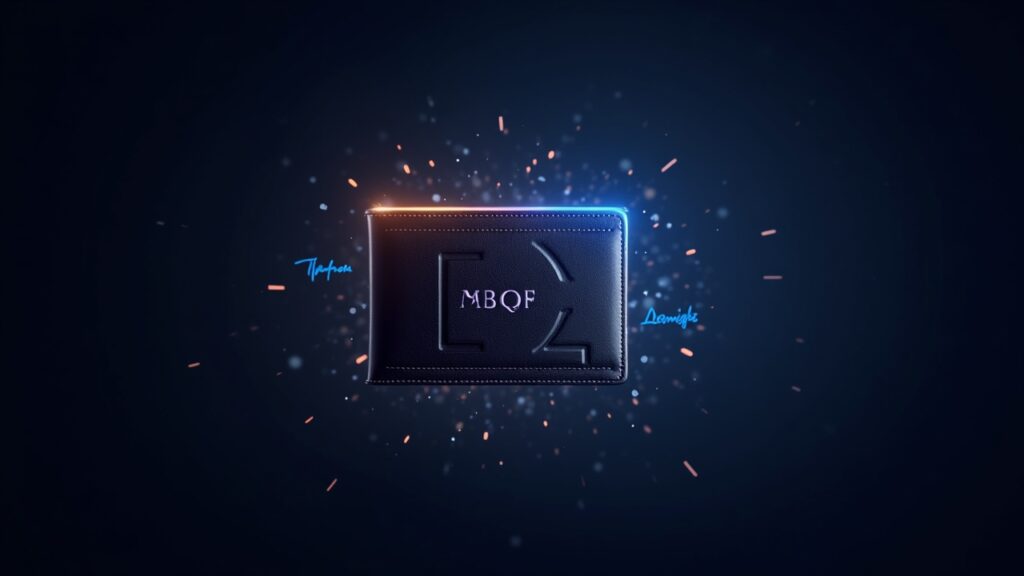
The advancement of quantum computing has ceased to be an academic theory to become an imminent threat that companies must face. In this context, qLABS, a foundation specialized in cryptographic infrastructure, has announced the launch of its qONE token and its Quantum-Sig wallet to protect digital assets.
This initiative arises at a critical moment where elliptic curve signature systems, essential for the security of networks like Ethereum or Solana, could become vulnerable to powerful quantum machines. However, qLABS proposes an immediate resistance layer, avoiding the wait for slow structural updates in the main blockchains.
Technical innovation to neutralize the risk of future decryption
Unlike other projects that seek to rebuild networks from scratch, qLABS’ proposal is based on implementing a post-quantum security layer over already existing infrastructures. Its system uses a dual-signature technology, which requires both the classical signature and a second signature resistant to quantum attacks to validate any transaction.
This approach seeks to mitigate the danger known as “harvest now, decrypt later,” a strategy where malicious actors collect data today to compromise private keys when quantum technology matures. Furthermore, the qONE token presale, scheduled for February 5, will mark a milestone in the commercialization of services of advanced security.
How do the giants of the sector plan to respond to this technological challenge?
While qLABS deploys tangible solutions, other large-scale companies like Coinbase have opted to strengthen their research frameworks through independent advisory committees. Despite these corporate efforts, the agility of quantum-native protocols is raising the protection standards demanded by global investors and developers.
On the other hand, networks like Aptos have already proposed signature schemes based on NIST standards, demonstrating that the transition toward post-quantum cryptography is a strategic priority. Thus, the market observes how competition shifts from scalability toward long-term resilience against disruptive computational capabilities.
The adoption of these tools will define the survival of assets in the next decade, especially as estimates for the arrival of “Q-Day” shorten significantly. Therefore, the cryptocurrency ecosystem is in a preventive migration phase, where success will depend on implementing robust defenses before the threat becomes an inevitable technical reality.
The post qLABS takes the lead in quantum security amid growing pressure for crypto companies appeared first on The Cryptocurrency Post.

TRON Announced as Title Sponsor for Hong Kong Web3 Festival 2026

Kaspa Ecosystem Foundation Announced as Speaker and VIP Lounge Sponsor at Hong Kong Web3 Festival 2026

BytePlus Joins Hong Kong Web3 Festival 2026 as Gold Sponsor

SignalPlus Announced as Title Sponsor for Hong Kong Web3 Festival

MEET48 Announced as Diamond Sponsor at Hong Kong Web3 Festival

New AI cybercrime tool breaches banking KYC systems using advanced deepfake technology

Cardalonia Aiming To Become The Biggest Metaverse Project On Cardano

P2P2C BREAKTHROUGH CREATES A CONNECTION BETWEEN ETM TOKEN AND THE SUPER PROFITABLE MARKET

WOM Protocol partners with CoinPayments, the world’s largest cryptocurrency payments processor

ETHERSMART DEVELOPER’S VISION MADE FINTECH COMPANY BECOME DUBAI’S TOP DIGITAL BANK

Project Quantum – Decentralised AAA Gaming

WOM Protocol Recommended by Premier Crypto Analyst as only full featured project for August
-
 Crypto4 years ago
Cardalonia Aiming To Become The Biggest Metaverse Project On Cardano
-
 Press Release5 years ago
P2P2C BREAKTHROUGH CREATES A CONNECTION BETWEEN ETM TOKEN AND THE SUPER PROFITABLE MARKET
-
 Blockchain6 years ago
WOM Protocol partners with CoinPayments, the world’s largest cryptocurrency payments processor
-
 Press Release5 years ago
ETHERSMART DEVELOPER’S VISION MADE FINTECH COMPANY BECOME DUBAI’S TOP DIGITAL BANK
-
 Press Release5 years ago
Project Quantum – Decentralised AAA Gaming
-
 Blockchain6 years ago
WOM Protocol Recommended by Premier Crypto Analyst as only full featured project for August
-
 Press Release5 years ago
ETHERSMART DEVELOPER’S VISION MADE FINTECH COMPANY BECOME DUBAI’S TOP DIGITAL BANK
-
 Blockchain6 years ago
1.5 Times More Bitcoin is purchased by Grayscale Than Daily Mined Coins