
Crypto Currency
Bitcoin’s FOMC Pattern Signals a Defining 2025 as Markets Brace for December Rate Decision

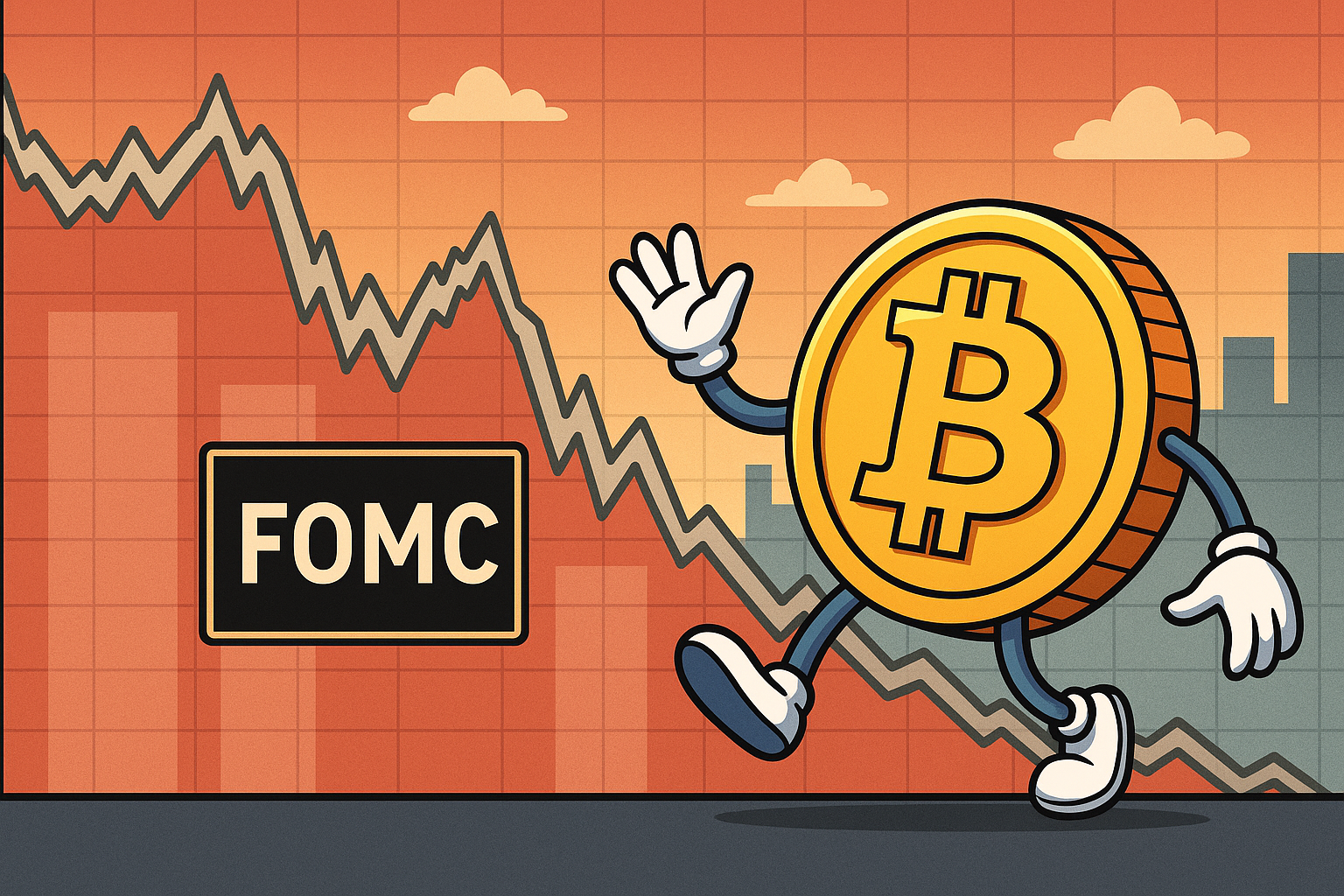
Bitcoin’s price action throughout 2025 has been shaped almost entirely by the Federal Reserve’s policy cycle, creating a clear and repeatable pattern: sharp corrections following nearly every FOMC meeting. With the December rate decision approaching — and rate-cut expectations running high — markets are now watching to see whether Bitcoin will finally break its year-long reaction trend or repeat the post-FOMC downturn that has defined its behavior.
Despite a volatile year that saw Bitcoin explode toward $126,000 before fading back to the $90K region, the asset now sits almost exactly where it began 2025. Liquidity shifts, shifting macro sentiment, and aggressive repricing around Fed announcements have carved out a boom-and-fade structure that continues to weigh on short-term momentum.
FOMC Pattern Drives Bitcoin’s Recurring 2025 Volatility
A detailed breakdown shared by on-chain analyst Ali (@ali_charts) reveals the extent of Bitcoin’s FOMC-driven volatility. According to the data, six of seven Fed meetings in 2025 triggered immediate post-event declines, including the January, March, June, July, September, and October meetings. These corrections ranged from 6% to as high as 29%, forming one of the most consistent macro-reaction patterns in Bitcoin’s recent history.
The shaded event windows across Ali’s chart highlight identical behavior:
- Volatility spike →
- Price compression →
- Reassessment of risk as traders digest policy tone
Only May bucked the trend, with a 15% short-term rally triggered by what the market perceived as slightly more supportive guidance. The overall data underscores one theme — Bitcoin is reacting directly to expectations around liquidity and the Fed’s trajectory.
December’s FOMC Tests Optimism Against Policy Reality
Traders now look ahead to the December 10, 2025 FOMC meeting, where probability models suggest an 87.4% chance of a rate cut. Historically, Bitcoin’s reaction tends to sharpen during Powell’s 8:30 PM CET press conference, when forward guidance becomes clearer.
However, the 2025 pattern suggests that pre-event optimism often evaporates if the Fed fails to deliver a decisively dovish message. Every meeting this year has reset short-term structure, often through:
- Sudden volatility spikes
- Forced liquidations
- Failed breakout attempts
September produced a notable lower high, signaling weakening momentum well before Q4 began.
Whether December breaks this cycle will depend on whether policy communication confirms the easing narrative traders now expect.
Boom-and-Fade Structure Leaves Bitcoin Near Its Yearly Open
Bitcoin currently trades around $90,204, down 7.43% year-to-date, despite the explosive rally toward $126K earlier in October. The failure to sustain that breakout created a rounded-top pattern, pulling price back into the familiar $90K–$92K range.
Market context reflects a cooling environment:
- Total crypto market cap sits near $1.8 trillion
- 24-hour volume is rising, signaling increased reactive selling
- The volatility-to-market cap ratio (3.93%) highlights heightened sensitivity to macro triggers
CryptoPulse+ notes that Bitcoin’s net return for 2025 is just 0.8%, demonstrating how extreme volatility has masked the lack of true directional progress.
2025: A Year Defined by the Bitcoin–Fed Relationship
If this year has proven anything, it’s that Bitcoin’s macro correlation remains front-and-center. The repeated FOMC pattern shows how tightly Bitcoin tracks liquidity outlooks, with policy announcements dictating sentiment far more than on-chain fundamentals.
As the December decision approaches, investors now face the same question that has framed every 2025 meeting:
Will the Fed validate market optimism — or reset the cycle once again?
Bitcoin’s reaction may set the tone for early 2026.

Brazil is once again moving toward a bold digital asset strategy as Congress reintroduces Bill 4501 of 2024. The proposal would allow the country to acquire up to 1 million BTC over the next five years, potentially creating the largest national Bitcoin reserve in the world.
Federal Deputy Luiz Gastão stated that building such a reserve could cost at least $68 billion. If completed, Brazil’s holdings would surpass those of countries like the United States and China. The broader objective is clear: diversify national assets, hedge against inflation, and reinforce Brazil’s economic sovereignty in an increasingly digital global economy.
Expanding Bitcoin Use Across the Economy
At the heart of the proposal is RESbit, the Strategic Sovereign Bitcoin Reserve. The reserve would be managed by the Central Bank in coordination with the Ministry of Finance. Importantly, the bill guarantees that Bitcoin held under RESbit cannot be confiscated and protects citizens’ rights to self custody.
According to Gastão, these protections are essential to encourage investment, support innovation, and provide long term legal clarity. The reserve would not rely solely on direct market purchases. It could also accumulate Bitcoin through tax payments, temporary ETF allocations, and corporate holdings.
Bill 4501 of 2024 goes further than simply establishing a reserve. It encourages companies to hold or mine Bitcoin and even permits federal tax payments in BTC. In addition, the proposal prohibits the sale of Bitcoin seized through court proceedings, preventing forced liquidation by the government.
The legislation positions Bitcoin as more than just a strategic asset. It frames the cryptocurrency as a tool for monetary sovereignty that could potentially support Drex, Brazil’s central bank digital currency initiative.
Congressman Eros Biondini, the bill’s author, emphasized Bitcoin’s scarcity and security features. He argued that these qualities make it either superior to or a strong complement alongside traditional reserve assets such as gold and the U.S. dollar. To ensure transparency, the bill requires the Central Bank to publish semi annual reports detailing RESbit transactions and performance metrics.
Governance and Legal Protections
The proposal includes strict accountability measures to prevent mismanagement. Article 6 outlines both administrative and criminal penalties for improper handling of RESbit funds. Officials responsible for violations would be required to reimburse public resources.
Furthermore, Brazil’s Internal Revenue Service would have 12 months to develop the technological framework needed to integrate Bitcoin into the national financial infrastructure.
However, legal challenges may arise. Current Central Bank regulations do not formally recognize Bitcoin as a reserve asset, which could create regulatory friction. The bill addresses user autonomy directly, stating that any administrative restriction on self controlled wallets would be considered void, reinforcing citizen custody rights.
Beyond reserve accumulation, the legislation aims to modernize Brazil’s broader financial ecosystem. It encourages international cooperation to adopt best practices and requires the Executive Branch to regulate and implement the law within 180 days of its publication.
If passed, Bill 4501 of 2024 could mark a historic shift in how Brazil approaches digital assets, placing Bitcoin at the center of its long term economic strategy.
Solana is undergoing a major transformation. Once viewed primarily as a faster alternative to Ethereum, the network is now emerging as a strategic infrastructure layer for decentralized finance, attracting growing interest from institutional investors. As Solana strengthens its technical foundations, capital inflows from specialized funds are reshaping its position within the crypto ecosystem.
At the start of the year, Solana is no longer defined by potential alone. Instead, it is increasingly recognized as a foundational player at the intersection of real-world use cases and large-scale financial flows.
Institutional Funds Quietly Accumulate SOL
According to market analysts, institutional accumulation of SOL has intensified since the beginning of the year. Crypto analyst Rex noted that several major investment firms are steadily building positions in Solana, a trend echoed by other ecosystem observers.
Among the most prominent investors, Forward Industry reportedly holds close to $1 billion worth of SOL, signaling strong long-term conviction. Other entities, including Defidevcorp and additional institutional funds, are also managing holdings worth several hundred million dollars.
Analysts believe this shift is still in its early stages. Solana stands out as one of the few blockchains capable of combining high performance with scalability, making it increasingly attractive for institutional-grade applications. As Rex put it, the choice to accumulate SOL is not accidental—these investors are positioning themselves for where decentralized infrastructure is heading.
Key factors reinforcing this institutional shift include:
- Forward Industry’s nearly $1 billion SOL position, reflecting strategic commitment
- Multiple funds accumulating large SOL allocations
- Solana’s growing role in real-world asset (RWA) tokenization
- A reassessment by investors who were previously cautious due to centralization concerns
- Expectations that SOL’s major bullish phase is still ahead, despite already significant volumes
This marks a clear change in perception. Solana is no longer seen as a secondary option but increasingly as a core pillar of institutional decentralized finance.
From Promise to Proof: Solana Demonstrates Real-World Readiness
Beyond investment flows, Solana is showing tangible progress in adoption and network performance. One of the most significant milestones is the activation of Firedancer on the mainnet—an independent validator client that reduces block finality to approximately 150 milliseconds, dramatically improving speed, stability, and resilience.
In parallel, Solana’s integration by Western Union underscores its transition into enterprise-scale applications. This move highlights growing confidence in Solana’s ability to support global payment and settlement use cases.
Institutional interest is also reflected in traditional financial products. The SOL spot ETF recently surpassed $1 billion in net assets, a symbolic and practical confirmation that Solana is gaining acceptance beyond the crypto-native investor base.
On-Chain Metrics Confirm Rapid Ecosystem Growth
Network data further supports the narrative of accelerating adoption. According to investor insights, applications built on Solana generated $2.39 billion in revenue in 2025, representing a 46% year-on-year increase. Network-level revenue reached $1.48 billion, reflecting growth multiplied nearly 48 times over the past two years.
Additional on-chain highlights include:
- 3.2 million daily active wallets
- Nearly $900 million in stablecoin inflows in a single day on January 6
- Leadership in decentralized exchange (DEX) volume across both 24-hour and 30-day periods
- Market dominance in tokenized equities and digital securities
These metrics point to sustained, utility-driven demand rather than short-term speculation.
Conclusion
Solana is now attracting long-term capital and sustained usage, moving well beyond temporary hype cycles. As institutional funds accumulate SOL and on-chain fundamentals continue to strengthen, the network’s role within the broader crypto economy is being redefined. While market uncertainty remains a constant, the current momentum suggests Solana is positioning itself as a lasting force in decentralized financial infrastructure rather than a passing alternative.
Greg Kidd, an early executive at Ripple and a long-time figure in the cryptocurrency space, has shared fresh insights into what truly drives XRP’s long-term relevance. Rather than focusing on short-term price fluctuations, Kidd argues that liquidity and supply dynamics are the most critical factors determining XRP’s role and sustainability within the global financial system.
According to Kidd, XRP’s value proposition lies in its ability to function efficiently within payment infrastructure, not in speculative price movements. He believes that without deep and reliable liquidity, XRP cannot fully perform its intended purpose, regardless of how high its market price may rise.
Early XRP Investment Reflects Long-Term Conviction
Kidd revealed in a past interview that he still holds a substantial XRP position, having acquired roughly 1% of the total XRP supply more than five years ago. This investment predates the wave of institutional adoption and modern crypto market infrastructure, underscoring his long-standing confidence in XRP as a financial utility rather than a speculative asset.
His early involvement gives him a rare, long-term perspective on how real value is created within blockchain ecosystems. Kidd views XRP as a tool designed to solve liquidity challenges in global finance, not simply as a vehicle for price appreciation.
XRP’s Role as a Bridge Asset in Ripple’s Ecosystem
Kidd emphasized that XRP’s primary function is to act as a bridge asset within Ripple’s payment network. While Ripple builds enterprise-grade systems for cross-border transfers, XRP enables seamless movement of value between different fiat currencies.
He noted that XRP’s effectiveness is independent of Ripple’s corporate performance. Instead, the token’s strength lies in its ability to provide fast, cost-efficient liquidity across markets, making it suitable for large-scale transactional use.
Liquidity Matters More Than Price
A key takeaway from Kidd’s commentary is that liquidity outweighs price when it comes to XRP’s utility. High liquidity allows participants to move in and out of positions quickly, with minimal slippage—an essential requirement for institutional and cross-border payment use cases.
Kidd explained that even if XRP’s price increases, a lack of deep and efficient markets would limit its usefulness. In contrast, strong liquidity enables XRP to function as a reliable transactional instrument within the global payments ecosystem.
Supply, Demand, and Long-Term Price Potential
While liquidity is central to XRP’s role, Kidd acknowledged that supply constraints and rising demand naturally influence price over time. As adoption grows and markets mature, increased demand relative to available supply could support long-term price appreciation.
However, he stressed that any meaningful upside would be driven by real usage and sustained participation rather than speculation. In his view, price growth should be a byproduct of utility, not the primary objective.
Ripple’s Vision for Blockchain-Based Banking
Beyond XRP, Kidd has shared a broader vision for Ripple’s role in transforming traditional finance. Speaking at the XRP Las Vegas conference in June 2025, he suggested that blockchain technology could modernize legacy banking systems and integrate traditional institutions into decentralized networks.
In his current role as CEO of Vast Bank, Kidd is working on issuing FDIC-insured U.S. dollar tokens on the XRP Ledger. These tokens operate under a fractional-reserve model and aim to deliver capital efficiency, interest generation, regulatory protection, and 24/7 cross-border payment capabilities. He also plans to expand this framework to other currencies, including the British pound and the euro.
Conclusion
Greg Kidd’s perspective reinforces the idea that XRP’s long-term success depends far more on liquidity, structured adoption, and real-world utility than on short-term price action. While price appreciation may follow as markets deepen, Kidd believes XRP’s true value lies in its ability to function as a reliable bridge asset within a modernized global financial system.

CF Blockchain Joins Hong Kong Web3 Festival as Secondary Exhibition Sponsor

ENI Announced as Gold Sponsor at Hong Kong Web3 Festival 2026

CoinPost Announced as Secondary Exhibition Sponsor at Hong Kong Web3 Festival 2026

CHAINISLE Announced as Secondary Exhibition Sponsor at Hong Kong Web3 Festival 2026

KBW2026 Announced as Secondary Exhibition Sponsor at Hong Kong Web3 Festival 2026

Aspire Confirms Official Participation at Hong Kong Web3 Festival 2026

Cardalonia Aiming To Become The Biggest Metaverse Project On Cardano

P2P2C BREAKTHROUGH CREATES A CONNECTION BETWEEN ETM TOKEN AND THE SUPER PROFITABLE MARKET

WOM Protocol partners with CoinPayments, the world’s largest cryptocurrency payments processor

ETHERSMART DEVELOPER’S VISION MADE FINTECH COMPANY BECOME DUBAI’S TOP DIGITAL BANK

Project Quantum – Decentralised AAA Gaming

WOM Protocol Recommended by Premier Crypto Analyst as only full featured project for August
-
 Crypto4 years ago
Cardalonia Aiming To Become The Biggest Metaverse Project On Cardano
-
 Press Release5 years ago
P2P2C BREAKTHROUGH CREATES A CONNECTION BETWEEN ETM TOKEN AND THE SUPER PROFITABLE MARKET
-
 Blockchain6 years ago
WOM Protocol partners with CoinPayments, the world’s largest cryptocurrency payments processor
-
 Press Release5 years ago
ETHERSMART DEVELOPER’S VISION MADE FINTECH COMPANY BECOME DUBAI’S TOP DIGITAL BANK
-
 Press Release5 years ago
Project Quantum – Decentralised AAA Gaming
-
 Blockchain6 years ago
WOM Protocol Recommended by Premier Crypto Analyst as only full featured project for August
-

 Press Release5 years ago
ETHERSMART DEVELOPER’S VISION MADE FINTECH COMPANY BECOME DUBAI’S TOP DIGITAL BANK
-
 Blockchain6 years ago
1.5 Times More Bitcoin is purchased by Grayscale Than Daily Mined Coins