
News
Bitcoin Cash Nears $500, Cardano Eyes $0.70, & Web3 ai Rises with $8.3 M Raised & 1,747% ROI Potential

As the crypto market gains momentum in 2025, three standout projects are capturing attention for their bullish crypto setups. Bitcoin Cash (BCH) price performance is gaining strength, trading near $473 after a nearly 10% rise and supported by a surge in Open Interest from $312 million to $485 million, along with an RSI of 66. Meanwhile, the Cardano (ADA) price movement shows a triple bottom near $0.60, with a potential breakout toward $0.70794 if it clears key resistance.
Closing the trio is Web3 ai, which is reshaping crypto trading with multiple integrated AI tools. With $8.3 million raised, a $0.000443 presale price, and a projected ROI of 1,747%, Web3 ai offers unmatched upside in today’s data-driven market.
Bitcoin Cash (BCH) Price Performance Signals Strong Bullish Momentum
The Bitcoin Cash (BCH) price performance is gaining attention as the asset trades around $473, showing resilience despite rising geopolitical tensions. On-chain metrics and derivatives data support a bullish crypto outlook, with Open Interest (OI) surging from $312 million to $485 million since June 13, suggesting increased capital inflow. Meanwhile, the Spot Taker Cumulative Volume Delta (CVD) has turned positive, indicating a dominant buying phase since early May.

BCH recently bounced off its 50-day EMA at $409 and has climbed nearly 10%, breaking above the $459 resistance. The RSI remains strong at 66, and the MACD shows a bullish crossover with rising green bars, both pointing to continued momentum. If this trend holds, BCH could retest its January peak of $500.6 and potentially climb toward $542.50. Current indicators suggest that Bitcoin Cash (BCH) price performance is well-positioned among the most bullish crypto assets this week.
Cardano (ADA) Price Movement Hints at a Bullish Setup
The Cardano (ADA) price movement is showing early signs of a potential reversal, hovering just below the 9-period EMA at $0.62680. A push above this level, followed by a reclaim of the 20-period SMA at $0.63163, could shift sentiment from bearish to bullish. The $0.60 support has held firm, with ADA respecting it multiple times, forming what appears to be a triple bottom pattern, a classic bullish crypto signal.

This base, combined with waning selling pressure and hints of accumulation, strengthens the case for upside. If ADA clears the $0.66 resistance, it may quickly target $0.70794, where the 200-period SMA currently sits. Reaching that zone would mark a significant technical achievement and potentially invite more momentum-driven buyers. Overall, ADA’s setup reflects a cautious yet compelling opportunity for bullish traders watching the market closely.
Web3 ai Signals a Bullish Crypto Shift with Intelligent Trading Tools
Web3 ai is fast becoming a central force in reshaping how traders interact with the crypto market. With its powerful suite of multiple integrated AI tools, the platform offers everything from real-time trade signals and portfolio optimization to scam detection and risk management. These tools are not only user-friendly but are designed to reduce noise and deliver focused, actionable insights, making it easier for both newcomers and experienced traders to stay ahead.
What makes Web3 ai stand out is its ability to pull data from multiple sources, blockchains, exchanges, social media, and news platforms, and process it using advanced machine learning, natural language processing, and neural networks. This multi-layered approach allows users to respond faster to price movements, identify hidden opportunities, and reduce exposure to threats.
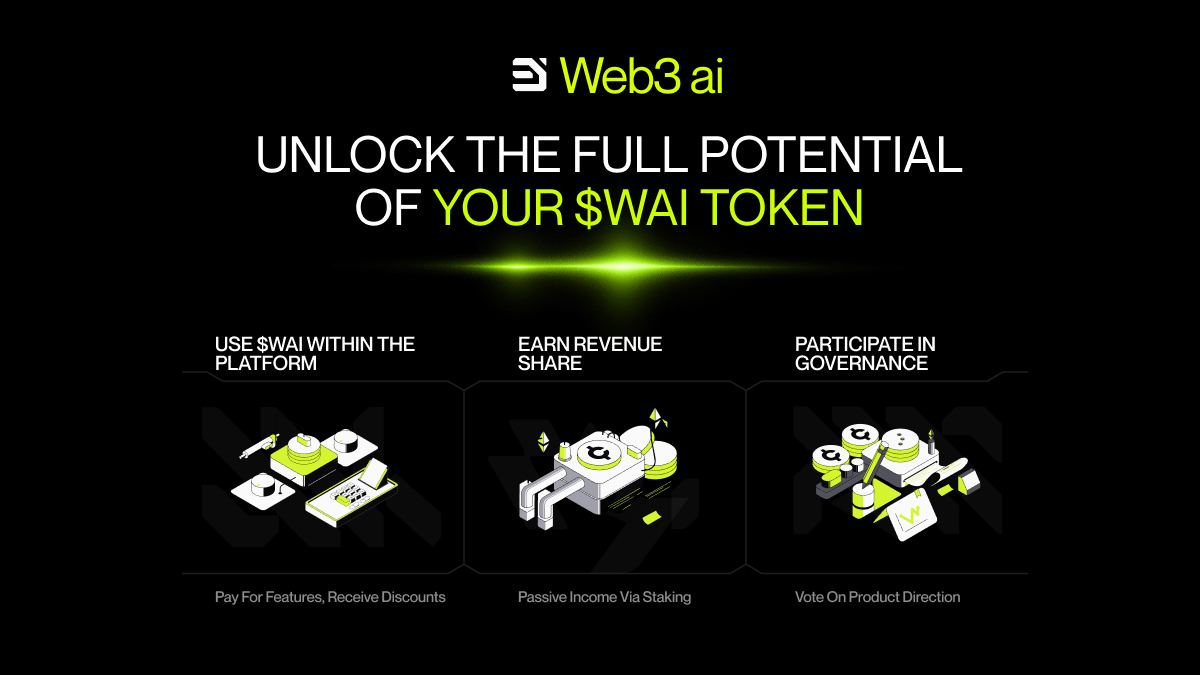
With over $8.3 million raised, a presale price of $0.000443, and a projected ROI of 1,747%, Web3 ai is not just gaining momentum, it’s helping define what a bullish crypto ecosystem should look like. As the market grows more data-driven, Web3 ai is leading the charge with tools that empower smarter, faster, and safer decision-making across the Web3 space.
Closing Insights
In 2025’s bullish crypto cycle, a few standout projects are drawing serious attention. The Bitcoin Cash (BCH) price performance remains strong, with BCH trading around $473, nearly 10% higher after bouncing off its 50-day EMA. Rising Open Interest and a solid RSI of 66 support continued momentum.
Meanwhile, the Cardano (ADA) price movement signals a potential reversal, with a triple bottom near the $0.60 support. If ADA reclaims $0.63163 and breaks past $0.66, it could quickly rally toward $0.70794, setting up a compelling breakout scenario.
But the most exciting shift is happening with Web3 ai. With over $8.3 million raised, a presale price of $0.000443, and a projected ROI of 1,747%, Web3 ai is redefining crypto trading. Its AI-powered ecosystem is built for speed, precision, and results, helping traders stay ahead in an increasingly data-driven market. Among all the best bullish crypto plays, Web3 ai is emerging as the project to beat.

Join Web3 ai Now:
Website: http://web3ai.com/
Telegram: https://t.me/Web3Ai_Token
Instagram: https://www.instagram.com/web3ai_token













Crypto
Ethereum Contract Deployments Reach Record 8.7 Million in Q4, Highlighting Developer Momentum


Ethereum closed 2025 with a major milestone that underscores its continued leadership in the smart contract ecosystem. According to data from Token Terminal, developers deployed 8.7 million smart contracts on Ethereum in Q4 2025, marking the highest quarterly total in the network’s history.
The figure reflects more than just raw activity. It points to sustained confidence in Ethereum as the primary platform for building decentralized applications, even as competition from alternative blockchains intensifies.
Ethereum contract deployments have steadily increased over the past year, but the sharp acceleration in the final quarter signals that developers are not slowing down. Instead, they appear to be doubling down on Ethereum’s infrastructure as the foundation for long-term innovation.
Ethereum’s Developer Ecosystem Shows Structural Strength
The surge in Ethereum smart contract deployments is closely tied to the rapid expansion of its Layer 2 ecosystem. Rollup networks such as Arbitrum, Optimism, and Base have lowered costs and improved scalability while maintaining compatibility with Ethereum’s core architecture. As a result, developers can deploy contracts more frequently without facing the same economic constraints that once limited on-chain experimentation.
This rollup-driven model has effectively extended Ethereum’s reach. While contracts may execute on Layer 2 networks, they still rely on Ethereum for settlement and security. That relationship helps explain why Ethereum contract activity continues to rise even as usage spreads across multiple chains.
At the same time, developer tooling around Ethereum has matured significantly. Improved frameworks, clearer documentation, and broader grant support have reduced friction for teams launching new protocols or testing novel ideas. These improvements make it easier to move from concept to deployment, contributing directly to the record numbers seen in Q4.
DeFi and NFTs Contribute to Renewed On-Chain Activity
Another factor behind the increase in Ethereum contract deployments is a rebound in decentralized finance and NFT-related experimentation. While earlier cycles saw speculative excess, recent activity has leaned more toward infrastructure upgrades, protocol iterations, and utility-focused applications.
DeFi teams continue to refine lending, trading, and liquidity mechanisms, often deploying multiple contracts as part of iterative development. NFT projects, meanwhile, are expanding beyond simple collectibles into areas such as gaming, identity, and digital rights, each requiring more sophisticated smart contract architectures.
Together, these trends create consistent demand for new deployments rather than one-off launches.
Why the 8.7 Million Figure Matters
Reaching 8.7 million Ethereum contract deployments in a single quarter is not just a symbolic achievement. It highlights the depth of developer engagement and suggests Ethereum remains the default environment for building complex on-chain systems.
Unlike short-term metrics tied to price or speculation, developer activity tends to reflect long-term confidence. Builders invest time and resources where they expect ecosystems to remain relevant and secure. The Q4 data indicates that, despite higher competition and ongoing debates around scalability and fees, Ethereum still holds that position.
Looking ahead, Ethereum’s rollup-centric roadmap is likely to push deployment numbers even higher. As more activity shifts to Layer 2 networks, developers can experiment faster while relying on Ethereum as the settlement layer. That dynamic reinforces Ethereum’s role as the backbone of Web3 rather than diminishing it.
For now, the record-setting quarter sends a clear signal: Ethereum’s developer ecosystem remains one of the strongest indicators of its long-term resilience and relevance in the blockchain space.

China’s digital RMB, also known as the e-CNY, is preparing for one of its most significant structural upgrades since its launch. Beginning January 1, 2026, the digital currency will shift to an interest-bearing model, a move that signals a deeper integration of the digital RMB into China’s traditional banking framework and broader financial system.
The planned change marks a clear evolution from the digital RMB’s original design, which emphasized strict reserve backing and non-interest-bearing balances. While final confirmation from the People’s Bank of China is still pending, the direction of policy is already reshaping expectations around how the e-CNY will function in practice.
A shift toward interest-bearing digital RMB accounts
Under the new framework, banks operating digital RMB wallets will be allowed to pay interest on user balances. More importantly, those balances will be recorded on banks’ balance sheets, rather than being fully segregated as off-balance-sheet liabilities. This change brings the digital RMB closer to how traditional bank deposits are treated today.
Previously, digital RMB holdings were backed by a 100% reserve requirement, limiting banks’ ability to manage liquidity or deploy funds efficiently. The upcoming model introduces partial reserve management, giving banks greater flexibility in asset-liability management while still preserving oversight through the existing dual-layer system. In this structure, the central bank remains responsible for issuance, while commercial banks handle distribution and customer-facing services.
By allowing interest payments, digital RMB wallets begin to resemble conventional savings or transaction accounts, rather than passive payment instruments. This shift may encourage broader usage, particularly among users and institutions that previously viewed the e-CNY as functionally inferior to bank deposits.
Deposit protection and regulatory alignment
One of the most consequential aspects of the upgrade is legal and regulatory alignment. Once digital RMB balances are treated as on-balance-sheet liabilities, they are expected to fall under China’s deposit insurance framework. This provides users with formal protection similar to that enjoyed by traditional depositors, reducing perceived risk and reinforcing trust in the system.
From a regulatory standpoint, the move also simplifies supervision. Treating the digital RMB as a deposit-like product allows regulators to apply existing banking rules more consistently, rather than maintaining a parallel framework for digital currency balances. For banks, this reduces compliance complexity and clarifies how digital RMB fits into capital and liquidity requirements.
Why China is making this move now
China has already seen large-scale adoption of the digital RMB under its non-interest-bearing model, with trillions of yuan reportedly circulated during pilot phases. However, usage has largely been driven by government programs, subsidies, and controlled use cases, rather than organic consumer preference.
Introducing interest is a practical incentive. It makes holding digital RMB economically neutral, or even advantageous, compared to cash or low-yield transaction accounts. At the same time, partial reserves give banks a reason to actively support and promote e-CNY wallets, rather than viewing them as operational overhead.
This shift also reflects broader strategic goals. China continues to modernize its payment infrastructure and reduce reliance on cash, while strengthening monetary oversight in an increasingly digital economy. An interest-bearing digital RMB supports those objectives without abandoning centralized control.
Potential implications beyond China
Although the digital RMB remains primarily a domestic project, its evolution is being closely watched internationally. An interest-bearing central bank digital currency challenges the assumption that CBDCs must be non-yielding to avoid competition with banks. China’s approach suggests that integration, rather than separation, may be the preferred long-term model.
For global institutions and policymakers, the changes offer a real-world case study in how digital currencies can coexist with commercial banking systems. If successful, the e-CNY could influence how other countries design their own digital currencies, particularly in emerging markets seeking both financial inclusion and system stability.
As the 2026 rollout approaches, attention will turn to implementation details, interest rate structures, and limits on balances. What is clear, however, is that China’s digital RMB is no longer an experimental payment tool. It is steadily becoming a core component of the country’s financial architecture, with implications that extend well beyond digital wallets.

Shisa is gaining fresh attention in the meme-coin sector as traders increasingly look beyond short-lived hype toward community-focused projects with clear on-chain activity. Built on the BNB Chain, Shisa positions itself as a decentralized, meme-inspired token that blends playful branding with straightforward token mechanics, appealing to retail participants drawn to social momentum and accessibility.
Unlike complex DeFi protocols or heavily venture-backed launches, Shisa leans into simplicity. The project emphasizes transparency, open participation, and organic growth, which has become a defining narrative for meme tokens that manage to sustain attention beyond initial launches.
Community Momentum Drives Shisa’s Market Presence
Shisa’s growth story is closely tied to community engagement rather than technical novelty. Activity surrounding the token has been fueled by social interaction, user-generated content, and grassroots promotion across crypto communities. This approach mirrors a broader trend in the meme-coin market, where visibility and cultural relevance often matter as much as utility.
On-chain data shows consistent participation from smaller holders, suggesting that Shisa’s supply distribution remains relatively broad. Such distribution patterns are often viewed favorably by traders who prefer tokens that are not overly concentrated in a handful of wallets, especially in speculative market segments like meme assets.
BNB Chain Infrastructure Lowers Entry Barriers
Operating on BNB Chain gives Shisa a structural advantage in terms of transaction costs and accessibility. Lower fees and faster confirmations make it easier for users to trade, hold, and transfer tokens without the friction commonly associated with higher-cost networks.
This infrastructure choice aligns with Shisa’s retail-oriented positioning. For newer participants entering the crypto market through meme tokens, ease of use can play a major role in adoption. BNB Chain’s established ecosystem also provides exposure to decentralized exchanges and liquidity venues already familiar to many users.
Meme Tokens Continue to Evolve Beyond Short-Term Hype
The rise of Shisa reflects a broader shift in how meme tokens are perceived. While the sector remains highly speculative, projects that maintain consistent branding, active communities, and steady on-chain behavior are increasingly separating themselves from short-lived launches.
Rather than promising complex roadmaps or aggressive utility claims, Shisa appears focused on sustaining relevance through engagement and visibility. This strategy aligns with the evolving meme-coin market, where long-term survival often depends on adaptability and community loyalty rather than technical milestones alone.
Market Outlook and Risk Considerations
As with all meme-based cryptocurrencies, Shisa carries elevated volatility and risk. Price movements are often driven by sentiment, social trends, and broader market conditions rather than fundamentals. Traders typically approach such assets with short-term strategies or limited allocations.
That said, sustained participation and growing awareness suggest that Shisa has entered a phase where market attention is no longer purely reactionary. Whether this momentum can translate into long-term positioning will depend on continued engagement and overall market conditions across the BNB Chain ecosystem.
For now, Shisa represents another example of how meme tokens continue to carve out space in crypto markets, driven less by promises and more by collective participation and cultural traction.

Conflux Joins Hong Kong Web3 Festival as Secondary Exhibition Sponsor

Web3 Leader Programme is an official Platinum Sponsor at Hong Kong Web3 Festival 2026

WEEX Labs Announced as Primary Exhibition Sponsor at Hong Kong Web3 Festival

CF Blockchain Joins Hong Kong Web3 Festival as Secondary Exhibition Sponsor

ENI Announced as Gold Sponsor at Hong Kong Web3 Festival 2026

CoinPost Announced as Secondary Exhibition Sponsor at Hong Kong Web3 Festival 2026

Cardalonia Aiming To Become The Biggest Metaverse Project On Cardano

P2P2C BREAKTHROUGH CREATES A CONNECTION BETWEEN ETM TOKEN AND THE SUPER PROFITABLE MARKET

WOM Protocol partners with CoinPayments, the world’s largest cryptocurrency payments processor

ETHERSMART DEVELOPER’S VISION MADE FINTECH COMPANY BECOME DUBAI’S TOP DIGITAL BANK

Project Quantum – Decentralised AAA Gaming

WOM Protocol Recommended by Premier Crypto Analyst as only full featured project for August
-
 Crypto4 years ago
Cardalonia Aiming To Become The Biggest Metaverse Project On Cardano
-
 Press Release5 years ago
P2P2C BREAKTHROUGH CREATES A CONNECTION BETWEEN ETM TOKEN AND THE SUPER PROFITABLE MARKET
-
 Blockchain6 years ago
WOM Protocol partners with CoinPayments, the world’s largest cryptocurrency payments processor
-
 Press Release5 years ago
ETHERSMART DEVELOPER’S VISION MADE FINTECH COMPANY BECOME DUBAI’S TOP DIGITAL BANK
-
 Press Release5 years ago
Project Quantum – Decentralised AAA Gaming
-
 Blockchain6 years ago
WOM Protocol Recommended by Premier Crypto Analyst as only full featured project for August
-

 Press Release5 years ago
ETHERSMART DEVELOPER’S VISION MADE FINTECH COMPANY BECOME DUBAI’S TOP DIGITAL BANK
-
 Blockchain6 years ago
1.5 Times More Bitcoin is purchased by Grayscale Than Daily Mined Coins