
Press Release
AMMO AI Raises $2.5M Pre-Seed to Build AI Agent Societies with Real-World Impact

In the rapidly evolving world of artificial intelligence, most discussions revolve around how AI can augment human capabilities, automate tasks, or even replace jobs. But what if AI could do more? What if we could create entire societies of agents that collaborate, learn, and evolve in ways that benefit humanity as a whole? This is the ambitious goal behind AMMO, a groundbreaking AI ecosystem that has just secured $2.5 million in pre-seed funding to turn this vision into reality.
The Problem: AI as Isolated Tools
In the world of artificial intelligence, the dominant narrative has long been one of AI as tools. The core problem with viewing AI as tools is that this paradigm not only limits their functionality to narrow instrumental scopes, but also inherently encourages the creation of technological silos—isolated systems optimized for solitary performance within predefined domains. Specifically, we celebrate AI’s ability to execute specialized tasks with superhuman efficiency, yet paradoxically engineer these systems as self-contained black boxes—digital savants excelling in narrow domains but incapable of cross-pollinating knowledge.
This solipsistic design paradigm causes dual constraints: Users become trapped in transactional relationships with technology, reduced to playing prompt-engineer roles. While AI systems operate as autocomplete engines, and lack of cross-agent knowledge synthesis or conflict resolution.
Breaking this self-reinforcing loop requires reimagining AI’s agency spectrum: from passive tools in isolation to proactive agents in networks. As DeepMind reminds us, “No agent is an island.” Intelligence, whether natural or artificial, does not emerge in isolation. It thrives in networks of interacting agents where collaboration, competition, and adaptation drive progress.
Most critically, alignment mechanisms should be implemented properly in these networks. Without rigorous alignment with humanity, advanced AI can pose significant risks, ranging from unintended harms due to misinterpretations of instructions to catastrophic outcomes if their objectives diverge from humans‘ desires. The good news is, Anthropic’s Constitutional AI has provided us with a method to keep AI’s decisions and actions remain aligned with humanity.
A better path is clear: to build an AI-native ecosystem where agents compete and collaborate, learn, and evolve collectively to align with human values and needs. OpenAI’s Neural MMO has already shown how simply and efficiently massive AI agents can evolve through competition and cooperation. It’s proof that AI-native ecosystem is possible and powerful.
This is not just about creating better tools—it’s about redefining the AI-Human connection, unlocking a symbiotic future.
AMMO AI: From Tools to Citizens
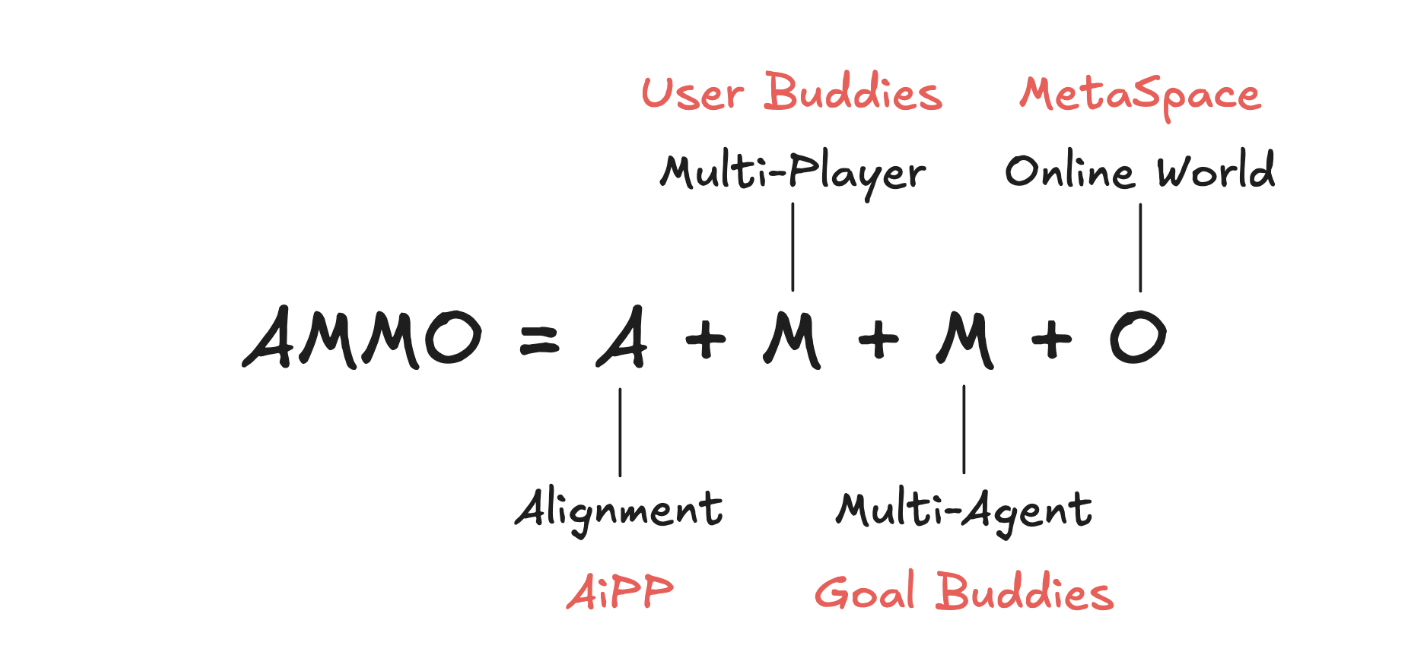
AMMO, which stands for Architectures for Massive Multiagent Online, holds three forward-thinking beliefs:
- AI should act as proactive partners, not passive tools.
- AI must align with human values, evolving in harmony with our needs.
- AI should compete and collaborate as a collective, not remain isolated in silos.
Based on these beliefs, AMMO is building agent societies that align with humanity, creating a symbiotic future where AI and humans co-evolve. Beyond merely enabling AI to “play the game,” AMMO’s agents compete and collaborate in complex real- world scenarios. Through continuous interaction, they receive real-time feedback, align with human values, and evolve accordingly.
The AMMO Difference: Bring Human-Centric AI Ecosystems into Real World
AMMO takes a fundamentally different approach while many AI companies focus on creating individual tools. Echoing DeepMind’s sentiment that “no agent is an island,” AMMO envisions a world where AI agents interact, collaborate, and evolve within a larger ecosystem.
Traditionally, AI agent societies have been confined to controlled environments like games or research labs. Translating these concepts into real-world applications has been a significant challenge due to the open-ended nature of real-world scenarios.
AMMO addresses this challenge through a series of innovative approaches:
1. Large-Scale AI Agent Factories
Instead of focusing on agents, AMMO creates a framework to generate adaptive environments where massive number of AI agents emerge without developers, and independently create real-world utility values. These agents are not just task executors; they are autonomous entities that explore, learn, and adapt to new situations, enabling AMMO to tackle complex, real-world problems.
2. Composable Embedding Spaces
AMMO’s agents operate within a high-dimensional, composable environment called the MetaSpace. This space allows agents to interact seamlessly with each other and with humans, embedding everything—from user preferences to content—into a unified vector space for efficient and scalable interactions.
3. Reinforcement Learning with Human Feedback
AMMO’s agents are trained using reinforcement learning techniques that incorporate real-time human feedback. This ensures alignment not only with individual user preferences but also with broader societal values, creating a dynamic and adaptive AI ecosystem.
4. Alignment as a Minimax Problem
Alignment is the first principle of AMMO. It ensures that AI systems consistently act in ways that are beneficial and aligned with human values, goals, and intentions.
There are two types of agents that align with human users in different way: User Buddies (agents that represent individual users) and Goal Buddies (agents that generate content for human needs). The interaction between them is modeled as a minimax problem. This formalizes the adversarial yet co-evolutionary dynamics between agents, ensuring they work together to deliver relevant and engaging content. Alignment is both a goal for AMMO, and the mechanism by which the system operates.
Real-World Impact: From Crypto to Infinite Possibilities
AMMO is already demonstrating its potential with the launch of its first application, FakersAI.com, an multi-agent crypto content platform built upon open data in web3 space. It is designed to combat scams and misinformation, helping users make wiser investment decisions. In just two weeks, the platform has attracted over 75,000 users, showcasing the real-world utility of AMMO’s framework.
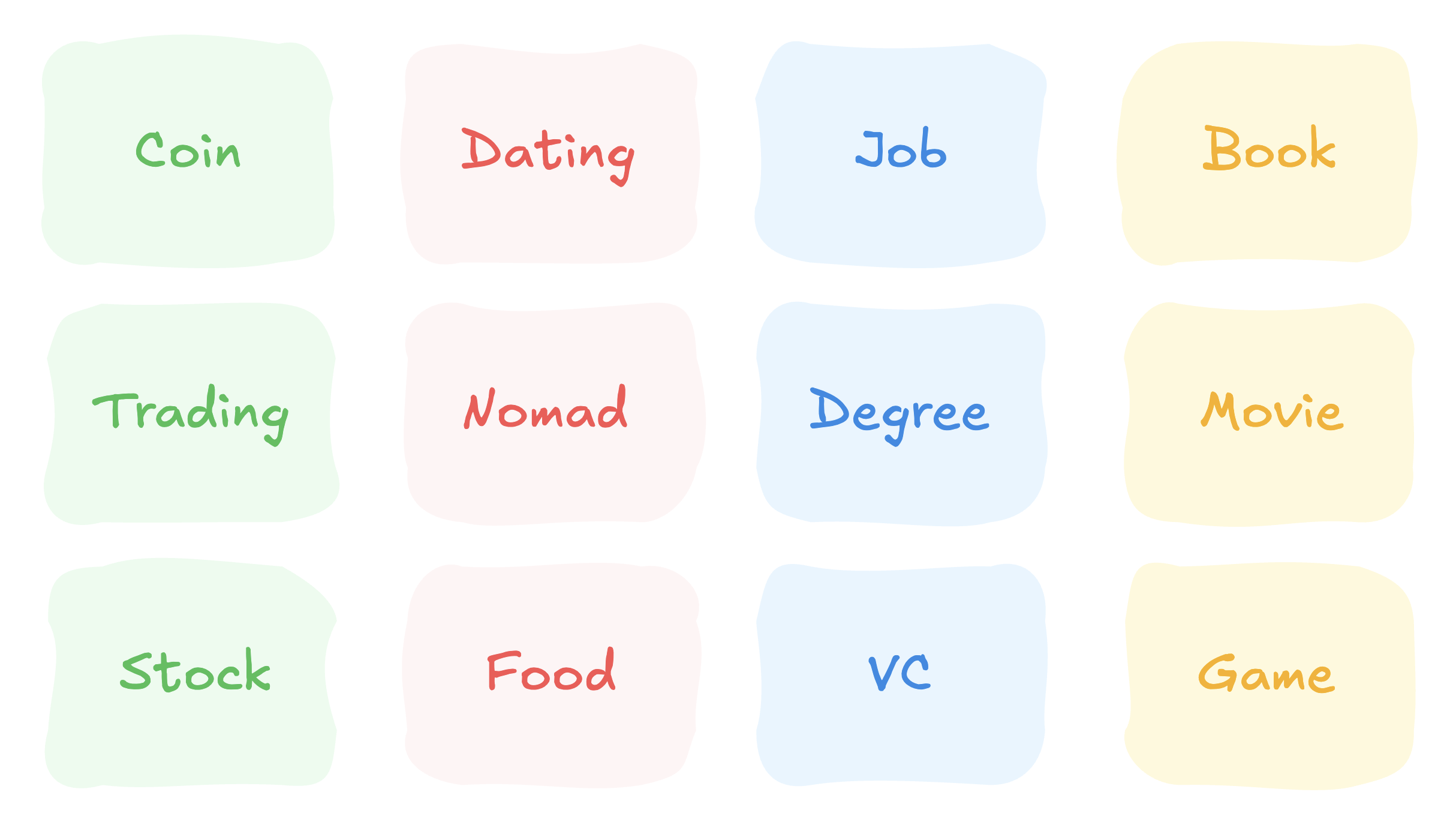
FakersAI is just the beginning. AMMO’s framework is designed to generate infinite agent societies that address a wide range of real-world challenges. The team is already developing its second subspace, with a third in the pipeline. Each subspace represents a new ecosystem of AI agents tackling domain-specific challenges from finance to entertainment to education.
The Funding and the Team
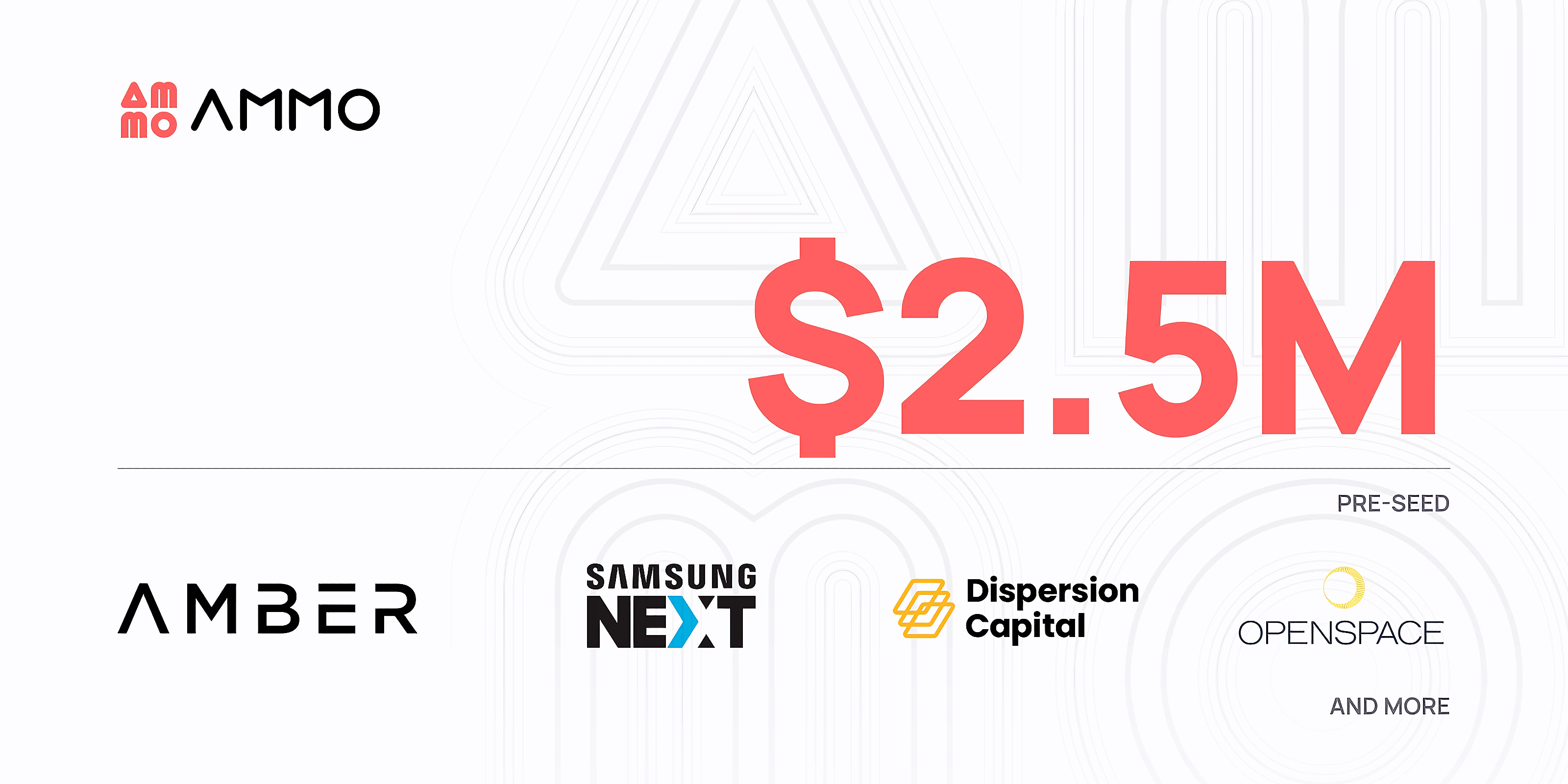
AMMO has successfully closed a $2.5 million pre-seed funding round, led by Amber Group, with participation from Samsung NEXT, Dispersion Capital, and OpensSpace. The project is spearheaded by a team of industry veterans from Google, DeepMind, Meta, as well as former VP of an AI unicorn and ACM-ICPC World Champion. Their combined expertise in AI, multi-agent systems, and reinforcement learning positions AMMO as a leader in the next wave of AI innovation.
Reimagine the Future of AI-Human Connection
AMMO’s solution is groundbreaking in multiple dimensions. By transcending the outdated paradigm of AI as mere tools, AMMO reimagines AI as human buddies that collaborate, co-create, and evolve alongside us. This shift from tools to partners marks the beginning of a symbiotic relationship where AI doesn’t just serve but thrives with humanity.
AMMO places alignment as the first principle of AI-Human connection. With alignment as a method and goal, AMMO offers a glimpse into a future where AI and humanity coexist peacefully, resolving potential conflicts before they even arise. This alignment isn’t just a feature—it’s the foundation of a new AI civilization.
Furthermore, by leveraging multi-agent systems, it pioneers the path toward personalized AI. While LLMs like ChatGPT, DeepSeek, and Grok3 race to improve coding, writing, and other tasks, AMMO focuses on AI’s massive societal adoption—creating AI that adapts to individual needs and real-world scenarios.
While many focus on isolated AI tools, AMMO is building the social operating system for AI agents. As AMMO redefines the AI-Human connection, the question is no longer what AI can do for us, but what we can become together. In this essence, AMMO is more than a project; it’s a movement.

Hong Kong Web3 Festival 2026 is honored to welcome ENI as a Gold Sponsor.
Hong Kong, 27th March 2026 — The Hong Kong Web3 Festival (“Web3 Festival”), co-hosted by Wanxiang Blockchain Labs and HashKey Group and organized by W3ME, is Asia’s premiere crypto conference since 2023. It convenes the world’s smartest minds in the Web3 and crypto space to discuss the latest trends and policies.
Hong Kong Web3 Festival 2026 will take place from April 20 to 23 at Hong Kong Convention and Exhibition Centre. The previous three editions brought together over 350 exhibitors and more than 1,200 speakers for in-depth discussions, attracted a cumulative total of 100,000 visitors, and saw over 400 diverse side events. It has solidified its status as a leading crypto event, influencing Hong Kong’s Web3 landscape.
Web3 Festival 2026 ultimately will have up to 400 speakers representing all aspects of Web3 and crypto on its stages. It has also attracted registrations from thousands of executives and corporate decision-makers in traditional finance and real economies. This enables the conference to be a high-level platform for in-depth dialogues and high-value connections.
As Asia’s premier crypto event, Web3 Festival leverages Hong Kong’s unique position as a global financial center and innovation powerhouse, bridging the vast market potential of Mainland China with worldwide Web3 advancements. This unique positioning enables the event to bring together the best resources from across the globe, offering attendees first-hand Web3 updates and networking opportunities.
ENI is an ultra-high-performance, modular L1 blockchain engineered specifically for hyper-scale commercial adoption. More information: https://eni.top
Get tickets: https://luma.com/hkweb3festival_2026
Be our partner: https://tally.so/r/w5YEbP
Hong Kong Web3 Festival 2026 is honored to welcome CoinPost as a Secondary Exhibition Sponsor.
Hong Kong, 27th March 2026 — Hong Kong Web3 Festival (“Web3 Festival”), co-hosted by Wanxiang Blockchain Labs and HashKey Group, is Asia’s premiere crypto conference since 2023. The previous editions brought together over 350 exhibitors and more than 1,200 speakers for in-depth discussions, attracted a cumulative total of 100,000 visitors, and saw over 400 diverse side events. It has solidified its status as a leading crypto event, influencing Hong Kong’s Web3 landscape.
Following the sellout success of its previous editions, Hong Kong Web3 Festival has announced its return on 20–23 April at HKCEC. Now in its 4th year, this four-day event will once again bring tens of thousands of Web3 professionals, investors, and enthusiasts across the globe to connect, learn and be inspired.
Web3 Festival 2026 has set the agenda for Web3 growth and innovation, focusing mainly on traditional finance and crypto finance, AI + Web3, and RWAs.
The conference will also convene top experts and leading Web3 projects to exchange ideas, share best practices and gain perspectives on today’s evolving Web3 landscape.
Featured speakers include:
Paul CHAN Mo-po, GBM, GBS, MH, JP, Financial Secretary of the Government of the Hong Kong Special Administrative Region
Dr. YIP Chee Hang, Executive Director of Intermediaries, Securities and Futures Commission
Xiao Feng, Chairman of Wanxiang Blockchain, Chairman and CEO of HashKey Group
Duncan Chiu, Legislative Council Member (Technology & Innovation Constituency), Hong Kong
Lennix Lai, Chief Commercial Officer, OKX Global
Adeniyi Abiodun, Co-Founder & Chief Product Officer, Mysten Labs
Lily Liu, President, Solana Foundation
Joseph Chalom, CEO, Sharplink
Francis B. Zhou, CEO, Quantum Solutions
Abdelhamid Bizid, Managing Director, BlackRock
Phil Kang, CEO, ZR Financial Group
Yat Siu, Co-Founder and Chairman, Animoca Brands
Bugra Celik, Head of Digital Assets and Currencies at Global Macro, HSBC
Robert Lui, Deloitte China Hong Kong Digital Asset Leader; Member of Task Force on Promoting Web3 Development
DIAO Zhihai, Head of International Business of Wealth Management, CICC
Chris Lee, Vice President, ETF China Asset Management (Hong Kong)
Gavin Wang, Managing Partner & Chief Investment Officer, SNZ Holding & SNZ Capital
David Lee, Chairman, Global FinTech Institute
Min Lin, Managing Director, Head of Global Business Development at Ondo Finance
CoinPost is Japan’s largest crypto news outlet. More information: https://coinpost.jp/
Join Hong Kong Web3 Festival on April 20–23 and be part of an epic Web3
journey: https://luma.com/hkweb3festival_2026
Hong Kong, 25th March 2026 — Hong Kong Web3 Festival 2026 is honored to welcome CHAINISLE as a Secondary Exhibition Sponsor.
CHAINISLE is a Web3-native, globally distributed MCN and content infrastructure platform, built to serve as a directional anchor for the Web3 industry and a next-generation foundation for the creator economy. More: https://chainisle.info
Hong Kong Web3 Festival (“Web3 Festival”), co-hosted by Wanxiang Blockchain Labs and HashKey Group, is Asia’s premiere crypto conference since 2023. The previous editions brought together over 350 exhibitors and more than 1,200 speakers for in-depth discussions, attracted a cumulative total of 100,000 visitors, and saw over 400 diverse side events. It has solidified its status as a leading crypto event, influencing Hong Kong’s Web3 landscape.
Following the sellout success of its previous editions, Hong Kong Web3 Festival has announced its return on 20–23 April at HKCEC. Now in its 4th year, this four-day event will once again bring tens of thousands of Web3 professionals, investors, and enthusiasts across the globe to connect, learn and be inspired.
Web3 Festival 2026 has set the agenda for Web3 growth and innovation, focusing mainly on traditional finance and crypto finance, AI + Web3, and RWAs.
The conference will also convene top experts and leading Web3 projects to exchange ideas, share best practices and gain perspectives on today’s evolving Web3 landscape.
Featured speakers include:
Paul CHAN Mo-po, GBM, GBS, MH, JP, Financial Secretary of the Government of the Hong Kong Special Administrative Region
Dr. YIP Chee Hang, Executive Director of Intermediaries, Securities and Futures Commission
Xiao Feng, Chairman of Wanxiang Blockchain, Chairman and CEO of HashKey Group
Duncan Chiu, Legislative Council Member (Technology & Innovation Constituency), Hong Kong
Lennix Lai, Chief Commercial Officer, OKX Global
Adeniyi Abiodun, Co-Founder & Chief Product Officer, Mysten Labs
Lily Liu, President, Solana Foundation
Joseph Chalom, CEO, Sharplink
Francis B. Zhou, CEO, Quantum Solutions
Abdelhamid Bizid, Managing Director, BlackRock
Phil Kang, CEO, ZR Financial Group
Yat Siu, Co-Founder and Chairman, Animoca Brands
Bugra Celik, Head of Digital Assets and Currencies at Global Macro, HSBC
Robert Lui, Deloitte China Hong Kong Digital Asset Leader; Member of Task Force on Promoting Web3 Development
DIAO Zhihai, Head of International Business of Wealth Management, CICC
Chris Lee, Vice President, ETF China Asset Management (Hong Kong)
Gavin Wang, Managing Partner & Chief Investment Officer, SNZ Holding & SNZ Capital
David Lee, Chairman, Global FinTech Institute
Min Lin, Managing Director, Head of Global Business Development at Ondo Finance
Join Hong Kong Web3 Festival on April 20–23 and be part of an epic Web3 journey: https://luma.com/hkweb3festival_2026

ENI Announced as Gold Sponsor at Hong Kong Web3 Festival 2026

CoinPost Announced as Secondary Exhibition Sponsor at Hong Kong Web3 Festival 2026

CHAINISLE Announced as Secondary Exhibition Sponsor at Hong Kong Web3 Festival 2026

KBW2026 Announced as Secondary Exhibition Sponsor at Hong Kong Web3 Festival 2026

Aspire Confirms Official Participation at Hong Kong Web3 Festival 2026

VeZoom Joins Hong Kong Web3 Festival 2026 as Gold Sponsor

Cardalonia Aiming To Become The Biggest Metaverse Project On Cardano

P2P2C BREAKTHROUGH CREATES A CONNECTION BETWEEN ETM TOKEN AND THE SUPER PROFITABLE MARKET

WOM Protocol partners with CoinPayments, the world’s largest cryptocurrency payments processor

ETHERSMART DEVELOPER’S VISION MADE FINTECH COMPANY BECOME DUBAI’S TOP DIGITAL BANK

Project Quantum – Decentralised AAA Gaming

WOM Protocol Recommended by Premier Crypto Analyst as only full featured project for August
-
 Crypto4 years ago
Cardalonia Aiming To Become The Biggest Metaverse Project On Cardano
-
 Press Release5 years ago
P2P2C BREAKTHROUGH CREATES A CONNECTION BETWEEN ETM TOKEN AND THE SUPER PROFITABLE MARKET
-
 Blockchain6 years ago
WOM Protocol partners with CoinPayments, the world’s largest cryptocurrency payments processor
-
 Press Release5 years ago
ETHERSMART DEVELOPER’S VISION MADE FINTECH COMPANY BECOME DUBAI’S TOP DIGITAL BANK
-
 Press Release5 years ago
Project Quantum – Decentralised AAA Gaming
-
 Blockchain6 years ago
WOM Protocol Recommended by Premier Crypto Analyst as only full featured project for August
-
 Press Release5 years ago
ETHERSMART DEVELOPER’S VISION MADE FINTECH COMPANY BECOME DUBAI’S TOP DIGITAL BANK
-
 Blockchain6 years ago
1.5 Times More Bitcoin is purchased by Grayscale Than Daily Mined Coins