
Press Release
Introducing Power Meta: The Disaster Recovery Solution Built on Blockchain and IPFS

Power Meta, a leader in decentralized disaster recovery storage solutions, has announced the launch of its groundbreaking disaster recovery infrastructure services, Vaultnode and Ararat Node Builder, based on the cutting-edge blockchain storage technology Interplanetary File System (IPFS).
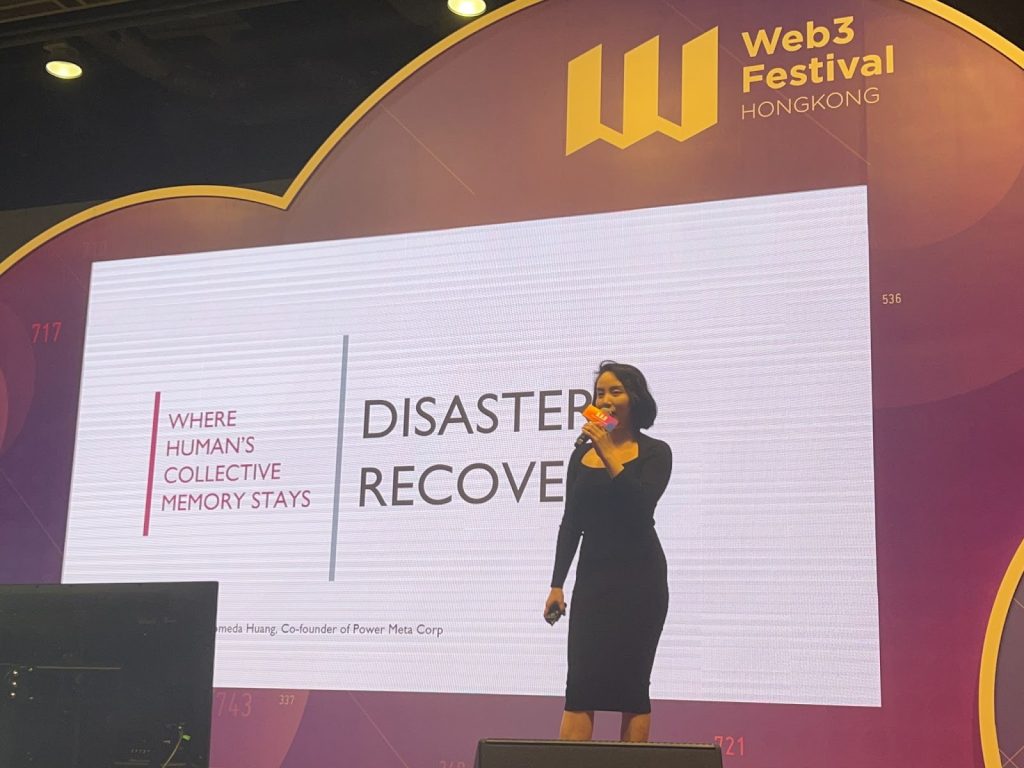
“As humans, our memories define us, and our ability to retain and recall information is what sets us apart from other species. In a world where data has become the lifeblood of our societies, disaster recovery is not just important for businesses, but for humanity as a whole.” As Power Meta’s co-founder, Andromeda Huang, mentioned at a recent web 3 conference in Hong Kong, disaster recovery is crucial because data retention is key to preserving human civilization.
Power Meta is a disaster recovery infrastructure network built on blockchain technology and IPFS, providing secure and reliable storage solutions that ensure your critical data is always safe and recoverable. With Power Meta, you don’t have to worry about losing valuable data or suffering long downtimes during a crisis.
At the heart of Power Meta’s storage solution is Vaultnode, a decentralized network that uses IPFS to store your data. This means your data is stored across multiple nodes, making it virtually impossible to lose all copies of the data at once. Plus, with Vaultnode’s pay-per-use model that is priced at only 1/10 of AWS storage solution, you only pay for the storage you need, making it the most cost-effective solution for organizations and individuals alike in the disaster recovery storage arena.
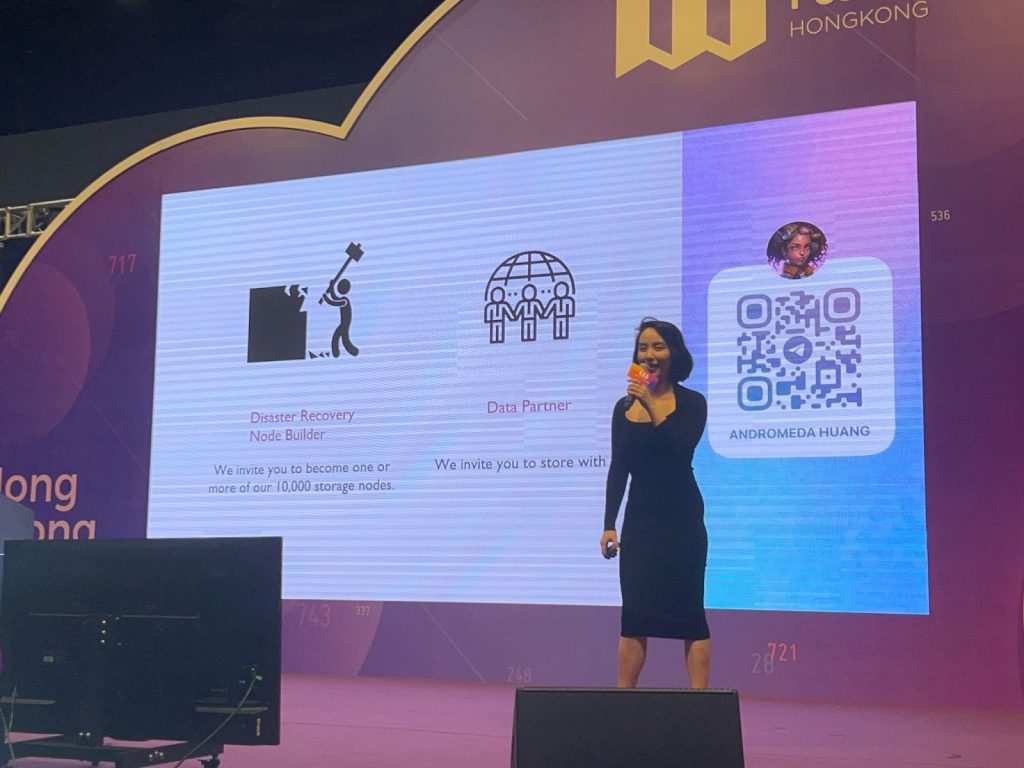
What about those who want to become a storage node themselves? That’s where Ararat Node Builder comes in. Ararat Node Builder is a service that helps individuals and organizations become storage nodes on the Power Meta network. With Ararat Node Builder, anyone can join the Power Meta network and contribute to the cause of disaster recovery.
With completion of 19 storage node in North America as of today, Power Meta’s goal is to expand its disaster recovery network to 10,000 decentralized storage nodes worldwide, with 10EiB of storage capacity in total, while maintaining its extremely price competitive service to its enterprise clients.
Power Meta’s disaster recovery solution provides secure and reliable storage solutions for businesses, governments, research institutes, NGOs, universities, and etc. With its underlying blockchain technology and IPFS backbone, along with services like Vaultnode and Ararat Node Builder, Power Meta is paving the way for a more secure and disaster-resistant world.
Reach out to them on Twitter @AraratGlobal, telegram @PowerMetaMarket or visit www.powermeta.market to learn more.
PR Contact:
ZEX PR WIRE

Press Release
Brazil Central Bank Warns Certain Stablecoin Transfers Could Create Money Laundering Risks


BRASILIA, Brazil, November 16, 2026, A senior official at Brazil’s central bank has warned that certain stablecoin-based international payment arrangements could expose financial institutions to money laundering risks, even when the funds involved originally come from legitimate sources.
Gerson Romantini, head of the central bank’s foreign exchange department, raised the issue at a private industry event. His remarks focused on how money is converted into stablecoins, transferred overseas and exchanged into another currency. The comments have renewed attention on Brazil’s rules for cryptocurrency-related foreign exchange services and the responsibilities of fintech companies operating in the payments market.
Background
Stablecoins are widely used for cryptocurrency trading, international transfers and digital payments because their value is generally linked to currencies such as the US dollar or euro.
In Brazil, regulators have been examining how these assets interact with conventional foreign exchange services. The central bank is particularly concerned about arrangements that allow money to move between countries through multiple conversion stages without following the controls normally associated with regulated currency transactions.
Resolution BCB No. 561, which took effect on October 1, 2026, introduced restrictions affecting the use of virtual assets in certain settlements between regulated electronic foreign exchange providers and their overseas counterparties. It did not create a blanket prohibition on all cryptocurrency transfers.
Key Developments
Romantini discussed a structure described as a stablecoin sandwich. In this arrangement, a company receives Brazilian reais, converts the funds into a dollar or euro-backed stablecoin, transfers the tokens overseas and converts them into local currency for the recipient.
The central bank distinguishes between different ways this structure can operate. A regulated financial institution may use virtual assets as part of the infrastructure supporting a conventional foreign exchange transaction. However, the regulator considers a different arrangement problematic when a company directly sells stablecoins to customers as part of a structured service designed to move reais into foreign currency through an overseas conversion.
This distinction is important because the central bank’s concerns relate to the structure and ownership of the transaction, not simply the use of stablecoins.
The reporting also points to additional compliance requirements. Covered institutions must report qualifying self-custody transfers of at least $10,000 to Brazil’s financial intelligence authority, Coaf, under the rules that took effect in October.
Industry Implications
The comments could affect payment providers and fintech companies that use stablecoins for international transfers. Businesses may need to review how they receive customer funds, convert currencies and transfer digital assets between jurisdictions.
For users, tighter oversight could influence which services remain available and how quickly cross-border payments can be processed. For the wider cryptocurrency industry, Brazil’s approach illustrates the difficulty regulators face in distinguishing legitimate blockchain-based payment infrastructure from arrangements that may bypass established foreign exchange controls.
Importantly, the central bank has not announced a general ban on stablecoins. The current distinction between permitted and restricted transaction structures remains central to understanding the policy.
What’s Next
An industry source cited in the reporting indicated that a meeting expected on November 19 could bring further discussion of restrictions affecting fintech stablecoin services. The possibility of reserving certain activities for banks has been raised, but no formal decision has been confirmed.
Market participants will also watch for further guidance from the central bank on how the existing rules apply to international transfers and digital asset intermediaries.

TOKYO, Japan, November 16, 2026, Japan’s three largest banking groups are preparing to begin commercial transactions using a yen-pegged stablecoin by March 2027, according to comments from Sumitomo Mitsui Banking Corporation (SMBC) executive Tomoya Hasebe at a financial industry roundtable in Singapore on November 16.
The initiative involves SMBC, Mitsubishi UFJ Financial Group (MUFG) and Mizuho Financial Group. The banks are working towards a shared digital currency arrangement designed primarily for corporate payments, cross-border trade settlement and transfers between multinational companies.
Background
Stablecoins are digital tokens designed to maintain a relatively stable value by referencing a traditional currency or another asset. Yen-backed stablecoins are intended to represent the value of the Japanese currency on blockchain networks, allowing businesses to use digital infrastructure for transfers and settlement.
Japan has been developing its regulatory approach to digital assets and payment services, with the Financial Services Agency playing a role in the country’s stablecoin framework. The participation of major banking groups reflects an effort to bring digital currency services into established financial structures rather than relying exclusively on cryptocurrency-native issuers.
The three banking groups have been working together on the operational and governance arrangements required for the proposed token.
Key Developments
The banks established a joint issuance governance committee in June 2026 and completed a proof of concept in July. The testing covered the main stages of the stablecoin process, including issuance, transfers and redemption under Japan’s Payment Services Act.
The planned token is designed to maintain a value of one yen per unit. Its backing is expected to be held in a trust structure legally separated from the banks’ own corporate assets. This arrangement is intended to distinguish the reserves supporting the token from the banks’ proprietary funds.
The primary use case is business payments rather than everyday retail cryptocurrency trading. Companies operating across different countries could use the system to move funds between subsidiaries, settle trade obligations and manage internal liquidity.
At the November 16 roundtable, SMBC’s Tomoya Hasebe described competition between currencies as increasingly connected to software and digital infrastructure. His comments reflect the banks’ interest in the role that programmable financial systems could play in future payment services.
Industry Implications
The involvement of Japan’s three largest banking groups could give yen-denominated digital payments a stronger institutional foundation. It also creates a potential alternative to relying entirely on dollar-linked stablecoins for certain international business transactions.
For Japanese companies, a regulated yen stablecoin could offer another way to manage payments across borders and time zones. However, its usefulness will depend on the number of participating businesses, the systems that support transfers and the ease with which tokens can be converted back into conventional money.
The initiative also places Japan within a wider competition among financial institutions and payment providers developing tokenised money services.
What’s Next
The banks are targeting commercial use by March 2027, the end of Japan’s fiscal year. The remaining work includes preparing the issuance and operating framework and ensuring that the system meets applicable legal and regulatory requirements.
Further information about the token’s distribution, participating companies and commercial operating arrangements will help establish how widely it can be used.

BERLIN, Germany, November 16, 2026, Germany’s Bundestag has passed legislation that would give customs authorities new powers to temporarily seize cryptocurrency and other high-value assets when their lawful origin cannot be established. The proposed rules would allow authorities to hold qualifying assets even before a criminal investigation has been opened, placing additional scrutiny on people and businesses holding substantial digital assets in the country. The bill still requires approval from the Bundesrat before it can become law.
Background
The legislation, known as the Zollfinanzgerechtigkeitsgesetz, is intended to strengthen the authorities’ ability to investigate assets suspected of having an unclear or potentially unlawful origin. It forms part of a broader effort to address financial crime and improve the recovery of proceeds from illicit activity.
Cryptocurrency has become part of this discussion because digital assets can be transferred across borders and held through wallets that do not operate in the same way as traditional bank accounts. Although blockchain transactions are recorded on public networks, identifying the individuals behind particular wallets and establishing the source of funds can require additional investigation.
Key Developments
Under the legislation approved by the Bundestag, customs authorities would be able to temporarily hold assets worth more than €100,000 when their lawful origin appears implausible. The provisions cover cryptocurrency as well as other assets, including certain stablecoins and utility tokens.
The initial holding period could last up to 30 days. A financial court could approve an extension of up to another 150 days, bringing the maximum period to 180 days.
The distinction between temporary seizure and permanent confiscation is important. Holding an asset during an investigation would not automatically transfer ownership to the state. Permanent confiscation would require a separate court decision.
The bill also extends certain border-control requirements to cryptocurrency and other valuables. According to reporting on the legislation, the government estimates that the broader enforcement powers could generate approximately €308 million annually from 2028. That projection covers several asset categories, not cryptocurrency alone.
Industry Implications
The proposed framework could affect cryptocurrency holders, exchanges, custodians and payment companies operating in Germany. Businesses may need to pay closer attention to customer due diligence, transaction histories and documentation showing where significant digital asset holdings originated.
For individual holders, maintaining records of purchases, transfers, exchange withdrawals and other relevant transactions could become particularly important when authorities request evidence of ownership or lawful acquisition.
The legislation also raises practical questions about how authorities will value less liquid tokens and how affected individuals can challenge a temporary restriction. Those details will matter when the rules are implemented.
What’s Next
The bill must receive Bundesrat approval before proceeding towards implementation. The reported target date for the legislation to take effect is January 1, 2027.
Its final wording and any accompanying administrative guidance will be important for determining how customs authorities apply the new powers to cryptocurrency holdings.

Brazil Central Bank Warns Certain Stablecoin Transfers Could Create Money Laundering Risks

Japan’s Three Largest Banks Target Yen Stablecoin Transactions by March 2027

Germany Advances Bill Allowing Authorities to Seize Crypto Assets of Unclear Origin

Bittensor introduces Gamma Tokens as payment layer

io.net highlights idle GPU supply as AI compute demand grows

NEAR launches Agent Market job board for local services quote agent

Cardalonia Aiming To Become The Biggest Metaverse Project On Cardano

P2P2C BREAKTHROUGH CREATES A CONNECTION BETWEEN ETM TOKEN AND THE SUPER PROFITABLE MARKET

WOM Protocol partners with CoinPayments, the world’s largest cryptocurrency payments processor

ETHERSMART DEVELOPER’S VISION MADE FINTECH COMPANY BECOME DUBAI’S TOP DIGITAL BANK

Project Quantum – Decentralised AAA Gaming

WOM Protocol Recommended by Premier Crypto Analyst as only full featured project for August
-
 Crypto4 years ago
Cardalonia Aiming To Become The Biggest Metaverse Project On Cardano
-
 Press Release6 years ago
P2P2C BREAKTHROUGH CREATES A CONNECTION BETWEEN ETM TOKEN AND THE SUPER PROFITABLE MARKET
-
 Blockchain6 years ago
WOM Protocol partners with CoinPayments, the world’s largest cryptocurrency payments processor
-
 Press Release6 years ago
ETHERSMART DEVELOPER’S VISION MADE FINTECH COMPANY BECOME DUBAI’S TOP DIGITAL BANK
-
 Press Release5 years ago
Project Quantum – Decentralised AAA Gaming
-
 Blockchain6 years ago
WOM Protocol Recommended by Premier Crypto Analyst as only full featured project for August
-

 Press Release6 years ago
ETHERSMART DEVELOPER’S VISION MADE FINTECH COMPANY BECOME DUBAI’S TOP DIGITAL BANK
-
 Blockchain6 years ago
1.5 Times More Bitcoin is purchased by Grayscale Than Daily Mined Coins