
Blockchain
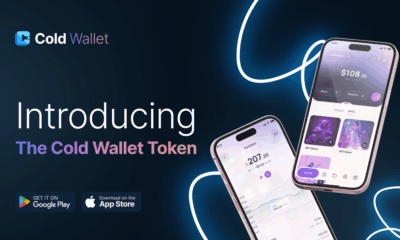
Cold Wallet: A Utility-First Presale That Prioritises Real Users Over Hype

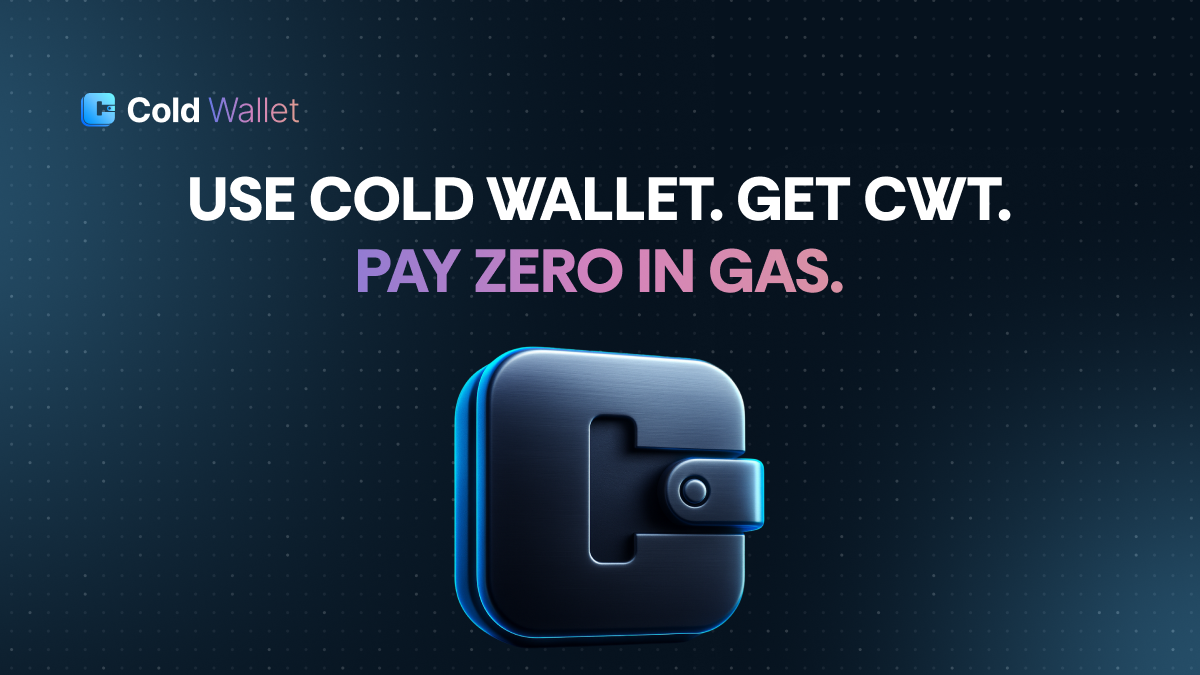
In a market often driven by speculation, Cold Wallet takes a different route. Instead of feeding hype cycles, it presents a working app backed by clear user-focused mechanics. Its presale comes with 150 price stages, a transparent vesting model, and a rewards system that benefits actual users who participate early.
The design favours those with long-term confidence. Cold Wallet is now in stage 16, with CWT priced at just $0.00942, providing a valuable entry point for those prioritising function over hype.
Presale Mechanics Focused on Meaningful Participation
Rather than rewarding short-term moves, the Cold Wallet presale structure supports consistent engagement. It’s a 150-stage price system that increases steadily, giving those who join early the lowest price advantage while still keeping entry fair for others later on.

At $0.00942 in stage 16, the pricing model motivates users who recognise value before momentum builds. The short vesting plan gives users 10% of their tokens at the Token Generation Event (TGE), followed by a linear release of the remaining 90% over three months. This format creates a balance that avoids pump-and-dump activity, attracting committed participants over opportunistic ones.
Cold Wallet: A Real Product with Built-In Utility
Cold Wallet’s design centres around practical usage from the beginning. CWT has direct functionality inside the Cold Wallet app, users earn rewards in CWT for gas payments, swaps, and on-chain or off-chain movements. This encourages consistent usage and adds real value for early buyers.
With 40% of the total supply, or 4 billion CWT, set aside for presale, users receive significant access to early utility. A 25% allocation is held specifically for cashback rewards, referrals, and loyalty incentives.

The team and advisor allocations are fully locked for 2 to 4 years, with zero upfront release, signalling a long-term commitment to the ecosystem. Live USDT rewards are already available within the app. This is not theory; it’s already functional. The inclusion of CWT simply enhances this working system.
Referral Rewards That Value Both User and Community Growth
Many crypto projects create referral programs that benefit only a select few, but Cold Wallet takes a more balanced approach. Its referral system is already operational, offering USDT rewards to users who invite others. During the presale, these are further boosted with token bonuses: 10% goes to the referrer and 5% to the referee.

These bonuses are distributed from a separate pool reserved for referrals, which protects the main token supply and ensures fair access. This method promotes genuine user expansion by encouraging real people, not bots, to engage and share. Bonuses follow the same vesting rules as presale tokens, keeping everything structured and honest.
Final Say!
Stage 16 of Cold Wallet’s presale currently offers CWT at $0.00942. This is one of the most accessible points for those supporting a functional product with measurable benefits. The listing price of CWT is set at $0.3517, making the current ROI an impressive 3635% for those entering now.
With real utility, short vesting, and a referral system that rewards all sides, Cold Wallet builds on usage, not speculation. Early adopters don’t just sit on coins; they get rewarded through active participation. Whether it’s using the wallet, earning through cashback, or referring others, the system is designed to keep giving back to those who contribute.

Explore Cold Wallet Now:
Presale: https://purchase.coldwallet.com/
Website: https://coldwallet.com/
X: https://x.com/coldwalletapp
Telegram: https://t.me/ColdWalletAppOfficial









Blockchain
Orochi Network (ON) Builds the Verifiable Data Layer for Web3 as zkPass Partnership and 49-Chain Expansion Signal Growing Infrastructure Reach


Orochi Network has been doing one of the harder things in crypto: building serious cryptographic infrastructure and waiting for the market to care. The wait is beginning to pay off. ON is currently trading around $0.119, up 96.24% from its all-time low of $0.06074 reached on February 10, 2026, with a market cap of approximately $17.2 million and a 24-hour trading volume of $6.7 million. The token sits 72.6% below its all-time high of $0.416 from October 2025 — but the direction of travel over the past five months has been consistently upward from the February floor.
Orochi Network operates as a blockchain-agnostic and proof-system-agnostic Verifiable Data Infrastructure, using three core cryptographic primitives — Zero-Knowledge Proofs, Fully Homomorphic Encryption, and Trusted Execution Environments — to make data operations trustless, provable, and private. That three-layer cryptographic stack is what separates Orochi from single-mechanism privacy protocols — it doesn’t bet on one cryptographic approach, it deploys all three depending on what each specific use case requires.
The Product Suite That’s Already Running
Orochi’s flagship product, zkDatabase, is the world’s first provable NoSQL database. Every data query generates a Zero-Knowledge Proof automatically, enabling auditors, regulators, and smart contracts to verify data correctness without ever accessing sensitive content. For enterprise and institutional use cases — financial compliance, healthcare data, government records — the ability to prove data integrity without revealing the underlying data is the precise capability that has prevented blockchain adoption in regulated industries. zkDatabase solves that at the infrastructure level.
Orand provides a Verifiable Random Function for trustless randomness, while Orocle delivers verifiable oracle feeds without relying on trusted nodes. The oracle market is dominated by Chainlink, but Orochi’s verifiable oracle approach — where every feed is accompanied by a cryptographic proof of origin rather than relying on a reputation-based trusted node network — offers a technically differentiated alternative that’s gaining traction in ZK-native ecosystems where proof composability matters.
Orand and Orocle services are integrated across 49-plus blockchains, while zkDatabase has been adopted by 20-plus blockchains. Cross-chain infrastructure that runs on 49 networks without being tied to any single chain’s success or failure is a meaningful structural advantage — especially as the multi-chain landscape continues to fragment.
The zkPass Partnership and Verifiable Identity
The collaboration with zkPass — building a new foundation for verifiable, privacy-protected data in Web3 — is among the more strategically aligned partnerships in Orochi’s ecosystem. zkPass handles identity verification through zero-knowledge proofs, allowing users to prove attributes about themselves without revealing underlying credentials. Orochi’s verifiable data infrastructure is the natural complement — once identity is verified, every subsequent data interaction that user has on-chain can be provably correct through Orochi’s zkDatabase layer.
That combination of verifiable identity and verifiable data integrity represents the foundational stack that regulated Web3 applications — particularly in RWA tokenization, DeFi compliance, and institutional finance — have been waiting for.
Backed by over $20 million in funding from the Ethereum Foundation, Mina Protocol, Web3 Foundation, and BNB Chain alongside leading venture capital firms, Orochi has grown to support 145-plus partners with more than 160 million transactions processed to date. Grants from protocol foundations rather than purely venture capital is a meaningful signal — it indicates that other blockchain ecosystems view Orochi’s infrastructure as genuinely valuable to their own development rather than simply making a financial bet.
The Supply Structure Worth Understanding
Only 14.4% of the 1 billion maximum ON supply is currently circulating — 144.28 million tokens — with a fully diluted valuation of approximately $81.3 million against the current $17.2 million market cap. With 85.6% of total supply still locked, ON is operating in a very early distribution phase. The gap between FDV and market cap implies either that the market believes the supply will create significant dilution pressure as it unlocks, or that adoption hasn’t yet reached the scale needed to justify the full supply value.
The Binance Alpha and Binance Alpha Airdrops tags on CoinMarketCap reflect a listing pathway that has brought broader retail attention to ON beyond its core technical audience. A trading call citing 25x leverage entry zones on KCEX reflects the speculative layer that sits above the infrastructure fundamentals — ON attracts both audiences simultaneously, which amplifies volatility in both directions.
Orochi’s 2026 goal is to solidify its position as the foundational verifiable data layer for Web3 and institutional finance, scaling zkDatabase, zkDA Layer, Orocle, and Orand modules across global markets to enable secure, auditable data infrastructure for RWA, stablecoins, AI, DeFi, and more. That ambition is coherent and directionally aligned with where institutional Web3 capital is flowing. A $17 million market cap for infrastructure already running on 49 chains with Ethereum Foundation backing is either a significant market oversight or a fair reflection of how early the verifiable data layer category still is.
Blockchain
Nexpace (NXPC) Turns One Year Old With $31M Revenue, 150M Transactions, and MSU 2.0 Redefining the Platform

MapleStory Universe has done what almost no Web3 gaming project has managed to do in its first year of operation: generate real, measurable revenue from genuine player activity rather than token speculation. Twelve months after launch, the platform has surpassed 150 million on-chain transactions from 3.8 million registered accounts, generated more than 48 million NXPC in ecosystem revenue worth approximately $31 million at time-weighted prices, and accounts for 23.3% of total activity on the Avalanche network.
Those numbers carry a different weight than most Web3 gaming metrics. $31 million in revenue from player activity — not from token sales or NFT mint proceeds — is the kind of commercially grounded performance that the sector has been promising and failing to deliver for years. Nexpace has delivered it.
The Launch That Set Records Before the Game Even Started
MSU launched in May 2025 as one of the largest debuts in the Web3 gaming ecosystem. The pre-launch Scroll NFT campaign recorded approximately 1.7 million scrolls minted — officially the largest NFT mint in Avalanche network history. On launch day, MSU-related weekly active addresses on the Avalanche network increased by 549%, and the marketplace has since maintained more than 446,716 buyers and sellers transacting daily on average.
The NXPC token listed simultaneously on seven major exchanges including Binance, Bybit, Upbit, and Bithumb — a launch distribution profile that most gaming projects spend years working toward and never achieve.
What MSU 2.0 Actually Changes
The anniversary announcement didn’t just celebrate year one — it formally introduced MSU 2.0, the platform’s most significant architectural evolution since launch. MSU 2.0 is being implemented throughout 2026 to 2027, with new features progressively released for builders, centered on VIBE IP — a tech stack providing builders with API access to MapleStory N gameplay data and establishing an on-chain economy on the Henesys chain.
The integration of AI-powered vibe coding tools is the most commercially interesting component. The idea is that anyone can turn a concept into a full-scale product built on MapleStory IP, while blockchain handles licensing, payments, and settlement automatically. Rather than requiring builders to negotiate IP licensing agreements with Nexon manually — a process that takes months and significant legal overhead — VIBE IP encodes those agreements into smart contracts that execute automatically when a builder’s product generates revenue.
Nexpace CEO Sunyoung Hwang framed the evolution directly: “MSU has evolved beyond a single game into infrastructure for creation, commerce, and participation. MSU 2.0 is the next phase of our growth journey. Our goal is to expand the role of IP from something people experience to something they can actively build with, share, and grow together.”
The Decentralization Trade-off That Sparked Debate
The most recent development — published just last week — introduces a meaningful constraint that the builder community is actively discussing. Nexpace is restricting decentralization in MapleStory Universe, limiting builders to using pre-built Action Modules for on-chain actions rather than writing arbitrary smart contracts.
The rationale is explicit. Gi Hyuk Ryu, head of blockchain at MapleStory Universe, explained that the project spent five years wrestling with a core tension: how to let builders expand the ecosystem without exposing players to the security and compliance risks common in Web3. Pre-built Action Modules solve that problem by keeping all on-chain interactions within a vetted, audited framework — but at the cost of the permissionless composability that crypto-native developers expect.
That trade-off is philosophically contentious but commercially rational. MapleStory’s 700 million registered players across its 20-year history are not a crypto-native audience. Introducing them to blockchain-powered gameplay through a tightly controlled, security-first architecture is more likely to drive genuine mass adoption than offering unlimited smart contract composability that creates exploit vectors and compliance risks.
The winter update generated more than 130,000 user inflows, with approximately three-quarters representing new users — a retention and acquisition dynamic that suggests the game is working as a consumer product, not just as a crypto experiment.
NXPC is trading at approximately $0.64 with a market cap of roughly $94 million — modest relative to the $31 million in annual revenue the platform generated in year one. A 3x revenue multiple for a live gaming platform with 3.8 million accounts and growing builder ecosystem is a valuation that most traditional gaming investors would find genuinely interesting, even before any crypto premium is applied.
Blockchain
Bluwhale (BLUAI) Launches AI-Native Financial Operating System as User-Owned Agentic Finance Takes Center Stage

Bluwhale has spent the past year building infrastructure that the broader fintech industry is only now beginning to articulate as a priority. On June 12, 2026, the company unveiled an AI-native financial operating system — a platform that deploys autonomous AI agents to actively manage users’ savings, liquidity, subscriptions, investments, and digital assets in real time, while keeping data ownership and account control firmly with the user rather than the platform.
Unlike conventional budgeting or dashboard tools, Bluwhale connects bank accounts, wallets, brokerages, digital assets, and hundreds of financial products spanning both traditional finance and Web3 into a single unified execution layer. The distinction between a dashboard and an execution layer is the most important one in the product’s description — Bluwhale’s agents don’t just show you your financial picture, they act on it autonomously.
The Problem Bluwhale CEO Han Jin Named Directly
The launch announcement came with an unusually candid framing from the top. CEO Han Jin stated: “The emerging AI finance model creates a growing risk: centralized AI systems becoming gatekeepers of consumers’ financial lives. Users should be able to benefit from powerful AI automation without giving up ownership, privacy, or control.”
That statement positions Bluwhale against the direction most AI-powered fintech is heading — toward centralized platforms that accumulate user financial data as a competitive moat. Bluwhale’s counter-thesis is that the AI should work for the user, not the platform — a philosophy encoded into the product architecture through zero-knowledge proof technology that verifies financial data without ever exposing it.
Agents execute transactions at lightning speed through an Optimism-based layer, with ZK proof technology ensuring complete privacy and security across every agent interaction — meaning no one sees the user’s data, not even Bluwhale itself.
WhaleScore and the Intelligence Layer
Central to the platform is WhaleScore — a live financial health score that measures a user’s overall financial position across savings, investments, liabilities, spending patterns, and digital assets. WhaleScore functions as the unified intelligence layer that informs every agent action — giving the system a dynamic, holistic view of a user’s financial situation rather than optimizing individual accounts in isolation.
That cross-asset, cross-chain intelligence is the product’s technical moat. Most robo-advisors and AI finance tools optimize within a single asset class or institution. Bluwhale’s agents operate across the full financial stack simultaneously — traditional bank accounts, crypto wallets, and brokerage positions all in view at the same time.
The Bluprint no-code agent creation tool extends this capability to developers and non-technical users who want to build custom financial agents without writing code. The platform’s 2026 roadmap prioritizes scaling Bluprint adoption alongside deeper Sui blockchain integration for cross-chain intelligence.
The Security Infrastructure and Beosin Partnership
Bluwhale announced a strategic partnership with blockchain security firm Beosin to fortify its intelligence layer with advanced smart contract audits, Know-Your-Transaction compliance, and on-chain threat intelligence services. For a platform handling autonomous execution of financial transactions across both TradFi and DeFi, security infrastructure isn’t optional — it’s the baseline requirement before any regulated institution or serious retail user will trust the system with real capital.
The Beosin partnership addresses that requirement directly, embedding compliance-grade KYT screening alongside the AI agent execution layer — a similar compliance-first design philosophy to what Zama and Elliptic announced this week for confidential finance.
BLUAI Token and the Supply Picture
BLUAI is the gas token that powers every agent action on the platform — users pay BLUAI for agent execution, creating direct token demand tied to platform usage rather than speculation. Circulating supply currently sits at just 12.3% of the total — meaning future unlocks from team, investor, and ecosystem allocations will progressively test the market’s ability to absorb new tokens as the platform scales.
Bluwhale raised $10 million in a Series A led by UOB Venture Management — the investment arm of one of Southeast Asia’s largest banks — alongside Amazon AI executives, PAID Network, and Sublime Ventures. UOB’s lead position is particularly notable: a Southeast Asian banking institution investing in a decentralized AI finance platform signals that the traditional finance sector is watching the agentic finance space more carefully than it publicly acknowledges.
The community has been running grassroots campaigns for centralized exchange listings throughout 2026 — a signal of active holder engagement, though actual liquidity improvement depends on exchange decisions rather than community votes alone.
At 12.3% circulating supply, BLUAI is still in the very early stages of its distribution lifecycle. The platform’s product launch and institutional backing give it stronger fundamentals than most tokens at comparable circulation percentages — but the supply trajectory will be the defining variable for price performance through the rest of 2026.

Aptos brings Encrypted Mempool to mainnet in move aimed at lowering MEV risk

RWA WEEK Singapore Announces New Wave of Institutional Speakers as October Event Draws Closer

Bittensor SN10 Work Tied to Pareto AI and Engy AI at Exploit Summit

BNB Chain Agent Studio v4 adds NodeOpsHQ for prompt-to-agent deployment

BNB Chain releases Agent Studio v4 with simplified AI agent deployment and stablecoin support

ChainUp Brings The Institutional Ark to TOKEN2049 Singapore, Focusing on Digital Asset Infrastructure and High-Value Deal Flow

Cardalonia Aiming To Become The Biggest Metaverse Project On Cardano

P2P2C BREAKTHROUGH CREATES A CONNECTION BETWEEN ETM TOKEN AND THE SUPER PROFITABLE MARKET

WOM Protocol partners with CoinPayments, the world’s largest cryptocurrency payments processor

ETHERSMART DEVELOPER’S VISION MADE FINTECH COMPANY BECOME DUBAI’S TOP DIGITAL BANK

Project Quantum – Decentralised AAA Gaming

WOM Protocol Recommended by Premier Crypto Analyst as only full featured project for August
-
 Crypto4 years ago
Cardalonia Aiming To Become The Biggest Metaverse Project On Cardano
-
 Press Release6 years ago
P2P2C BREAKTHROUGH CREATES A CONNECTION BETWEEN ETM TOKEN AND THE SUPER PROFITABLE MARKET
-
 Blockchain6 years ago
WOM Protocol partners with CoinPayments, the world’s largest cryptocurrency payments processor
-
 Press Release6 years ago
ETHERSMART DEVELOPER’S VISION MADE FINTECH COMPANY BECOME DUBAI’S TOP DIGITAL BANK
-
 Press Release5 years ago
Project Quantum – Decentralised AAA Gaming
-
 Blockchain6 years ago
WOM Protocol Recommended by Premier Crypto Analyst as only full featured project for August
-
 Press Release6 years ago
ETHERSMART DEVELOPER’S VISION MADE FINTECH COMPANY BECOME DUBAI’S TOP DIGITAL BANK
-
 Blockchain6 years ago
1.5 Times More Bitcoin is purchased by Grayscale Than Daily Mined Coins