
Crypto
BlockDAG’s X10 + X1 Demo Goes Live on Wednesday While SPX Whale Gains $4.46M & ETH Pushes Toward $5K

As the crypto market builds steam, certain names are pulling ahead through a mix of smart positioning and technical progress. SPX6900 (SPX) is gaining attention after a whale turned market timing into multi-million dollar profits. Ethereum (ETH) is also climbing, with its price prediction aiming at the $5,000 mark, thanks to rising ETF inflows and major players backing the move.
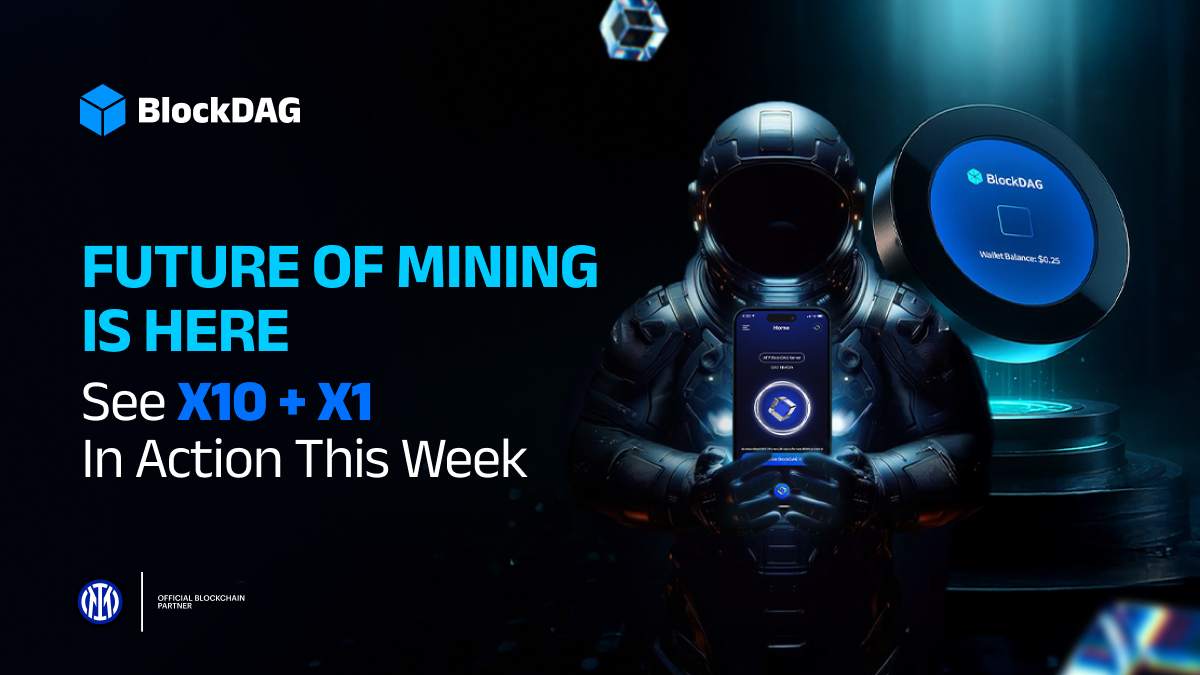
Meanwhile, BlockDAG (BDAG) is gearing up for a major demo this Wednesday, where it will highlight how its X10 Miner pairs with the X1 App for a real-time showcase. With more than 2 million miners already active, BlockDAG is turning technical innovation into user rewards. It’s positioning itself as a top contender among the best crypto for the 2025 bull run.
SPX6900 Whale Scores $4.46M Profit Amid Strong Market Signals
A large SPX holder has shaken things up after securing $4.46 million in profits by moving 2.53 million SPX to Bybit. As per Onchain Lens, this whale still holds 6.357 million SPX across three wallets, currently worth $11.44 million. This shows a strong signal of belief in SPX’s future while also locking in timely gains.
The price only slipped 0.4% to $1.80 after the deposit, and trading volume dropped over 53%. Despite this, SPX is up 49.3% over two weeks and recently reached a new all-time high of $1.94. These numbers point to a bullish structure. Ongoing accumulation and consistent inflows in both spot and derivative markets are supporting the trend, as current SPX6900 market activity continues to show underlying strength.
Ethereum Price Prediction Points to $5K as Momentum Builds
Ethereum’s (ETH) price is making a steady climb toward $4,000, and indicators suggest that $5,000 could be within reach. In July alone, spot ETH funds pulled in $3.28 billion in net inflows. Institutional interest is rising, with firms like BitMine and SharpLink expanding positions. Meanwhile, BlackRock’s Ethereum Trust now manages $9.17 billion, and Peter Thiel’s 9.1% stake in BitMine adds further weight.
On-chain data shows whales actively buying, fueling bullish sentiment. ETH is now trading at $3,745, just 6.8% away from the next resistance at $4,000. With an RSI nearing 84 and a strong MACD, Ethereum’s momentum looks solid.
If this continues, the $5,000 Ethereum price prediction may play out by 2025. With regulatory clarity improving and capital flowing from Bitcoin to Ethereum, ETH remains one of the best crypto plays for the coming rally.
BlockDAG X10 + X1 Demo to Highlight Seamless Dual Mining
BlockDAG is taking a bold step forward this week with a live demo of its X10 + X1 setup, scheduled for Wednesday. This event will show how the X10 Hardware Miner connects with the X1 Mobile App to deliver a fast, seamless mining experience that can boost daily returns up to 200 BDAG. When paired, the compact X10 enhances X1 performance by up to 10x and requires just a plug-in connection via Wi-Fi or Ethernet.
More than 2 million users already mine with the X1, and the upcoming demo will highlight how easy it is to scale up with the X10. BlockDAG’s hybrid DAG framework powers this efficient setup, designed to fit into any home.
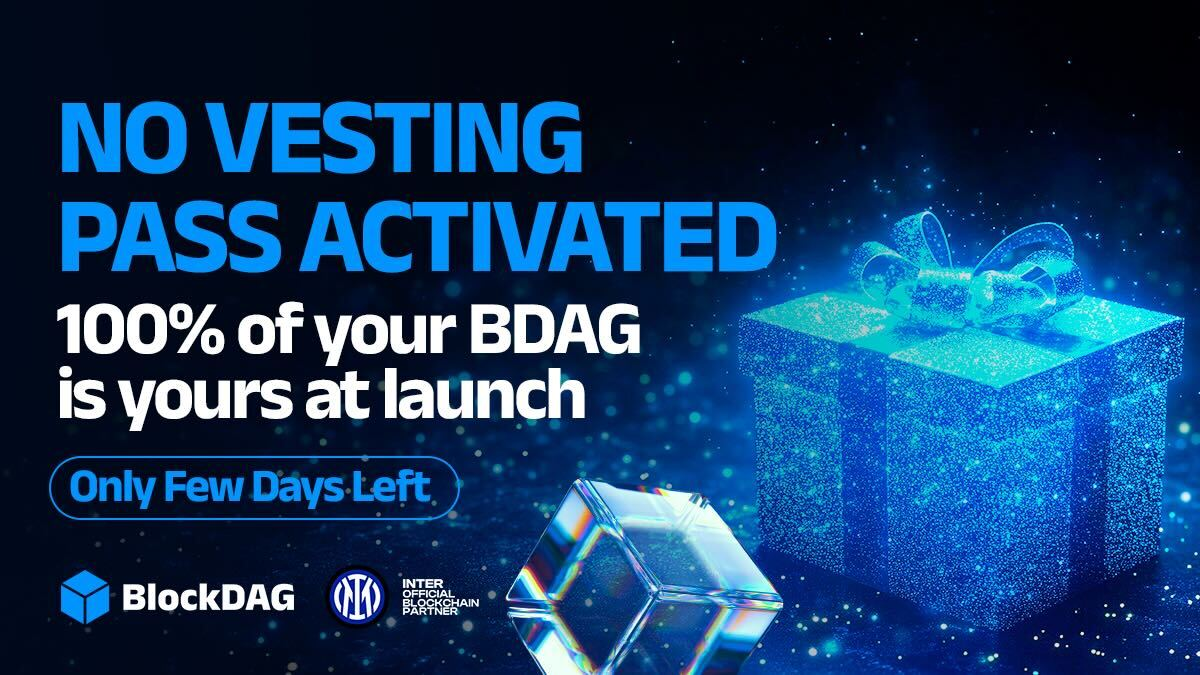
The limited-time NO VESTING PASS gives 100% access to coins at launch for those who buy now. With just 3 days left, this offer applies only to coins purchased during this window; bonus and referral coins still follow the vesting plan.
BlockDAG has raised over $348 million and sold 24.2 billion coins so far. At $0.0016, the current price offers a 3,025% ROI if it reaches the $0.05 launch price. BlockDAG is clearly emerging as one of the best crypto for the 2025 bull run.
Summing It Up
The crypto market continues to reward strategic moves. SPX6900 (SPX) shows how profit-taking and patience can pay off. Ethereum (ETH) is gaining traction with strong inflows and solid backing, bringing its $5,000 target closer.
BlockDAG, however, is grabbing attention with its hands-on approach. The upcoming X10 + X1 demo gives users a preview of how mobile and hardware mining combine for real-world income. With only 3 days left on the NO VESTING PASS and a current entry at $0.0016, BlockDAG is aligning technology, growth, and accessibility to compete with the best crypto for the 2025 bull run.

Presale: https://purchase.blockdag.network
Website: https://blockdag.network
Telegram: https://t.me/blockDAGnetworkOfficial
Discord: https://discord.gg/Q7BxghMVyu









Zama has spent years solving the technical side of financial privacy. On July 21, 2026, it addressed the institutional side — announcing a partnership with Elliptic, the global leader in blockchain intelligence, to integrate compliance screening directly into its confidential financial applications.
The announcement landed two days before ZAMA hit its all-time high, and the timing isn’t coincidental. The collaboration integrates Elliptic’s blockchain intelligence capabilities into Zama’s confidential financial applications, supporting compliance screening processes while maintaining the confidentiality protections of Zama’s FHE technology for applications built on public blockchains.
For a protocol whose primary value proposition is financial privacy, building compliance directly into the architecture rather than treating it as an afterthought is the most important signal the team could send to institutional capital.
The Problem the Partnership Solves
The fundamental tension in confidential finance has always been the same: regulators and financial institutions require the ability to identify illicit activity, while users require privacy. Most privacy protocols have chosen one side of that equation or the other. Zama is attempting to hold both simultaneously.
As the first step in the collaboration, Elliptic will support wallet risk screening for the confidential vaults powered by Zama — identifying high-risk wallets before a transaction proceeds while keeping balances and transfer amounts confidential. That sequencing matters. The screening happens at the entry point, before a transaction is executed, rather than requiring post-hoc surveillance of encrypted activity. Risk is assessed without exposing what’s inside.
Elliptic supports more than 700 institutions globally and analyzes more than $90 million in digital asset activity every day. That operational scale means Zama’s confidential vaults inherit compliance infrastructure that’s already trusted by the institutions Zama is trying to attract — rather than asking those institutions to evaluate an unproven compliance layer alongside an already unfamiliar cryptographic technology.
Zama CEO Rand Hindi framed the partnership’s philosophy directly: “Financial institutions shouldn’t have to choose between protecting sensitive financial information and meeting compliance obligations. Confidential finance must deliver both.”
Why This Matters More Than a Typical Partnership Announcement
The Elliptic integration directly addresses the regulatory risk that CoinMarketCap’s analysis flagged as Zama’s primary institutional adoption headwind — court-ordered stablecoin freezes on Zama highlighting a compliance gap. By embedding Elliptic’s wallet risk screening into the vault architecture, Zama is responding to that specific concern with infrastructure rather than statements.
As financial institutions move beyond experimentation toward real-world blockchain adoption, they require infrastructure that combines financial confidentiality with the compliance controls expected in regulated markets. The confidential USDC vault launched with Morpho and Steakhouse Financial in June was the first live product. The Elliptic integration is the compliance layer that makes that product deployable by regulated institutions without requiring a compliance exception or regulatory carve-out.
Combined with the Dfns custody integration in April 2026 — enabling encrypted transactions for over 400 enterprise banking clients — Zama is methodically building a compliance infrastructure stack that makes confidential finance accessible to the institutional market that previously had no pathway into it.
ZAMA hit its all-time high of approximately $0.05 on July 23 with a 30% weekly gain and an RSI of 83.38 — reflecting a market that is beginning to price in the institutional thesis rather than just the technical one. The Elliptic partnership is the clearest signal yet that the thesis has a structural foundation behind it.
Blockchain
Checkmate (CHECK) Builds a Multi-Game Chess Ecosystem as Coinbase Listing and Season 7 Entry Fees Sharpen Token Utility


Anichess has done something most Web3 gaming projects only aspire to — it built a genuine player base before launching its token. With over 340,000 players, 100,000 monthly active users, and more than 6 million minutes of gameplay recorded since early access, the game had measurable traction before CHECK ever traded on an exchange. That sequence — players first, token second — is the correct order for sustainable Web3 gaming economics, and it’s rare enough to be worth noting explicitly.
CHECK is currently trading at $0.028 with a 24-hour trading volume of $4.74 million — a modest market cap for a project backed by Animoca Brands, developed in partnership with Chess.com, and endorsed by world chess champion Magnus Carlsen and top-10 grandmaster Anish Giri. The gap between those credentials and current valuation is either a market oversight or a reflection of the broader Web3 gaming category’s difficulty in converting genuine players into token demand.
The Coinbase Listing That Changed Distribution
$CHECK debuted on WEEX on March 25, 2026, posting a day-one trading volume of $20.98 million and a market cap of $11.16 million. Its subsequent Coinbase listing triggered a 60% leap in value on the day of the announcement. That kind of exchange progression — from a smaller venue to Coinbase within a short window — reflects deliberate listing strategy rather than opportunistic exchange chasing. Coinbase’s compliance bar and global retail reach gave CHECK access to an investor base that WEEX alone couldn’t provide.
Ahead of its Coinbase listing, Anichess launched Gambit Mode — a competitive gameplay feature offering 250,000 CHECK as weekly incentives — tying token rewards directly to game performance rather than passive holding. That design choice distinguishes CHECK from yield-farming tokens: you earn it by playing well, not by locking capital in a smart contract.
Season 7 and the Entry Fee Model That Matters
With the onset of Season 7 in Q2 2026, Anichess incorporated entry fees and prizes, further solidifying CHECK’s utility. Entry fees are the most important token utility mechanism in gaming — they create recurring, predictable demand from every player who wants to participate in competitive play, regardless of market conditions. A player who wants to enter a tournament must hold and spend CHECK. That demand is driven by competitive motivation rather than financial speculation, making it structurally more durable than emission-based yields.
Players utilize CHECK for tournament entry, staking to earn Mate Points (M8), and purchasing game-specific items. Token holders can also influence the ecosystem through Checkmate Improvement Proposals. The staking mechanic adds a holding incentive on top of the utility demand — players who stake CHECK accumulate M8, which provides gameplay advantages, creating a natural flywheel between holding, staking, and competitive performance.
The Multi-Game Ecosystem Expanding Beyond Chess
The most ambitious dimension of the Checkmate thesis is the multi-game network expansion. The Checkmate Ecosystem aims to connect competitive play, generative AI creation, and education into a single on-chain framework powered by CHECK. Future integrations are planned to extend into competitive programs, merchandise, and casual titles like King’s Gambit — a new roguelike chess survival game launching later in 2026.
VibeCheck, announced in July 2025, extends CHECK utility beyond the core game. It allows players and creators to propose and vote on new game ideas through Vibe Sprints — community members stake CHECK to support preferred concepts, and winning proposals are developed on the platform with participants rewarded for their contributions. That mechanism turns governance from a passive right into an active participation loop — staking CHECK to shape what games get built is a materially different engagement than clicking a governance vote button.
In March 2026, Anichess partnered with Alibaba Cloud on the AliBAE platform to integrate AI tools tailored for Web3 content creation — an enterprise-grade partnership that adds technical credibility and distribution access well beyond the typical Web3 gaming partner ecosystem.
The CHECK infrastructure spans multiple blockchains: Abstract Chain manages staking and M8 accrual, while trading activities happen on Base via Aerodrome Finance. Players can bridge tokens for either trading or gameplay. That multi-chain architecture prioritizes user experience over chain maximalism — players use the chain that makes their specific activity cheapest and fastest, while traders access the deepest liquidity venue available.
Anichess has raised $4 million from leading investors since 2023 — a modest raise that reflects a team that built product before seeking capital rather than the reverse. Combined with Animoca Brands’ incubation and Chess.com’s partnership — the world’s largest chess platform with over 150 million registered users — CHECK has distribution access that most Web3 gaming tokens simply don’t have.
The question the market is answering right now is whether 100,000 monthly active players translates into enough recurring CHECK demand through entry fees, staking, and item purchases to support a growing token valuation. Season 7’s entry fee data will be the first real test of that conversion rate.
Blockchain
Balancer (BAL) Navigates Survival Mode After Balancer Labs Closure as BIP-918 Tokenomics Overhaul and V3 Expansion Attempt a Reset

Balancer’s story in 2026 is one of the more striking examples of a protocol outliving its own corporate entity. Balancer Labs, the company that built and maintained the protocol, closed in March 2026 — a direct casualty of the difficult environment facing DeFi platforms dealing with hacks, financial strain, and volatile markets. The protocol itself, however, keeps running. BAL is currently trading around $0.11, with a market cap of approximately $7.35 million — down 99.85% from its all-time high of $74.77 reached in May 2021 — generating just $577.96 in daily fees and $288.98 in daily project revenue.
Those revenue numbers tell the story of a protocol that once processed billions in weekly volume now operating on a fraction of its prior scale. The question facing the Balancer community in July 2026 is whether the V3 architecture and the BIP-918 tokenomics overhaul can genuinely reverse that trajectory — or whether Balancer becomes another protocol that survived institutionally but never recovered commercially.
The BIP-918 Overhaul That Defines the Recovery Attempt
BIP-918 and BIP-919 implementation began in April 2026, enacting major tokenomics and protocol sustainability changes following a governance vote. The proposals shift Balancer toward a more sustainable economic model — reducing reliance on BAL emissions for liquidity incentives while building toward protocol-generated revenue that can fund operations independently. The roadmap targets doubling EVM-chain TVL share by Q2 2026 and achieving $250,000 per month in sustainable DAO revenue — a target that current daily figures of $288.98 suggest is significantly out of reach without substantial volume recovery.
The Balancer Alliance Program adds another dimension to the sustainability push. The program formalizes partnerships with protocols contributing to the Balancer ecosystem through a fee-sharing arrangement where 17.5% of protocol fees from qualifying liquidity pools are distributed to partners in USDC — aligning external protocol interests with Balancer’s liquidity depth.
V3’s Boosted Pools and the HyperEVM Expansion
Balancer V3 introduced boosted pools and custom hooks — architectural upgrades that allow pool creators to build yield-bearing liquidity strategies and custom logic directly into pool mechanics. That flexibility is Balancer’s primary technical differentiation from Uniswap and Curve: the ability to create multi-token pools with custom weighting, auto-rebalancing, and integrated yield strategies that standard constant-product AMMs can’t replicate.
The Balancer DAO approved BIP 862 to deploy Balancer V3 on HyperEVM using a three-staged framework — initial phases focusing on technical functionality and ecosystem growth, with later phases integrating the BAL token and governance. HyperEVM, Hyperliquid’s EVM layer, represents one of the fastest-growing new ecosystems in 2026, and an early Balancer deployment there positions the protocol ahead of competing DEXs in a market with genuine trading volume behind it. HyperBloom is already integrating swaps through the deployment.
The November 2025 Hack and Its Lingering Impact
Gnosis Chain executed a hard fork to recover approximately $9 million in user funds lost during a November 2025 Balancer protocol hack. The recovery was successful but came with significant reputational cost — the decision to hard fork sparked debate within the crypto community about blockchain immutability and centralized power within what was supposed to be a decentralized protocol. For a protocol trying to rebuild institutional confidence, that controversy added friction that pure product development can’t easily overcome.
Balancer’s security score from CoinGecko currently sits at 94% with a $1 million maximum bug bounty — metrics that reflect the team’s post-hack security investments but don’t erase the memory of the exploit itself.
The Honest Assessment
BAL at $0.11 with a $7.35 million market cap against the protocol’s historical position as one of DeFi’s foundational liquidity layers represents either extreme undervaluation or a fair reflection of a protocol that has been functionally superseded. Balancer’s AMM innovation — weighted pools, multi-asset pools, custom hooks — remains genuinely differentiated. The commercial problem is that differentiation doesn’t automatically convert into volume when competing protocols have deeper liquidity and stronger integrations.
The HyperEVM deployment and BIP-918 sustainability push are the two most concrete reasons to believe the reset is genuine rather than performative. Both need to deliver measurable TVL and fee growth over the next two quarters before the market will price in a recovery thesis at current levels.

RWA WEEK Singapore Announces New Wave of Institutional Speakers as October Event Draws Closer

Bittensor SN10 Work Tied to Pareto AI and Engy AI at Exploit Summit

BNB Chain Agent Studio v4 adds NodeOpsHQ for prompt-to-agent deployment

BNB Chain releases Agent Studio v4 with simplified AI agent deployment and stablecoin support

ChainUp Brings The Institutional Ark to TOKEN2049 Singapore, Focusing on Digital Asset Infrastructure and High-Value Deal Flow

NEAR AI Cloud API Adds OpenAI Compatibility and Tiered Privacy

Cardalonia Aiming To Become The Biggest Metaverse Project On Cardano

P2P2C BREAKTHROUGH CREATES A CONNECTION BETWEEN ETM TOKEN AND THE SUPER PROFITABLE MARKET

WOM Protocol partners with CoinPayments, the world’s largest cryptocurrency payments processor

ETHERSMART DEVELOPER’S VISION MADE FINTECH COMPANY BECOME DUBAI’S TOP DIGITAL BANK

Project Quantum – Decentralised AAA Gaming

WOM Protocol Recommended by Premier Crypto Analyst as only full featured project for August
-
 Crypto4 years ago
Cardalonia Aiming To Become The Biggest Metaverse Project On Cardano
-
 Press Release6 years ago
P2P2C BREAKTHROUGH CREATES A CONNECTION BETWEEN ETM TOKEN AND THE SUPER PROFITABLE MARKET
-
 Blockchain6 years ago
WOM Protocol partners with CoinPayments, the world’s largest cryptocurrency payments processor
-
 Press Release6 years ago
ETHERSMART DEVELOPER’S VISION MADE FINTECH COMPANY BECOME DUBAI’S TOP DIGITAL BANK
-
 Press Release5 years ago
Project Quantum – Decentralised AAA Gaming
-
 Blockchain6 years ago
WOM Protocol Recommended by Premier Crypto Analyst as only full featured project for August
-
 Press Release6 years ago
ETHERSMART DEVELOPER’S VISION MADE FINTECH COMPANY BECOME DUBAI’S TOP DIGITAL BANK
-
 Blockchain6 years ago
1.5 Times More Bitcoin is purchased by Grayscale Than Daily Mined Coins